

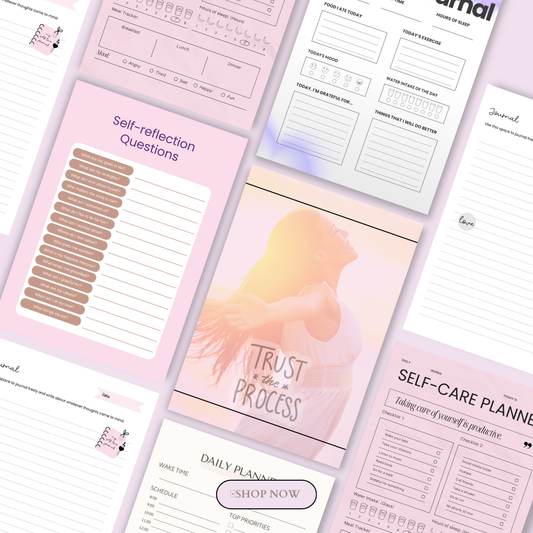

If you've ever poured hours into designing a beautiful digital download only to watch it sit at zero sales, you're not alone — and it's rarely a product problem. It's a marketing problem. Most creators market digital products the same way they'd market a physical one: pretty mockups, a price tag, and a "buy now" button.
🎥 Prefer watching instead of reading?
Watch the full step-by-step explainer video below.
But digital products don't get picked up, flipped through, or tried on. Buyers can't touch them, which means your marketing has to do something mockups never can — build trust, prove the outcome, and remove the risk of clicking "purchase" on something they can't return in the traditional sense.
The creators who consistently sell templates, planners, and courses aren't necessarily the most talented designers. They're the ones who've nailed a repeatable system: they build trust before the ask, they create content that shows real transformation instead of static previews, they capture emails instead of relying on the algorithm, and they price and package smartly.
This guide breaks down 10 strategies that actually move the needle when marketing digital products on social media, search, and email — with examples drawn from two of the best-selling categories in the space: online courses and templates.
Whether you're launching your first digital planner or scaling a library of done-for-you digital products, these strategies apply whether you're marketing to buyers in the US, the UK, or Australia — the platforms and search habits shift slightly by region, but the psychology of an intangible purchase doesn't.
1. Close the Trust Gap Before Purchase
Why Intangible Products Need Extra Proof
Physical products sell themselves through texture, packaging, and the ability to hold them before buying. Digital products don't have that luxury — a buyer is essentially trusting that a PDF, template, or course will deliver on a promise they can't verify until after checkout. This is what's known as the "trust gap," and closing it is the single biggest lever in converting browsers into buyers.
The fix isn't more sales copy — it's specificity. Vague claims like "high quality" or "professionally designed" don't reduce risk. What reduces risk is showing the exact thing a buyer will receive: real screenshots of the actual pages, a walkthrough of what's inside, and language that mirrors the outcome a buyer is searching for (this matters for SEO too — search intent for digital products to sell or to buy is almost always outcome-driven, not feature-driven).
Social Proof Examples for Courses vs. Templates
The type of proof that converts depends heavily on what you're selling:
-
Templates convert best on time saved and ease of use — testimonials like "this saved me 12 hours of formatting" or "I customized this in 20 minutes and it looked professional" speak directly to the buyer's hesitation (will I actually be able to use this?).
-
Courses convert best on transformation and results — proof like "this helped me pass the exam" or "I landed my first client within a month of finishing this" speaks to a longer-term outcome and justifies a higher price point.
If you sell across both categories — say, a bundle of digital products that includes both templates and a mini-course — segment your testimonials accordingly rather than using generic praise across the board. Specific, outcome-based proof consistently outperforms general five-star reviews.
Previews, Refunds, and Reducing Perceived Risk
Three elements do most of the heavy lifting when it comes to pre-purchase trust:
-
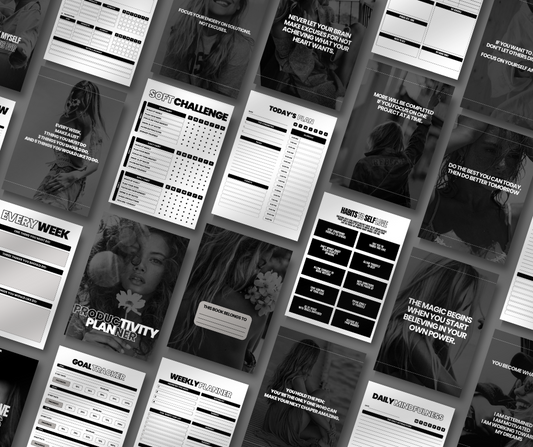
Generous previews — actual pages, modules, or slides shown in full, not just covers. For products like planners, this is especially important; browsing collections such as Plan & Prosper works best when buyers can see the interior layout before committing.
-
Clear, low-friction refund or satisfaction policies — even a simple, clearly stated policy measurably lowers cart abandonment for digital goods.
-
Format and compatibility clarity — especially relevant for niche buyers. If you're marketing to iPad or GoodNotes users, for example, spelling out compatibility up front (the way a guide like best digital planners for iPad and GoodNotes users does) prevents the single most common pre-purchase objection: "will this even work on my device?"
Get these three right, and you've removed the majority of hesitation before a buyer even reaches your product page.
2. Show Outcomes With Short Demo Videos
Why Screenshots and Mockups Underperform
A static screenshot tells a buyer what your product looks like. It doesn't tell them what it does — and for digital products, that gap is exactly where hesitation lives. Mockups are easy to scroll past because they read as generic marketing rather than proof. What stops the scroll is motion: watching a template get filled in, watching a messy process become an organized one, watching a course lesson actually play.
This shift matters more every year as buyers become more visually literate about Canva-based digital products that sell like crazy — templates and planners in particular are judged almost entirely on how they look and function in real use, not on cover art. A well-produced 15-second demo consistently outperforms a polished static graphic because it answers the buyer's real question: "will this actually work for me?"
Demoing a Template (Before/After Use Case)
The strongest template demos follow a simple structure: messy or manual version first, then the transformation once your template is applied. For a productivity planner, that might mean showing a cluttered, disorganized to-do list, then cutting to the same tasks laid out cleanly inside the planner's daily spread. For a resume or social media template, it's the blank Word doc versus the finished, branded result.
This before/after format works because it's inherently outcome-focused rather than feature-focused — it shows the transformation a buyer is actually paying for, not just the aesthetic of the file itself.
Demoing a Course (Module Preview, Transformation Story)
Courses need a slightly different demo approach since the "outcome" often isn't visible in 15 seconds. Two formats tend to perform best:
-
Module previews — a short clip pulled directly from inside the course, showing teaching style and production quality, which reduces the "will I actually learn something" objection.
-
Transformation stories — a short before/after narrative from a real student, similar in spirit to how an ebook like Coping With Grief or Mastering Creative Leadership might be marketed around the emotional or professional shift a reader experiences, not just the table of contents.
Both formats are cheap to produce repeatedly, which matters — this type of content needs to be published consistently, not as a one-off launch asset.
3. Build an Email List With a Value-First Welcome Sequence
Lead Magnet Ideas for Courses and Templates
Email consistently outperforms social media for digital product sales because it's a channel you own — no algorithm decides who sees it. The entry point is a lead magnet valuable enough that someone trades their email for it:
-
For templates: a mini or single-page version of your paid template (e.g., a one-week sample from a full planner)
-
For courses: a free lesson, checklist, or workbook excerpt that gives a genuine preview of your teaching style
-
For broader digital product lines: a themed freebie tied to a niche audience, similar to how PLR digital products are often used as entry points into a larger paid catalog
The goal isn't to give away your best content for free — it's to prove competence and format quality so the paid product feels like a natural next step.
The 5–6 Email Welcome Sequence Breakdown
Once someone opts in, a structured sequence over roughly 10 days converts far better than a single promotional blast:
-
Deliver the freebie immediately, with clear instructions
-
Share a quick win — a tip they can apply in minutes
-
Tell your story or a case study — why you built this, who it's helped
-
Introduce the paid product — connect it directly to the problem the freebie started solving
-
Handle objections — price, time, skill level — using testimonials
-
Add a time-limited bonus — a small nudge to convert now rather than "later"
This structure works whether you're selling a single Gemma bundle-style product or an entire seasonal collection like a Black Friday collection, because it mirrors how people actually make purchase decisions: awareness, trust, then action.
Turning Subscribers into Buyers Without Ads
The reason this sequence works without paid ads is that it front-loads value before it asks for anything. By the time the paid product is introduced in email 4, the subscriber has already experienced your quality firsthand through the freebie and the quick-win email — the "ask" feels earned rather than cold. This is especially powerful for creators just starting out who don't yet have ad budget, and it remains the highest-ROI channel even for established shops with steady traffic.
4. Use SEO to Capture High-Intent "Solution" Searches
Problem-Specific Keyword Targeting
Generic keywords like "digital planner" are crowded and expensive to rank for. Problem-specific, solution-oriented searches — "email templates for coaches," "best online course for freelance writers," "digital planner for ADHD" — carry much higher buying intent because the searcher already knows what they need; they're just looking for who delivers it. This is true across Google US, UK, and Australia alike, since the underlying search behavior (typing a problem, not a product category) doesn't vary much by region even if phrasing does.
Building content around these specific queries — including guides that map out 20 high-demand digital products to sell right now — positions your shop in front of buyers actively looking to purchase, not just browsing.
Comparison and "How To" Content Ideas
Two content formats consistently capture high-intent search traffic:
-
Comparison posts ("X vs. Y") that help buyers choose between formats, tools, or product types
-
"How to" guides that walk through a process step-by-step, such as a complete guide to selling digital products online, which naturally attracts both aspiring sellers and buyers researching the space
These formats tend to rank well because they match how people actually phrase searches, and they position your product as the faster, easier solution compared to figuring it out manually.
Internal Linking From Blog to Product Pages
None of this content works in isolation — every blog post should link naturally to relevant product or collection pages. A post about grief or personal growth content, for instance, links naturally to a resource like The Glow Lab Guide, while a broader roundup post links out to seasonal collections. This internal linking does double duty: it helps search engines understand your site structure, and it guides blog readers — who are often top-of-funnel — directly toward a purchase decision.

5. Publish Four Repeatable Content Types That Sell
Demo, Use Case, Free Value, Proof — Explained
Sustainable content marketing for digital products isn't about constantly reinventing what to post — it's about rotating through four content types that each do a specific job in the buyer's decision-making process:
-
Demo — the product in action (covered in Section 2)
-
Use case — one specific scenario shown start to finish, e.g., "how a freelancer uses this invoice template for every new client"
-
Free value — a genuinely useful, standalone tip that proves your expertise without requiring a purchase
-
Proof — real buyer results, testimonials, or before/after outcomes
This mix matters because different buyers are at different stages of trust. Someone seeing your content for the first time responds to free value; someone who's followed you for weeks responds to proof. If you're still deciding what to sell in the first place, a resource like 100 digital products you can sell online in 2026 is a useful starting point before building content around your chosen niche.
Content Calendar Example Applying All Four to a Template Product
For a single template product, a simple weekly rotation might look like:
-
Monday (Free Value): a quick tip related to the problem your template solves (e.g., "3 mistakes people make when tracking expenses manually")
-
Wednesday (Demo): a 15-second screen recording of the template being filled in
-
Friday (Use Case): a specific scenario — "here's how a small business owner uses this for monthly budgeting"
-
Sunday (Proof): a customer testimonial or result, paired with a soft call-to-action
Over a month, this rotation builds a well-rounded content library that touches every stage of buyer trust without requiring constant new ideas — and much of it can be planned in advance using tools and workflows that automate digital product delivery, freeing up time to focus on the content itself rather than fulfillment.
Applying the Same Framework to a Course Launch
The same four-part structure scales to a course launch, just with longer-form content:
-
Free value becomes a mini-lesson or live Q&A
-
Demo becomes a module preview
-
Use case becomes a specific student's journey through one part of the course
-
Proof becomes a results-focused testimonial or case study
This is especially effective for higher-ticket offers like an online masterclass, where buyers need more convincing before committing — the repeatable four-part structure gives you a steady content engine throughout a launch window rather than a single promotional push.
6. Optimize Product Pages for Clarity and Conversion
Must-Have Elements
A high-converting product page removes ambiguity at every point a buyer might hesitate. At minimum, it should include:
-
An outcome-focused headline (what the buyer achieves, not just what the file is)
-
Who it's for — and who it's not for (this actually increases conversion by pre-qualifying the right buyer)
-
Exact contents, file types, and software requirements — critical for template and planner buyers who need to know compatibility before purchasing
-
Visible, unambiguous pricing
If you're designing digital products from scratch, following established guidance on tips for designing high-converting digital products at the creation stage makes this page-level clarity much easier to achieve later.
FAQ and Guarantee Sections That Reduce Drop-Off
An FAQ section isn't just customer service — it's a conversion tool. Answering questions like "what software do I need?" or "can I edit this after purchase?" directly on the page prevents a buyer from leaving to search for the answer elsewhere (and potentially not coming back). Pairing this with a clearly stated guarantee or refund policy further lowers the perceived risk of an intangible purchase.
Course-Specific vs. Template-Specific Page Considerations
The two product types need slightly different page emphasis:
-
Templates should emphasize format compatibility, editability, and licensing terms up front — especially relevant if you're new to the space and still learning what a digital product actually is and how licensing works.
-
Courses should emphasize curriculum structure, time commitment, and instructor credibility, since the buyer is committing more time and often more money.
Getting this distinction right on the page itself does far more for conversion than any amount of external marketing pointing to it.
7. Leverage Platform-Specific Social Strategies
Instagram/TikTok/Shorts for Quick Template Demos
Short-form video is the natural home for template demos — the before/after format from Section 2 thrives here. Use link stickers to drive traffic directly to product pages, and follow up with DM sequences for anyone who engages, since short-form platforms reward quick, visual proof over long explanations. This is also where content built using AI tools like ChatGPT can be repurposed efficiently into multiple demo formats.
Pinterest for Evergreen Template Traffic
Pinterest behaves less like social media and more like visual search, which makes it especially strong for templates and planners — pins can drive traffic for months or years after posting, unlike the short lifespan of a typical social post. Pin directly to product pages with keyword-rich descriptions that mirror how buyers search.
LinkedIn for B2B Course Credibility
For courses aimed at professional or business audiences, LinkedIn builds credibility in a way other platforms can't — long-form posts and case studies establish authority before a sale is even attempted. This is particularly effective for creators positioning themselves within the growing space of digital products for content creators, where audience trust is the primary sales driver.
YouTube for In-Depth Course Walkthroughs
YouTube is where longer, more detailed content earns its keep — full walkthroughs, tutorials, and behind-the-scenes previews work well for higher-ticket courses because they let a prospective buyer sit with the content longer before deciding. A course like an Instagram Growth Masterclass benefits enormously from a YouTube presence, since buyers researching growth strategies are already primed to consume long-form educational video.
8. Raise Average Order Value With Bundles and Tiers
Two-Tier Pricing Structures for Templates
Since the acquisition effort to get a buyer to your product page is largely the same regardless of price, increasing average order value is often more efficient than chasing more traffic. A simple two-tier structure — a base template and a premium version with extra assets or a walkthrough video — gives buyers a choice rather than a binary yes/no decision, which consistently outperforms a single price point.
Bundling Courses with Templates/Workbooks
Bundling a course with complementary templates or workbooks increases perceived value without proportionally increasing production cost. Seasonal bundles work particularly well for this — a themed collection like New Year, New Me combines multiple related products into one higher-value purchase, giving buyers a complete solution rather than a single isolated file.
Checkout Cross-Sell Ideas
Simple checkout-stage cross-sells — "buyers of this also got…" or a discounted add-on — capture incremental revenue from a buyer who's already committed to purchasing. This works especially well when cross-selling within a related niche or format, turning a single-item sale into a multi-product order with minimal additional marketing effort.
9. Run Periodic Launches on Evergreen Products
"New Version" Launches for Templates
Even a template that sells consistently year-round benefits from being re-launched as if it's new. Adding a handful of new pages, refreshing the design, or releasing an updated file format gives you a legitimate reason to market an existing product with fresh urgency. This is especially effective for visually-driven products — a refreshed drop within something like The Planner Collection can generate a full new wave of interest from buyers who saw the original version and didn't convert the first time.
Seasonal or Cohort-Based Relaunches for Courses
Courses lend themselves naturally to seasonal relaunches — a "New Year" cohort, a back-to-school promotion, or a themed push tied to a specific time of year. This works particularly well for personal development content, where timing plays a psychological role in purchase decisions; an offer like the 30 Days to a Better You ebook or a Money Mindset Collection becomes far more compelling when it's positioned around a natural reset moment like January or the start of a new season.
Using Collaborations to Re-Energize Demand
Partnering with another creator — through a joint bundle, a cross-promotion, or a shared resource — introduces your product to an entirely new audience without additional ad spend. This is one of the fastest ways to re-energize an evergreen product that's plateaued, and it works well across formats, whether you're collaborating on a niche prompt pack like the Director's Cut Prompt Pack or a broader lifestyle offer like a Work-Life Balance ebook.
10. Track the Right Metrics and Iterate Weekly
Click-Through vs. On-Page Conversion
It's easy to conflate "my content isn't working" with "my product page isn't working" — but they're separate problems requiring separate fixes. Click-through rate tells you whether your content is compelling enough to get someone from a post or search result to your product page. On-page conversion rate tells you whether the page itself closes the sale. Tracking these separately shows you exactly where in the funnel to focus your energy.
Watching Refund Rate as a Signal (Especially for Courses)
Refund rate is one of the most underused diagnostic metrics in digital product sales. A high refund rate rarely means the product itself is bad — far more often, it signals a mismatch between what the marketing promised and what the page or product actually delivered. This is especially important for courses, where buyers commit more time before realizing whether the content matches expectations. If refunds spike, revisit your product page clarity (Section 6) before touching the product itself.
Weekly Review Checklist
A simple weekly review keeps this process sustainable:
-
Which content pieces drove the most click-throughs this week?
-
What's the current on-page conversion rate, and has it moved?
-
Which email sequence step has the highest drop-off?
-
What's the average order value, and did any bundle or cross-sell move it?
-
Is the refund rate stable, rising, or falling?
Reviewing these five questions weekly — rather than only at the end of a launch — lets you catch and fix small issues before they compound.
FAQ
How do you market digital products on social media?
Focus on short, outcome-driven demo content rather than static mockups — before/after clips, module previews, and real use cases consistently outperform polished but generic graphics. Platform choice matters too: short-form video (Instagram, TikTok, Shorts) works well for quick template demos, while Pinterest drives long-term evergreen traffic and YouTube supports deeper course content. Formats like downloadable social media templates for Instagram are a useful reference point for what high-converting social-native content actually looks like.
What's the best way to price a digital course vs. a template?
Templates typically perform well with a two-tier structure (a base version and a premium version with extras), since the buying decision is quick and low-commitment. Courses generally support higher price points but need more pre-purchase trust-building — curriculum clarity, instructor credibility, and social proof — to justify the cost. In both cases, price should reflect the specificity of the outcome, not just the size of the file.
Do digital products need an email list to sell well?
Not strictly, but products marketed without an email list typically rely entirely on algorithm-dependent traffic, which is inconsistent. A value-first welcome sequence converts significantly better than one-off social posts because it builds trust over several touchpoints instead of asking for a purchase decision immediately.
Are small, low-cost digital products worth selling alongside bigger ones like courses?
Yes — smaller items like clip art, icon packs, or single-page printables lower the barrier to a first purchase and often lead to repeat buyers of higher-ticket products later. As outlined in guides on clipart and digital downloads, small files can carry surprisingly strong margins because production cost stays low while volume scales.
What types of digital products sell best right now?
Planners, templates, prompt packs, and niche printables — including specialized categories like printable planners for teachers — continue to perform well because they solve specific, recurring problems. Broader guides on digital planners 101 and how to sell digital art online are useful starting points if you're deciding what to create next.
Conclusion
Marketing digital products successfully comes down to closing the trust gap that comes with selling something intangible. The 10 strategies above — from demo-driven content and email-first funnels to SEO-targeted blog posts, optimized product pages, platform-specific social strategy, bundling, relaunches, and weekly metric reviews — all work toward the same goal: making an invisible product feel proven before the buyer ever clicks "purchase."
You don't need to implement all 10 strategies at once. Start with the ones that address your biggest current gap — if you don't have an email list, start there; if your product pages are vague, fix those first. Small, consistent improvements across these areas compound quickly.
If you're ready to put these strategies into practice, browse The Reseller's Playbook for a deeper walkthrough of building and marketing a digital product shop from the ground up, or explore the full range of ready-to-sell templates, planners, and prompt packs to start building your own catalog today.
Sources referenced in this guide: Marketing XP, Media Strategy Lab, InterServer, ThriveCart, and Hostinger.
🎬 Want a visual walkthrough?
If you’d rather watch than read, here’s the full explainer video covering everything in this guide: