


Introduction
Digital planners have become one of the most in-demand digital products on the market today, and it's easy to see why. They combine the satisfaction of handwriting with the convenience of a device you already carry everywhere, and they've turned into a genuine business opportunity for designers, side-hustlers, and creative entrepreneurs alike. If you're completely new to this space, it's worth starting with a quick primer on what a digital product actually is before diving into planners specifically.
🎥 Prefer watching instead of reading?
Watch the full step-by-step explainer video below.
In this guide, we'll break down exactly what a digital planner is, why they sell so consistently well, and how to design one from the ground up — covering everything from dated versus undated formats to niche selection, layout structure, and visual consistency. By the end, you'll have a clear framework for building a digital planner that's both genuinely useful and ready to sell.
What Is a Digital Planner?
A digital planner is an interactive organizer built for tablets, computers, and phones, typically used inside note-taking apps like GoodNotes or Notability. Unlike a physical notebook, it lives entirely on-screen, and unlike a basic printable, it's designed to be navigated rather than just written on.
Digital planners are sold as instant-download files, most commonly PDFs, that include hyperlinked elements: clickable tabs, linked monthly and weekly sections, and buttons that jump the user straight to the page they need. This is what separates a true digital planner from a simple printable planner — the interactivity is the product's core value.
If you're curious how digital planners fit into the broader digital download market, browsing a dedicated planners resource is a good way to see how the category has evolved and where the demand is currently concentrated.
Why Digital Planners Sell So Well
Digital planners consistently perform well in the digital download space for a few key reasons:
-
Instant access. Buyers receive their file immediately after purchase — no shipping, no waiting, no production delay on your end.
-
Low marginal cost. Once the planner is designed, it can be sold and resold indefinitely at essentially no additional cost, which makes the margins far better than physical products.
-
Built-in buyer demand. Marketplaces like Etsy already have a large, active audience actively searching for planners and printables, so you're tapping into existing demand rather than creating it from scratch.
This same low-overhead, high-margin model is part of why so many creators are exploring digital products you can sell online more broadly — planners are simply one of the most approachable entry points. Some sellers also choose to start with PLR digital products as a faster way to get a planner shop off the ground before building fully original designs.
How to Design a Digital Planner
Dated vs. Undated — Why This Decision Shapes Every Page
Before you design a single page, decide whether your planner will be dated or undated, because this choice affects the structure of the entire product.
A dated planner is built around a specific calendar year, with fixed dates already assigned to each page. It feels more polished and structured, but it also has a shorter shelf life — once the year ends, so does its usefulness (unless you plan to release a new version annually).
An undated planner lets the user fill in their own dates, which means it can be sold and used at any point in the year. This makes it more evergreen and often easier to market long-term, since you're not racing against a calendar deadline.
Choosing a Niche — Why Niche Outperforms Generic
Generic "daily planner" listings are some of the most saturated on the market, so narrowing your focus gives you a real competitive advantage. Popular niches include fitness, study and academic planning, business management, meal planning, journaling, and shop or small-business management.
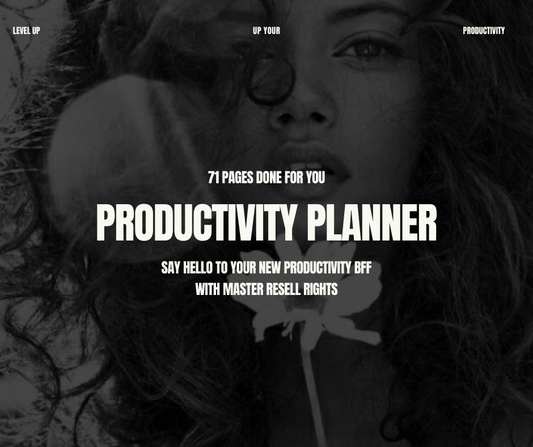
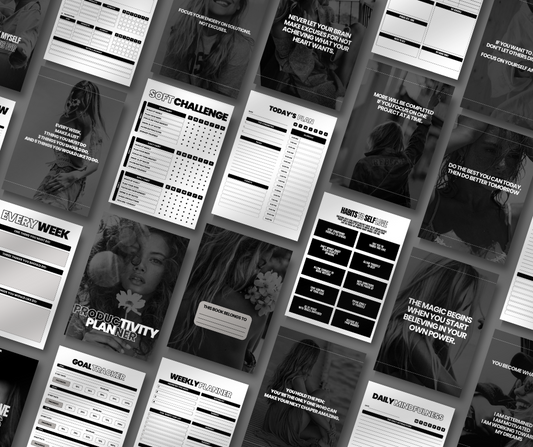
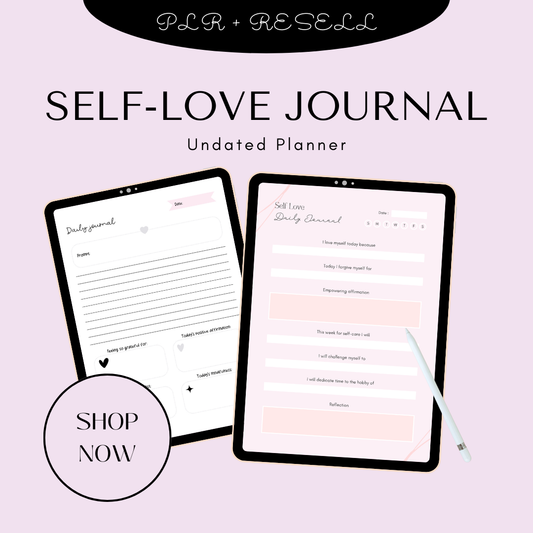
Niche planners are easier to market because they speak directly to a specific buyer's problem. A self-love journal, for example, appeals to a very different (and highly engaged) audience than a general productivity tool, while a dedicated productivity planner speaks to buyers looking specifically for focus and task-management systems. The more specific your positioning, the easier it becomes to write compelling copy, choose the right keywords, and target the right audience with marketing.
Core Layout Elements — What Every Planner Needs
Regardless of niche, most successful digital planners include the same core building blocks:
-
Daily, weekly, and monthly views for time management at every level
-
Goal-setting pages to give the planner long-term structure, not just day-to-day tracking
-
Notes sections for flexible, unstructured thinking
-
To-do lists for actionable task tracking
-
Habit trackers to add ongoing engagement value beyond a single day's use
Bundling several of these elements together — rather than offering a single-purpose tracker — tends to increase perceived value and justify a higher price point, similar to how curated collections like Plan & Prosper group multiple planning tools into one cohesive system.
Design Consistency — Fonts, Colors, and Orientation
Visual consistency is what makes a planner feel professional rather than thrown together. Stick to one or two font pairings and a defined color palette across every single page, so the product feels cohesive from cover to close.
It's also worth considering orientation early on. Some buyers plan in portrait mode, others prefer landscape, and offering a planner that works well in both — or clearly stating which orientation it's designed for — helps you appeal to a wider range of tablet users. Well-designed bundles, like the Luna Bundle, are a good reference point for how consistent styling and thoughtful layout choices can elevate a planner from functional to genuinely premium.

Tools to Build Your Planner
You don't need years of design experience to build a professional-looking digital planner — you just need the right tool for your skill level.
Beginner-friendly options include Canva, Microsoft PowerPoint, and Google Slides. These platforms are approachable because they use drag-and-drop editing and don't require any prior design training, which is exactly why so many Canva digital products sell as well as they do. If you want a deeper walkthrough of the platform specifically, it's worth reading up on how to create and sell Canva templates for profit, since much of that process overlaps directly with planner design.
More advanced tools include Adobe InDesign, Adobe Illustrator, and Procreate. These give you far more precision over typography, vector elements, and complex multi-page layouts, but they come with a steeper learning curve. If you're comfortable experimenting, some creators are now also using AI tools to speed up parts of the design and content process — this list of digital products you can create using ChatGPT or AI tools is a useful starting point.
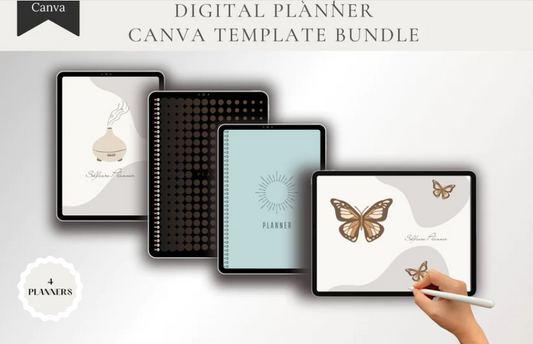
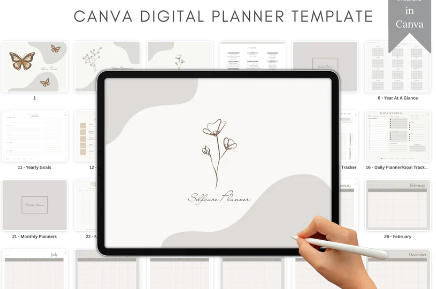
If building entirely from scratch feels overwhelming, you don't have to. Pre-made templates from Canva, Planify, Creative Market, or Etsy give you a fully structured starting point that you can restyle with your own branding, colors, and niche-specific content. For sellers who want a genuine head start, browsing done-for-you digital products can save weeks of design time while still leaving room to make the planner your own.
Packaging Your Planner for Sale
Once your design is finished, how you package the file matters just as much as how it looks.
Export as a PDF. This format preserves all of your clickable hyperlinks and tabs, and it's compatible across the widest range of devices and note-taking apps — which matters, since buyers using GoodNotes, Notability, and other apps all need the file to behave the same way. If you're designing specifically with tablet users in mind, it's worth reviewing what makes the best digital planners for iPad and GoodNotes users so your file meets those same expectations.
Test everything before you list it. Open the finished PDF on an actual tablet and click through every hyperlink, tab, and navigation button. A single broken link can lead to refund requests and negative reviews, so this step should never be skipped — even if it feels repetitive on a planner with hundreds of pages.
How to Sell Your Digital Planner
Listing on Etsy
Etsy remains the most beginner-friendly marketplace for digital planners, largely because it already has a massive, active audience searching for digital downloads. A strong listing needs a clear, keyword-rich title, a benefit-focused description, high-quality mockup images showing the planner in use, relevant tags, and pricing that's competitive with similar products in your niche. If you're just starting out, this roundup of 25 digital planners you can sell on Etsy is a genuinely useful reference for beginner-friendly formats and pricing benchmarks.
Driving Traffic
A great listing still needs visibility. Etsy SEO — optimizing your title, tags, and description around the exact terms buyers are searching — is your foundation. Beyond that, Pinterest and Instagram are two of the strongest free traffic channels for planner sellers, since both platforms are highly visual and heavily used by exactly the audience searching for planning tools. Paid ads, whether on Etsy itself or on social platforms, can accelerate results once you know which listings are already converting organically.
Targeting the Right Audience
Not every planner appeals to every buyer, and that's a good thing. Students respond well to academic and study planners, teachers to classroom and lesson-planning tools, small business owners to operations and content planners, and wellness-focused buyers to journals, trackers, and self-care planners. Products like The Planner Collection, the Self-Love Workbook, and the Start-Up Business Planner Workbook each speak directly to a distinct buyer persona, which is exactly why niche targeting outperforms generic, one-size-fits-all listings. Wellness-adjacent products, such as the Hydration Handbook and the Ageless Beauty Glow Ritual Tracker, show just how specific a successful niche planner can get.
If you want to explore how this same design and audience-targeting approach applies beyond planners, it's worth looking at how creators sell digital art online or browsing broader resources like Canva templates for small businesses, the AI Prompt Packs collection, or a full library of masterclasses for leveling up your digital product skills. Collections like Money Mindset and New Year, New Me are also good examples of how bundling a planner with a broader theme can boost perceived value, and starter resources like Build Your Digital Empire are worth a look if you want to expand beyond a single product.
For additional outside perspective, guides like how to sell digital planners on Etsy and how to make and sell digital planners offer helpful, complementary breakdowns of the process, and a more technical walkthrough on how to make a digital planner can help if you want a step-by-step build process to follow alongside video tutorials.
Quick-Start Summary
If you take nothing else from this guide, remember these five steps:
-
Define the planner — decide on format, dated vs. undated, and overall purpose.
-
Choose a niche — like the Self-Love Journal or the Productivity Planner, pick a focused audience rather than designing something generic.
-
Design in the right tool — Canva for beginners, InDesign or Procreate for advanced creators.
-
Export and test the PDF — confirm every hyperlink works before it ever reaches a customer.
-
List and market on Etsy — optimize your listing, then drive traffic through SEO, Pinterest, and Instagram.
Conclusion
Digital planners remain one of the most accessible digital products to design and sell, especially once you understand how planners revolutionize time management for the people who use them. You don't need advanced design skills or a huge upfront investment — just a clear niche, a clean layout, and a listing that shows buyers exactly what they're getting. Start with one well-executed planner, learn from real customer feedback, and use that momentum to expand your shop from there.
Frequently Asked Questions
1. Do I need an iPad or Apple Pencil to use a digital planner? No — while digital planners are most popular with iPad and Apple Pencil users through apps like GoodNotes and Notability, they also work on Android tablets, laptops, and other stylus-enabled devices that support PDF annotation. As a creator, you don't need one either; you can design entirely on a computer and test the file on any tablet you have access to.
2. What's the difference between a digital planner and a printable planner? A printable planner is designed to be printed on paper and used by hand, while a digital planner is built to be used entirely on-screen, with clickable tabs and hyperlinked navigation between sections. That interactivity is what allows a digital planner to command a higher price than a simple printable.
3. How much does it cost to start selling digital planners? Startup costs are low compared to most product-based businesses. Free or low-cost design tools like Canva, along with an Etsy shop (which charges small listing and transaction fees), mean you can launch your first planner for little more than your time and a modest software subscription if you upgrade to premium design tools.
4. Should I make my planner dated or undated? It depends on your goals. Dated planners feel more polished and structured but need to be updated or re-released each year, while undated planners can be sold and used at any time, giving them a longer shelf life. Many sellers start with an undated version and later expand into dated, year-specific editions.
5. Where is the best place to sell digital planners as a beginner? Etsy is generally the best starting point because it already has a large, active audience searching for planners and digital downloads, which reduces the amount of traffic you need to generate yourself. As your brand grows, many sellers expand to Gumroad or their own website to gain more control over pricing, branding, and customer data.
🎬 Want a visual walkthrough?
If you’d rather watch than read, here’s the full explainer video covering everything in this guide: