


If you search "wedding planning digital downloads" on Google in the US, Australia, or the UK, almost everything that comes back is built for the couple: budget spreadsheets, guest list trackers, save-the-date templates. What's missing is the other side of the market — the planners actually running weddings for a living, juggling multiple clients, vendors, and timelines at once.
🎥 Prefer watching instead of reading?
Watch the full step-by-step explainer video below.
That's the gap. Wedding planners need repeatable, brandable, reusable systems they can drop into every client relationship — not another one-off printable aimed at a bride planning a single event. Almost nobody is building digital products with that professional buyer in mind, which is exactly what makes this such an untapped niche worth exploring.
In this post, we'll break down why this gap exists, the two distinct layers of digital downloads planners can use (or sell), and how to think about building or buying products that actually fit a planner's business — not just a couple's wedding day.
Why This Niche Is Still Untapped
Most digital wedding products target couples, not professionals
Etsy shops, Pinterest boards, and blog round-ups overwhelmingly market to DIY brides. Budget planners, seating charts, and checklist bundles are built to solve a single couple's problem once. Very few sellers ask the follow-up question: what does a wedding planner managing fifteen clients a year actually need to run their business smoothly? That question is where the real opportunity sits, and it's covered in more depth in this mega guide to digital products you can sell, which highlights just how underdeveloped the professional-services side of digital products still is.
Planners need repeatable, brandable systems (not one-off templates)
A couple only needs a budget spreadsheet once. A planner needs an intake form, a vendor questionnaire, a run-of-show template, and a day-of coordination kit for every single client, ideally with their own logo and branding attached. That's a fundamentally different product need — closer to a done-for-you business system than a printable. This is precisely the kind of high-demand, underserved category explored in this breakdown of high-demand niches for PLR digital products that sell fast.
Tech adoption is rising but fragmented
Most planners aren't short on tools — they're short on cohesive ones. A typical workflow is stitched together from Google Docs, Canva templates, random downloaded PDFs, and spreadsheets that don't talk to each other. Adoption of digital planning tools is clearly rising across the US, UK, and Australian markets, but it's scattered rather than systemised, leaving plenty of room for a single, professional-grade toolkit to replace five disconnected habits.
That fragmentation is the gap: there's real room for done-for-you systems built specifically around how a wedding planner's business actually operates, not just around a single wedding day. Products designed with this "for the business owner, not just the bride" lens are exactly what's outlined in this guide to done-for-you digital products, and in this planner-specific breakdown of digital products made for planners.
The Two Layers of Digital Downloads for Wedding Planners
Understanding this niche starts with separating two very different buyer needs — because a product built for one rarely works well for the other.
Layer 1 — Planner business tools (high-value, underserved)
These are the assets a planner uses to run their business: client intake forms, proposal templates, contract clauses, vendor databases, pricing sheets, and day-of coordination kits. They're B2B in nature — sold planner-to-planner or built by a planner for their own repeated use — and because they solve an ongoing operational problem rather than a one-time task, they tend to carry higher perceived value and stronger repeat demand.
Layer 2 — Client-facing planning tools (more crowded, but differentiable)
These are the products planners hand to their couples as part of a service package — budget trackers, guest list managers, mood boards, wedding day timelines. This layer is far more saturated since it overlaps directly with the DIY-bride market. The differentiation comes from branding and system integration: a client-facing tool that's part of a planner's cohesive onboarding-to-day-of process reads as premium, while the same template sold standalone reads as a commodity printable.
Why this distinction matters
Whether you're building your own product line or sourcing ready-made templates, knowing which layer you're serving changes everything — the price point, the positioning, and the buyer you're marketing to. Planners looking to shortcut this process rather than build from scratch can explore existing masterclasses on building and selling digital products, or go deeper on brand positioning with resources like The Ultimate Branding Course with Master Resell Rights and the Anti-Algorithm Growth Guide for standing out in a market that's still figuring out how to serve this audience properly.
Digital Products Examples — What Actually Sells
When people search for digital products examples in the wedding space, most results are still built around the couple, not the business behind the wedding. But once you shift the lens to what a working wedding planner actually needs to run client after client, a much clearer, more valuable product category appears — one covered in more depth in this broader roundup of digital downloads worth building or buying. Below is a breakdown of what genuinely sells, organized by the stage of a planner's workflow it supports.
Client onboarding & discovery
This is the first touchpoint a planner has with a new couple, and it sets the tone for the entire working relationship. Inquiry forms, style and vision questionnaires, and budget discovery worksheets all fall here — and when they're fully branded and ready to send on day one, they save hours of manual setup per client. Done-for-you funnel kits like the Naomi Mega Funnel, a 14-page fully branded instant-download system, show how this entire onboarding sequence can be pre-built and simply customized with a planner's own branding.
Proposals, contracts & pricing
Once discovery is done, planners need a fast, professional way to present packages: service one-pagers, tiered pricing sheets, add-on menus, and contract clause cheat-sheets that protect both the planner and the client. Bundled template sets — similar in structure to the Gemma Bundle — are a good reference point for how proposal and pricing documents can be packaged as one cohesive, purchasable kit rather than scattered individual files.
Vendor & logistics management
Every wedding planner is, in part, a vendor manager — coordinating photographers, caterers, florists, and venues for every event. Vendor contact databases, comparison matrices, and onboarding packets streamline this work considerably. It's worth noting that vendor-specific niches are being productized in their own right, too — this guide to digital products for photographers, including presets and templates, is a useful parallel for understanding how a single vendor category within weddings can support an entire product line of its own.
Planning timelines & checklists
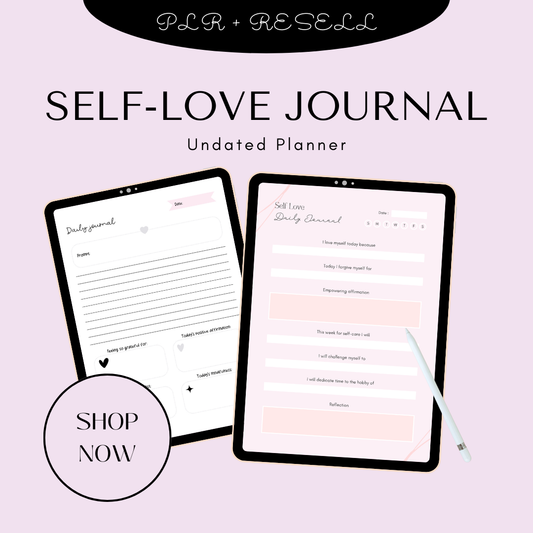
Master timelines (12/9/6/3/1-month countdowns), task checklists by wedding type, and run-of-show templates are the backbone of keeping any wedding on track. Interestingly, the structure behind these planning tools isn't unique to weddings — it mirrors the same goal-tracking and reflective structure found in products like a self-love journal built around structured, intentional planning, which is a helpful reference for how to design a checklist or timeline that feels guided rather than just transactional.

Day-of coordination & event ops
On the wedding day itself, planners rely on emergency contact sheets, vendor arrival/departure logs, floor plans, seating charts, and program fans. Many of these are small, simple files — but they carry outsized value because they solve a very specific, high-stakes problem in the moment. This is exactly the kind of opportunity explored in clipart and digital downloads: small files, big profits, which makes the case that compact, purpose-built graphic assets can be some of the most profitable digital products of all.
Client-facing planning tools (budget sheets, RSVP trackers, mood boards)
These are the products couples actually see and use throughout the process — budget spreadsheets, guest list and RSVP trackers, and mood boards. The differentiator for a planner is presentation: branded, polished, on-theme content templates elevate a simple tracker into something that feels like a premium client deliverable. The Glow Lab Co skincare content templates bundle is a strong example from outside the wedding space of how luxury-feeling, cohesive branded templates can transform an ordinary planning tool into something that reads as high-end.
Marketing & operations for planners
Beyond client work, planners need to market their business — welcome packets, onboarding email sequences, FAQ docs, and content calendars all fall under this umbrella. This is where a huge amount of underused opportunity sits, and it's worth studying what's working broadly across service-based niches, including this look at digital products for content creators in 2026 and this breakdown of downloadable social media templates for Instagram that actually convert — both of which apply directly to a planner trying to market their services consistently online.
How to Position These Products as an Untapped Opportunity
From DIY to pro-grade — reusable systems vs. one-time templates
The mental shift here is simple but important: a one-time template solves a single problem once, while a system is designed to be reused, client after client, indefinitely. Positioning digital products this way — as infrastructure for a business rather than a printable for an event — is the same logic explored in resources around building financial freedom through side hustles, where the highest-value digital products tend to be the ones built for repeatable, scalable use rather than a single transaction.
Productized services — bundling downloads into premium packages
Rather than selling a planning session or a single template in isolation, bundling multiple related digital products into one premium package increases both perceived value and average order value. The Content Girl Collection, a complete image and reels bundle, is a good model for this kind of bundling — taking several individually useful assets and packaging them as one comprehensive, higher-ticket offer.
Scalable income beyond 1:1 clients — tiered offers
A tiered approach lets planners serve two audiences with one product line: a lower-cost version for DIY couples, and a premium, fully branded version for other planners or high-touch clients. This kind of scalable thinking is closely tied to mindset as much as strategy, which is why resources like the Money Mindset Collection are relevant here — pricing confidently and thinking beyond hourly, one-to-one income are prerequisites for building a tiered digital product strategy that actually works.
Combining AI + templates for "smart," fast-to-customize products
The newest layer of opportunity in this niche is combining editable templates with AI-assisted content — timelines, email copy, and design elements that a planner can customize in minutes rather than hours. Canva-based products are leading this shift, and this guide to Canva digital products that sell like crazy — templates, planners, and more is a strong reference point for how fast, editable, AI-friendly templates are reshaping what "done-for-you" actually means in this space.
Pricing and Packaging Digital Downloads
Once you know what to build, the next question is how to price and package it — and this is where a lot of planners underprice themselves out of habit rather than strategy. Getting pricing right is covered in detail in this step-by-step guide on how to sell digital downloads on Etsy, which walks through positioning products for maximum perceived value from the very first listing.
Single templates/forms
The entry point for most buyers is a single, standalone template — an intake form, a pricing sheet, a seating chart. These typically sell in the $9–$29 range and act as a low-friction way for a couple or a fellow planner to try your work before committing to a bundle. The same logic applies across adjacent niches, as shown in this breakdown of printable planners for teachers and the digital download ideas that actually sell, where single, focused products consistently outperform overly broad ones at this price point.
Function-based bundles (e.g., Client Onboarding Bundle)
Grouping templates by function — everything a planner needs for onboarding, or everything needed for day-of coordination — creates a natural mid-tier offer, usually priced $39–$79. This is a more sustainable model than selling one-off files indefinitely, and it mirrors the strategy laid out in Digital Planners 101: how to design and sell them, where bundling by use-case (rather than by file type) is shown to increase both conversion and average order value.
Full planner toolkits
At the top tier sit comprehensive toolkits — the full onboarding-to-day-of system, fully branded and ready to implement, typically priced $99–$199 or more. These work best when built with a cohesive visual identity throughout, which is why well-designed Canva-based systems tend to perform strongly here; this guide to the best Canva templates for small businesses to sell is a useful reference for keeping a full toolkit visually consistent and premium-feeling rather than like a patchwork of mismatched files.
Licensing tiers — personal use vs. commercial/PLR
The final piece of the pricing puzzle is licensing. A personal-use license lets a planner use a toolkit for their own clients, while a commercial or PLR (private label rights) license allows them to resell or rebrand the product entirely — a model worth understanding if you're sourcing rather than building from scratch. Curated collections like Word That Sell and Plan & Prosper are good examples of how licensing tiers are typically structured across ready-made digital product lines, giving planners a clear framework for how to price personal-use versus resell rights.
The Data Behind the Opportunity
The "untapped niche" claim isn't just a hunch — it holds up against the available market data. Etsy trend analysis consistently shows strong, steady demand for wedding-related digital products, particularly functional tools like spreadsheets, timelines, and seating charts, as detailed in this breakdown of six profitable wedding digital products. Yet the overwhelming majority of that supply is still built for couples rather than for the planners managing multiple weddings at once — a gap explored further in this list of digital product ideas for wedding planners, realtors, travel agents, and beauty influencers, which highlights just how few sellers are targeting service-based professionals direct
Frequently Asked Questions
What are digital downloads for wedding planners?
Digital downloads for wedding planners are ready-to-use digital files — templates, checklists, contracts, timelines, and branded kits — that help planners run client work more efficiently. They fall into two categories: business tools planners use internally (like intake forms and vendor databases) and client-facing products they hand to couples as part of a service package (like budget spreadsheets and seating charts).
Are digital products a profitable niche for wedding planners?
Yes. While most existing wedding digital products target DIY couples, very few are built specifically for the planners running the business. That gap means less competition and stronger demand for professional-grade, brandable systems — everything from onboarding kits to full day-of coordination toolkits — making it a genuinely underserved and profitable niche to enter.
What's the difference between selling to couples versus selling to other planners?
Selling to couples (DIY buyers) typically means lower price points and higher volume, since these are usually one-time purchases tied to a single wedding. Selling to other planners is more of a B2B model — these buyers pay more for done-for-you, brandable systems they can reuse across every client, which generally means higher price points and stronger repeat value per product.
How much should I charge for wedding planning digital downloads?
Pricing typically depends on scope. Single templates or forms usually sell for $9–$29, function-based bundles (like a full client onboarding kit) sell for $39–$79, and comprehensive, fully branded planner toolkits can command $99–$199 or more. Licensing also affects price — a personal-use license is priced lower than a commercial or resell (PLR) license.
Where can I sell digital downloads for wedding planners?
Etsy remains one of the strongest marketplaces for wedding-related digital products because buyers are already searching there with clear intent. Alternatively, a dedicated shop through your own website or platform (like Shopify) gives you more control over branding, pricing, and building repeat relationships with planner clients rather than one-time couple buyers.
🎬 Want a visual walkthrough?
If you’d rather watch than read, here’s the full explainer video covering everything in this guide: