




Introduction
For decades, "planning" meant the same routine: open a calendar or a paper planner, write down what needs to happen, and hope the day cooperates. That model is quietly being replaced. AI-powered planners don't just store your schedule — they interpret it, adjust it, and keep working in the background while you focus on the actual tasks.
🎥 Prefer watching instead of reading?
Watch the full step-by-step explainer video below.
Whether you're motivated by a New Year, new me reset or simply tired of rebuilding the same to-do list every Sunday night, the appeal is the same: less manual upkeep, more follow-through. This shift is part of a much larger move toward digital downloads as the default way people manage their work, money, and daily routines.
In this guide, you'll discover:
-
What AI-powered planners actually are, and how they differ from a regular planning app
-
The core features that separate AI planners from everything that came before them
-
How AI planners are boosting productivity today, backed by real data
-
Why AI planners are shaping up to be a core layer of the future of productivity — for readers in the US, Australia, and everywhere in between
1. What Are AI-Powered Planners?
AI-powered planners are digital planning tools that use machine learning and natural language processing to schedule tasks, prioritize work, and adjust your day in real time based on inputs like your calendar, deadlines, and habits.
The key difference from a standard planner app comes down to one thing:
-
Traditional apps store exactly what you type
-
AI planners read what you type, figure out what you actually mean, and turn it into a workable plan
Here's a simple example. Instead of writing "prepare for Monday" and leaving it at that, an AI planner can break the task into concrete steps:
-
Checking outstanding email threads
-
Drafting a meeting agenda
-
Blocking thirty minutes of quiet prep time
Each step then gets slotted into your calendar wherever it fits best. It's a small example, but it captures the core promise of this category: AI planners aim to close the gap between "I should do this" and "this is already scheduled."
For anyone who has built a system using printable planners in the past, this will feel like a natural next step rather than a totally foreign concept — the underlying goal of clarity and structure hasn't changed, only the mechanism behind it.
2. Core Features That Make AI Planners Different
A handful of core capabilities separate AI planners from paper planners or basic task list apps. Here's what to look for.
Smart Task Prioritization
Most AI planners learn your work patterns and preferences over time, then rank tasks by:
-
Importance
-
Urgency
-
Energy level required
-
Deadline
Instead of leaving you with one long, flat list, you get a shorter list of what genuinely matters right now. It's the same logic behind a well-designed productivity planner guide: the goal isn't to capture everything, it's to surface the few things worth your attention today.
Intelligent Scheduling and Auto Time-Blocking
Modern AI planners can:
-
Automatically slot tasks into open calendar windows
-
Build focus blocks around your existing meetings
-
Rearrange your day the moment a new commitment appears
-
Coordinate shared focus sessions across a team, in some tools
No manual dragging and dropping required. For people who like pairing AI-driven scheduling with a more tactile, themed approach to weekly planning, a structured option like the Plan & Prosper collection works well as a complement rather than a replacement.
Natural Language Input and Task Clarification
You don't need a perfectly structured task list for an AI planner to understand you. A quick, messy brain dump in plain language gets converted into:
-
Clear, actionable tasks
-
Suggested subtasks
-
Realistic deadlines
This same instinct — turning a rough idea into something structured and usable — is exactly what's driving so many people to explore digital products to sell, since the underlying skill of clarifying a vague idea into a finished, organized format carries over directly.
Real-Time Adaptation and Coaching
The best AI planners behave less like a static scheduler and more like a planning coach. They:
-
Track how your day is actually unfolding
-
Notice when tasks run longer than expected
-
Adjust your remaining time blocks accordingly
No need to rebuild your whole afternoon by hand. This coaching instinct shows up elsewhere too: a guided resource like a money mindset collection works on a similar principle, nudging you toward better habits step by step rather than just handing you a static checklist.
Integrated Notes and Structured Capture
Many AI daily planners fold note-taking directly into task management, automatically sorting:
-
Meeting notes
-
Quick ideas
-
Personal reflections
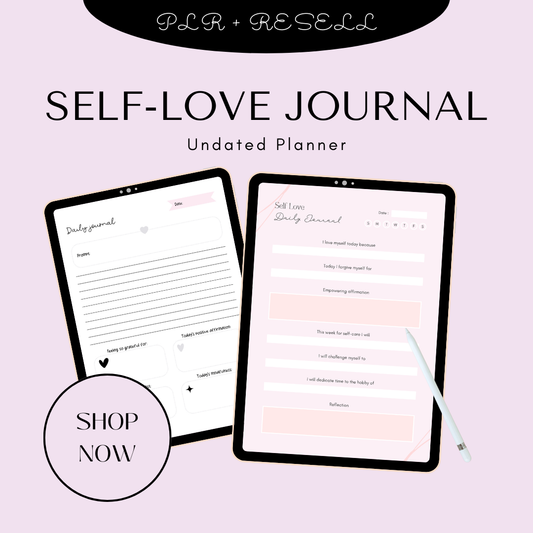
This keeps planning, doing, and documenting in one place instead of scattered across several apps. The same pull toward intentional, structured reflection is why tools like a self-love journal have stayed popular even in an AI-driven world — and why pairing a digital AI planner with something like The Planner Collection for deeper reflection is a combination a lot of people land on.
3. How AI Planners Boost Productivity Today
The benefits of AI planning aren't theoretical — they show up in how much time people get back, how overloaded their days feel, and how well work and personal life stay separated.
Less Time Spent Planning, More Time Doing
AI planners cut down the time people spend manually organizing calendars and rewriting to-do lists, because the system handles the auto-scheduling and reshuffling instead of you. Drop a task in, and the planner finds a slot for it — especially useful when a schedule is complex or changes by the hour.
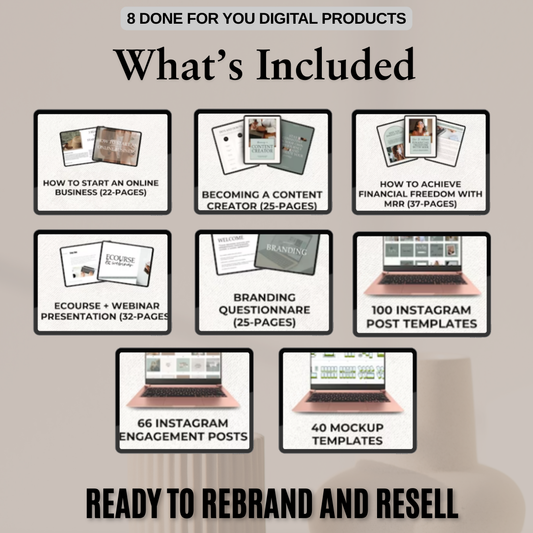
It's the same appeal behind done-for-you digital products more broadly: the value isn't just the content itself, it's getting back the hours you'd otherwise spend building something from scratch. Even something as simple as switching to a tool built for tablets, like the best digital planners for iPad and GoodNotes users, can shave meaningful time off a daily planning routine.
Reduced Decision Fatigue and Overwhelm
Instead of staring down a list of twenty competing priorities, AI planners highlight what to work on next based on:
-
Urgency
-
Your stated goals
-
What's realistically achievable today
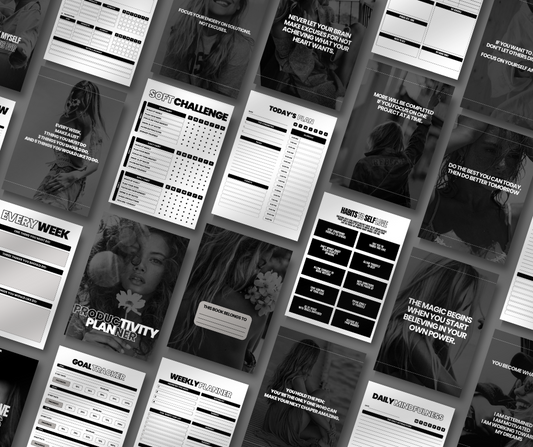
Reviews of these tools consistently point to less context-switching and a workload that actually looks doable, rather than an aspirational list nobody finishes. It's the same psychology behind a well-structured productivity planner: fewer open decisions on the page means less mental clutter in your head.
Better Work–Life Balance
Some AI planners are built to protect personal time by default, automatically preserving:
-
Evenings
-
Weekends
-
Built-in breaks
Rather than ignoring your non-negotiables, they schedule around them, which supports healthier boundaries and helps prevent the kind of over-scheduling that leads to burnout. Because these tools see your whole calendar and workload at once, they can flag when a day is overloaded and help spread tasks more evenly across the week. That same instinct toward balance and self-care shows up in resources like The Self-Love Journal, which exists for exactly the kind of space an AI planner clears.
Measurable Productivity Gains
The benefits aren't just anecdotal anymore. A St. Louis Federal Reserve study found that, during the hours people used generative AI, they were:
-
33% more productive
-
Saving roughly 5.4% of their total weekly working time — about 2.2 hours in a standard 40-hour week
Planning tools built on generative AI contribute to that number in several concrete ways: summarizing notes, drafting task lists, and preparing meeting agendas, all without requiring a person to start from a blank page. It's a measurable version of the same value proposition behind the broader wave of digital products built to save people time, and it's part of why resources like The Wealth Mindset Journal increasingly frame productivity and financial clarity as connected goals rather than separate ones.
From Individual Productivity to Team Coordination
AI task managers don't stop at personal use. For teams, they can:
-
Automate task assignment and follow-ups
-
Prioritize work across multiple people
-
Surface bottlenecks and predict scheduling conflicts before they become a real problem
That's particularly valuable for distributed or remote teams that rely heavily on digital tools to stay aligned, since AI can centralize planning instead of leaving it scattered across someone's inbox. The same logic that makes a single AI planner useful for one person — flexibility across different needs — is reflected in products built to cover multiple areas of life at once, like the Digital Planner Bundle, which bundles several planning styles together rather than forcing one rigid format on everyone.

4. Why AI-Powered Planners Represent the Future of Productivity
The features available today are really just a starting point. A few clear trends point to where AI planning is headed next.
Shift From Static Plans to Adaptive Systems
Traditional planners assume your day will go according to plan. AI planners assume it won't, and they're built around that assumption instead of fighting it. Rather than a fixed structure you have to manually update every time something shifts, you get a living system that adjusts itself in real time — much closer to how an actual day unfolds.
This same momentum toward dynamic, ever-expanding digital tools is visible across the wider market too; a resource like this mega guide to 100 digital products you can sell online in 2026 gives a sense of just how fast this space is growing beyond simple to-do lists.
Deep Integration Across Tools and Data
Future AI planners are expected to connect deeply with:
-
Calendars
-
Email
-
Project management software
-
Note-taking apps
...to create one unified view of everything you're responsible for. Many already pull data from multiple sources to adjust schedules and clarify tasks on the fly, and as those integrations mature, they'll be able to predict how long tasks take based on your own history or flag a project at risk before you'd notice yourself.
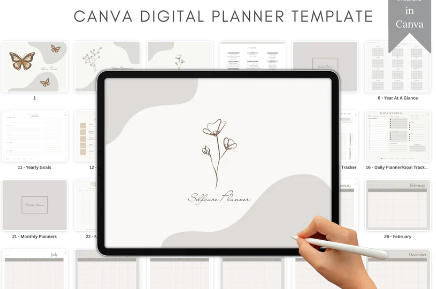
This pattern of tools talking to each other mirrors what's already happening across design and planning templates — see how widely Canva digital products like templates and planners now move between platforms, or the sheer range covered by 25 digital planners now sold on Etsy, each built to plug into whatever system someone is already using.
Personalized, Data-Driven Coaching
Because AI planners observe your habits over time, they can offer recommendations that are actually personal instead of generic productivity advice, including:
-
When you focus best
-
How often you reschedule
-
Which tasks you consistently put off
Some already use historical focus data to suggest adaptive session lengths or recommend when to tackle deep-focus work versus lighter admin tasks. In the future, this starts to look like a personal productivity coach that tracks your goals and energy and nudges you toward more sustainable work rhythms.
Goal-oriented resources like the Quantum Manifestation Planner work on a similar coaching principle, designed to keep you aligned with what you're actually trying to achieve rather than just what's on today's list.
Support for Different Roles and Lifestyles
AI-powered planners aren't built only for corporate knowledge workers. They're increasingly suited to a wide range of routines:
-
Parents & busy households — coordinating family schedules, school runs, and recurring errands, often paired with a dedicated meal planner for the parts an AI scheduler can't cook for you
-
Teachers — automating lesson planning, grading schedules, and prep for recurring events
-
Freelancers & solopreneurs — managing multiple client deadlines and content calendars without needing a separate system for each one
Because the underlying engine adapts to context, the same AI planner can support all of these roles without forcing anyone into a one-size-fits-all system.
5. Traditional Planning vs. AI Planning: A Side-by-Side Example
Sometimes the easiest way to understand the shift is to watch the same day play out twice — once the old way, and once with an AI planner doing the heavy lifting.
A Day Planned the Traditional Way
Picture a freelance creator blocking out their Monday by hand:
-
"Write blog post" goes into a 9 a.m. slot
-
"Design planner pages" goes in right after lunch
-
"Reply to emails" gets squeezed in wherever there's room left
Then an unexpected client call gets added at 11 a.m. Every block after it now has to be manually shifted, and the whole afternoon gets rebuilt from scratch. This is the experience most people associate with printable and digital planners used the traditional way — useful for structure, but entirely dependent on the person doing the rearranging.
The Same Day With an AI-Powered Planner
Now picture the same creator using an AI planner instead:
-
They dump all three tasks into the planner in plain language, no formatting required
-
The system breaks "design planner pages" into smaller steps and finds the best open windows for each one
-
When the 11 a.m. client call gets added, the AI planner automatically reshuffles the rest of the day around it
-
Personal time — like a school pickup or an evening workout — stays protected the entire time, because the planner already knows it's off-limits
Nothing about the plan needed to be torn down and rebuilt. It simply flexed.
Why This Comparison Matters
This is the most beginner-friendly way to understand the value of AI planning: it's not about fancier features, it's about removing the manual labor of replanning every time life doesn't cooperate.
If you're trying to decide which planning format fits you best before adding AI into the mix, this breakdown of the best planners for productivity in 2026, digital and printable options is a useful starting point — and if structure itself tends to stress you out, a guide to minimalist planners for people who hate overplanning pairs well with an AI system that's already doing the heavy lifting. For more general background, this overview of planners is a good companion read.
Conclusion
AI-powered planners already deliver real, measurable benefits: less time spent planning, fewer decisions to make before lunch, healthier boundaries between work and personal time, and — per the productivity data above — hours back in an average week. None of that is hypothetical at this point; it's already how a growing number of people in the US, Australia, and beyond are getting through their days.
What makes this category worth watching isn't just what it does today, though — it's the trajectory. Deeper integration across calendars and tools, more personalized coaching based on your own habits, and support for roles far beyond the traditional office worker all point the same direction: static planning is becoming the exception, not the default.
Over the next few years, an AI layer sitting on top of your calendar is likely to become standard infrastructure for getting things done, closer to how spell-check quietly became invisible inside every writing tool rather than a feature you have to think about.
If you haven't tried an AI-powered planner yet, this is a reasonable moment to start — even a free or basic version is usually enough to see whether the auto-scheduling and prioritization actually fit how you work. And if you're building a planning system around it rather than relying on one app alone, a few resources are worth bookmarking.
If you want to understand the digital products behind these tools:
If you want to pair your AI planner with structured templates:
For specific areas of life an AI planner alone won't cover:
Sources
This guide draws on research and reporting from the following publications:
FAQ: AI-Powered Planners and the Future of Productivity
1. What is an AI-powered planner?
An AI-powered planner is a digital tool that uses machine learning and natural language processing to schedule tasks, set priorities, and adjust your day automatically based on your calendar, deadlines, and habits. Unlike a standard planner app, it doesn't just store what you type — it interprets it and turns it into a workable schedule, updating itself as your day changes.
2. Are AI-powered planners better than traditional paper or app-based planners?
Neither is universally better — it depends on what you need. AI planners save time on manual scheduling and adapt automatically when plans change, which works well for busy or unpredictable schedules. Paper and basic app planners still appeal to people who want fewer screens, deeper focus, or the simple satisfaction of writing things down by hand. Many people land on a hybrid approach, using an AI planner for scheduling and a paper or digital journal for reflection.
3. Do I need to be tech-savvy to use an AI-powered planner?
No. Most AI planners are built around plain-language input, so you can type or speak a task the way you'd describe it to a person, rather than learning a specific format or syntax. The system handles the structuring, prioritizing, and scheduling in the background, which makes AI planners genuinely beginner-friendly compared to more rigid project management software.
4. Can AI planners be used for teams, or are they just for individuals?
Both. Many AI planners now support team features like automated task assignment, shared focus sessions, and conflict detection across multiple calendars. This makes them useful for distributed or remote teams that need visibility into each other's workloads without constant manual check-ins, in addition to their use as a personal productivity tool.
5. Are AI-powered planners actually worth it, or is this just a trend?
The data suggests it's more than hype. Research has linked generative AI use to measurable productivity gains, including a Federal Reserve study that found workers were 33% more productive during the hours they used it. Combined with the broader shift toward adaptive, integrated digital tools, AI planners look less like a short-term trend and more like a permanent layer in how people manage their time going forward.
🎬 Want a visual walkthrough?
If you’d rather watch than read, here’s the full explainer video covering everything in this guide: