



The way people buy has changed. They want instant access, niche-specific solutions, and zero friction between clicking "buy" and getting results. That's exactly why digital products are having a moment — and not just a small one.
Whether you're a creator in the US looking to launch your first product, or an Australian entrepreneur exploring what sells online right now, this guide covers everything you need to know. We'll walk through the most popular digital products trending in 2026, explain why buyers keep coming back to them, and help you figure out which category might be the right fit for you.
Let's get into it.
🎥 Prefer watching instead of reading?
Watch the full step-by-step explainer video below.
What Is a Digital Product?
A digital product is any item that can be delivered electronically — downloaded, streamed, or accessed online — without ever needing to be shipped. Think eBooks, templates, online courses, prompt packs, Notion systems, memberships, and more.
No inventory. No warehousing. No postage. Just a file (or a link) that delivers value the moment someone pays for it.
If you're completely new to this space, our complete beginner's guide to digital products is the best place to start. It breaks down exactly what digital products are, how they work, and why so many creators and business owners are building income around them.
The appeal in 2026 is straightforward: create once, sell many times. Whether it's 10 buyers or 10,000, your cost of delivery stays essentially the same. That's a business model that's very hard to beat.
The Most Popular Digital Products Right Now
From Etsy bestsellers to Gumroad top earners, here are the digital product types dominating the market in 2026 — and why each one continues to attract serious buyer demand.
1. Online Courses & Coaching
What it is: Online courses are structured, self-paced learning experiences covering virtually any skill — from graphic design and copywriting to fitness and financial planning. Coaching is the higher-touch version: personalized guidance, live sessions, and direct feedback.
Why it's trending: People pay to learn when the outcome matters to them. The strongest-performing courses in 2026 focus on skills that directly help buyers earn money, save time, or transform a major area of their life. Buyers aren't just looking for information — they're looking for a clear path to a result.
Niche-specific courses consistently outperform broad ones. "Instagram growth for hair salon owners" sells better than "social media marketing." "Budgeting for Australian freelancers" sells better than "personal finance." The more targeted, the more compelling.
Who buys it: Beginners learning a new skill, professionals upskilling, entrepreneurs wanting to grow their business, and anyone willing to invest money to save time.
Popular niches right now:
-
AI tools for non-technical professionals
-
Content creation and YouTube growth
-
E-commerce and Etsy selling
-
Certification prep (AWS, PMP, real estate licensing)
If you're thinking about turning your knowledge into a course or digital product, our step-by-step guide to making digital products in 2026 walks you through the full creation process.
2. Templates (Canva, Notion, Spreadsheets & Resumes)
What it is: Templates are pre-built, customizable frameworks buyers can use immediately. This includes Canva social media graphics, Notion workspace dashboards, Google Sheets trackers, resume kits, pitch deck layouts, email sequences, and more.
Why it's trending: Templates solve a universal pain point — starting from scratch is slow, and most people would rather customize something polished than build it from nothing. Canva templates in particular dominate Etsy and Creative Market because they're visual, instantly editable, and work across multiple use cases.
Notion templates are one of the fastest-moving subcategories right now. Business owners use them to replace scattered spreadsheets and manage projects, content, finances, and client work in one organized system.
Who buys it: Solopreneurs, students, job seekers, content creators, small business owners, virtual assistants, and marketers.
Popular formats right now:
-
Instagram post and story bundles
-
Business proposal and pitch deck templates
-
Content calendar Notion dashboards
-
Budget and expense tracker spreadsheets
-
ATS-optimized resume kits
For ready-to-sell template products with master resell rights, the DFY Social Media Content Launch Kit and the 100 Modern Ambitious Entrepreneur Posts & Stories pack are strong examples of what's selling right now.
3. Digital Planners & Journals
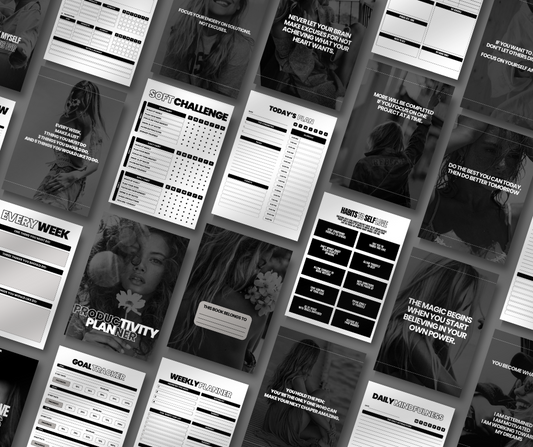
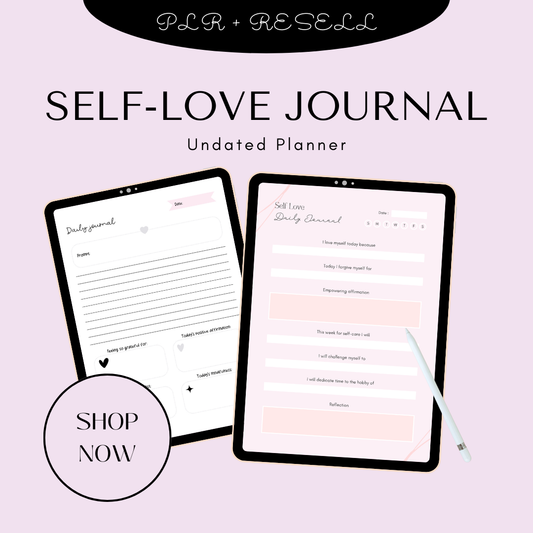
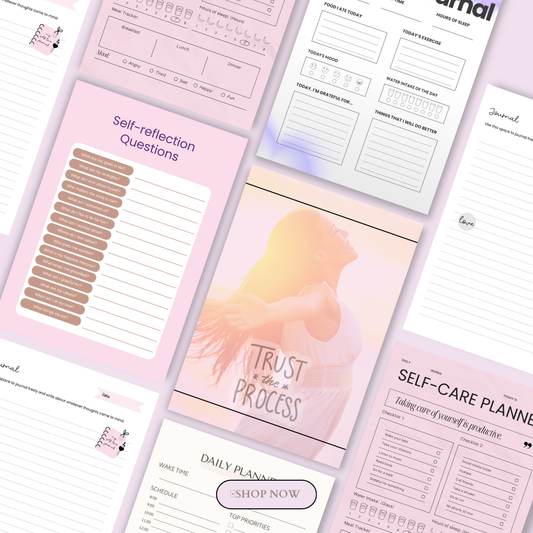
What it is: Digital planners are interactive PDF or GoodNotes/Notability files that replace paper planners. They include to-do lists, goal trackers, calendars, habit logs, and daily/weekly layouts. Journals follow a similar format with guided prompts and reflection pages.
Why it's trending: The global digital planner market is projected to exceed $7 billion by 2033, and 2026 is already tracking well ahead of earlier forecasts. The category thrives because it spans multiple high-demand niches — productivity, wellness, study, business planning — and buyers return for seasonal updates, new themes, and expanded versions.
They're also one of the most beginner-friendly digital products to create. A well-designed planner can be built in Canva with no coding or technical skills, priced competitively at $7–$27, and sold repeatedly with no updates required.
Who buys it: Students, working parents, wellness-focused buyers, entrepreneurs, and anyone who loves a paper planner but prefers a tablet.
Popular formats right now:
-
Weekly and daily planners for GoodNotes
-
Goal-setting and vision board journals
-
Mental health and CBT-style workbooks
-
Business and content planning systems
-
Niche-specific versions (fitness, study, motherhood)
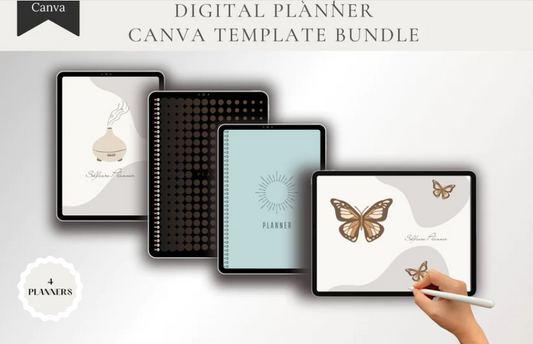
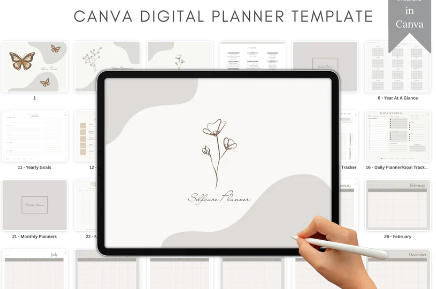
Our Digital Planner Bundle (4 Planners) is a great example of a ready-to-use product in this category — and one that's designed to be resold.
4. eBooks & Guides
What it is: eBooks are downloadable written products — guides, how-tos, workbooks, and long-form educational content. They range from simple 10-page PDFs to fully designed 100+ page resources.
Why it's trending: eBooks remain one of the easiest digital products to validate and launch. The key shift in 2026 is that niche-specific eBooks consistently outperform broad ones. "Investing in your 20s as an Australian expat" outperforms "investing for beginners." Specificity signals relevance to a buyer, and relevance drives conversions.
AI has also lowered the barrier to entry significantly — creators can draft, structure, and format an eBook faster than ever, which means more products entering the market. Standing out now requires a clearer niche and better design, not necessarily more words.
Who buys it: Self-starters, career changers, hobbyists, entrepreneurs, students, and anyone seeking focused expertise they can reference at their own pace.
Popular niches right now:
-
AI productivity and automation guides
-
Personal finance for specific demographics (freelancers, 20-somethings, self-employed)
-
Mental health and therapy workbooks
-
Business startup playbooks
-
Fitness and nutrition plans for specific goals
For an expansive view of what you can create and sell, browse our 100 digital products you can sell online in 2026 mega guide — it covers formats, niches, and pricing across the full landscape.
5. AI-Related Products (Prompt Packs, Custom GPTs & Automation Templates)
What it is: This category covers any digital product that helps buyers get better, faster results from AI tools they already use. This includes ChatGPT prompt libraries, Claude prompt packs, custom GPT configurations, Zapier automation templates, and AI workflow guides.
Why it's trending: This is the fastest-growing digital product category of 2026. Searches for AI-related content have roughly doubled year-over-year, and the core demand is clear: most people pay for AI tools but don't know how to use them effectively. Products that bridge that gap — turning technical capability into practical outcomes — are in extremely high demand.
Prompt packs are particularly strong because they're low-cost to create, easy to price ($9–$49), and solve an immediate problem. Buyers want faster output from tools they're already paying for. Give them a proven system and they'll buy it.
Who buys it: Content creators, marketers, coaches, Etsy sellers, solopreneurs, and any professional already using AI tools who wants better, more consistent results.
Popular formats right now:
-
Niche-specific ChatGPT prompt packs (for copywriters, coaches, real estate agents)
-
AI content creation systems for social media
-
Faceless content automation kits
-
Zapier and Make.com workflow templates
Our DFY 30 Faceless Reels with MRR is a great example of an AI-assisted digital product that's selling well right now — combining automation-ready content with resell rights.
6. Memberships & Communities
What it is: A membership is a subscription-based digital product where buyers pay monthly (or annually) for ongoing access to content, a community, resources, or expert guidance. This could be a private group, a regularly updated resource library, live Q&A calls, or a combination of all three.
Why it's trending: Memberships are attractive from both sides of the transaction. Creators get recurring, predictable income. Buyers get ongoing support, accountability, and a sense of community — things a one-time download can't provide.
The strongest memberships in 2026 are tight-niche communities built around a clear outcome, not just a topic. "Etsy sellers scaling past $10k/month" is more compelling than "online business support." Specificity drives sign-ups and reduces churn.
Who buys it: Entrepreneurs wanting accountability, hobbyists seeking community, professionals wanting ongoing learning, and anyone who prefers ongoing expert access over a single purchase.
Popular formats right now:
-
Niche content libraries with monthly additions
-
Coaching communities with live sessions
-
Reseller communities with updated product access
-
Skill-building memberships with weekly challenges
If you're exploring ongoing product access and resell rights, our full MRR products collection includes membership-friendly digital products you can launch or bundle.

7. Website Themes, Design Kits & Branding Assets
What it is: This category covers digital assets that help businesses and creators look professional online — including WordPress and Shopify themes, Webflow templates, logo kits, brand style guides, Canva branding packs, icon sets, font bundles, and Lightroom presets.
Why it's trending: Small businesses and creators need polished online presences, but most can't afford to hire a designer or developer from scratch. Ready-made design assets bridge that gap at a fraction of the cost. As more people launch online stores, personal brands, and service businesses — particularly in the US and Australia — demand for plug-and-play design solutions continues to climb.
Custom fonts are a particularly active niche right now, as are cohesive brand kits that give buyers everything they need in one download: logos, colors, fonts, social templates, and mockups.
Who buys it: Small business owners, content creators, bloggers, freelancers, e-commerce store owners, and anyone building or refreshing their online brand.
Popular formats right now:
-
Canva brand identity kits
-
Shopify and Webflow starter themes
-
Logo template bundles
-
Lightroom and Photoshop preset packs
-
Social media branding template suites
Want to see more digital product types, real examples, and ideas across every niche? Our complete digital products resource hub covers the full landscape — from beginner-friendly ideas to advanced product strategies.
Ready to start selling? Our ultimate guide to selling digital products online covers platforms, pricing, and everything in between.
Why Are These Digital Products Trending Right Now?
Trends don't happen by accident. The digital products dominating 2026 share three core characteristics — and understanding them helps explain not just what is selling, but why buyers keep choosing digital over physical.
1. Immediate Value: Convenience, Speed, and Transformation
The modern buyer has a short runway between problem and solution. They don't want to wait for shipping, sit through unnecessary content, or wade through generic advice. They want the answer, the template, the system — now.
Digital products are uniquely positioned to deliver that. A buyer struggling to grow their Instagram account can purchase a content template pack and have posts scheduled within the hour. Someone dealing with anxiety can download a CBT workbook and begin working through it the same afternoon. A freelancer wanting to streamline their client process can grab a Notion dashboard and have it set up before their next meeting.
That instant gratification loop — pay, download, get results — is a core reason digital products continue to gain market share over physical alternatives. According to Swell's digital product sales statistics, digital product revenue has grown steadily year-over-year, with buyers citing speed of access and specificity as the top purchasing drivers.
The products winning right now aren't just convenient. They're transformational — they help people earn more, save time, feel better, or show up more professionally. That's a level of value buyers are happy to pay for repeatedly.
2. Scalable and Recurring Income Models
For sellers, digital products solve a problem that physical goods never fully can: the ceiling on income.
With a physical product, growth requires more materials, more manufacturing, more fulfilment. With a digital product, a template you built on a Tuesday afternoon can sell 10,000 times without any additional effort. That scalability is why creators, entrepreneurs, and side hustlers across the US and Australia are shifting toward digital-first income models.
The rise of memberships and subscriptions adds another layer — recurring revenue. Instead of chasing new buyers every month, membership-based digital products build a reliable income floor. According to Kartivo's analysis of digital product marketplaces in 2026, membership and subscription-based digital products have seen some of the strongest growth in the category, particularly in coaching, communities, and content libraries.
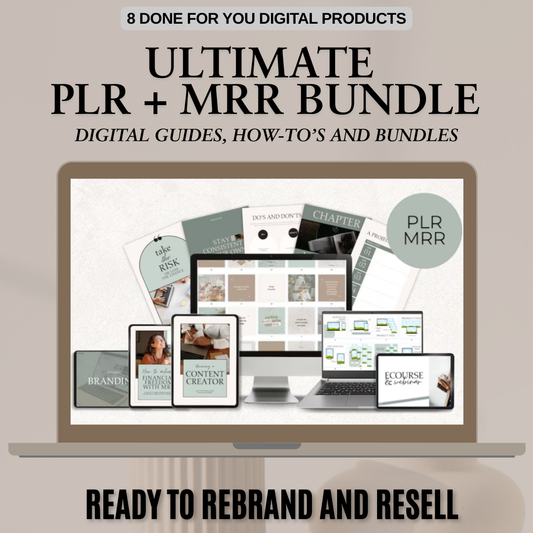
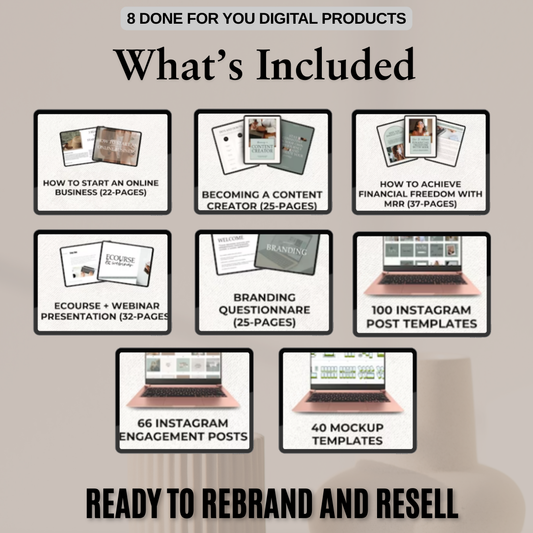
Master Resell Rights (MRR) products have also emerged as a compelling model — buyers purchase a digital product and the right to resell it, creating a layered income opportunity. If you're exploring this model, The Ultimate Branding Course with Master Resell Rights is a strong example of a high-value MRR product that combines education with a built-in business opportunity.
3. AI Has Lowered the Barrier to Create and Buy
Perhaps the biggest structural shift in the digital products market is the role AI now plays on both sides of the transaction.
On the creation side: AI tools have dramatically reduced the time and cost of producing digital products. eBooks that once took weeks to research and write can now be drafted in days. Template designs, prompt packs, illustrated guides, and content bundles that once required specialist skills are now accessible to creators at any experience level. Our guide to 40 digital products you can create using ChatGPT or AI tools is a practical starting point if you want to see what's possible.
On the buying side: AI has increased demand for products that help people use AI better. Prompt libraries, automation templates, faceless content kits, and AI workflow guides have become some of the fastest-moving digital product categories of 2026 — because buyers want done-for-you solutions that make their existing tools work harder. The PLR Faceless Illustration Prompt Guide is a strong example of a product built directly on this demand.
Together, these three drivers — instant value, scalable models, and AI acceleration — explain why the digital product market continues to expand, and why now is one of the best times to participate in it. For a deeper look at current market data, Accio's 2026 digital products market size and trend report provides a solid overview of where growth is concentrated.
How to Choose the Right Digital Product to Sell
With so many options, the most common mistake is trying to pick the "hottest" product rather than the right product. The best digital product for you is the one that sits at the intersection of three things: your skills, your audience, and your goals.
Here's a simple decision framework to help you narrow it down.
Step 1: Start With What You Already Know
You don't need to be an expert in digital marketing to sell digital products. You need to know something useful that a specific person would pay to access faster or more easily than figuring it out themselves.
Ask yourself:
-
What do people ask me for help with?
-
What have I learned through work, study, or personal experience that others find valuable?
-
What problems have I solved that others still struggle with?
If your answer points toward a skill, knowledge base, or system — there's likely a digital product in there. Our resource on done-for-you digital products is also worth exploring if you'd prefer to start with a ready-made product rather than creating from scratch.
Step 2: Match the Product Format to Your Strengths
|
Product Type |
Why It's Trending |
Best Audience |
Effort to Start |
|
Online Courses |
High-value, educational, scalable |
Beginners, professionals, skill learners |
Medium–High |
|
Templates |
Saves time and effort instantly |
Solopreneurs, students, job seekers |
Low–Medium |
|
Digital Planners & Journals |
Low-cost, evergreen, easy to personalise |
Students, mums, productivity buyers |
Low |
|
eBooks & Guides |
Fast to create, highly scalable |
Self-starters, hobbyists, entrepreneurs |
Low–Medium |
|
AI Prompt Packs |
Massive demand, fast results |
Creators, marketers, entrepreneurs |
Low |
|
Memberships & Communities |
Recurring income, ongoing value |
Niche communities, hobby groups |
Medium |
|
Website & Design Assets |
Businesses need polished branding |
Small businesses, creators, freelancers |
Medium |
If you're a visual person who enjoys design: templates, planners, and branding assets are your strongest starting point.
If you have knowledge to share: courses, eBooks, and coaching let you package that expertise directly.
If you want to start quickly with minimal creation effort: AI prompt packs, done-for-you bundles, and MRR products let you launch fast.
Step 3: Consider Your Target Audience and Platform
Where your buyers spend time matters. Etsy buyers browse for printables, planners, and visual templates. Gumroad buyers tend to look for courses, guides, and niche digital tools. Your own website gives you full margin control but requires traffic.
If you're just starting out, our guide to 15 digital products you can sell on Etsy without designing is a great way to start selling on an existing marketplace without needing advanced design skills.
For US and Australian sellers specifically, low-competition niches are especially worth targeting in 2026. Our low-competition digital products guide for USA and Australia markets identifies the categories where demand is high and competition is still manageable.
Step 4: Match the Product to a Specific Person's Problem
The most important step — and the one most beginners skip — is getting specific about who you're selling to.
"Productivity planner" is vague. "Daily planner for ADHD adults working from home" is compelling. "Instagram templates" is generic. "Instagram post templates for Australian small business owners" is targeted.
Niche-specific products consistently outperform broad ones on every platform. The more clearly your product speaks to one person's specific situation, the more likely that person is to buy.
Browse our full digital planners resource and the best digital planners for iPad and GoodNotes users guide to see how effective niche-specific positioning looks in practice.
Real Product Examples to Inspire You
Still not sure where to start? Here are some live products that demonstrate what's selling across different niches right now:
-
Wellness & mental health: Coping with Grief eBook & Workbook — a niche-specific workbook targeting a highly emotionally engaged buyer.
-
Productivity: The Productivity Planner — an evergreen, tablet-friendly planner built for the daily planning niche.
-
Social media content: Aesthetic Social Media Posts & Stories and 100 Pink Positive Affirmations Instagram Stories — visual content packs targeting creators who post consistently.
-
Marketing content: 30 Days of Digital Marketing Carousels Bundle — a done-for-you content system for marketers and business owners.
Each of these products solves one specific problem for one specific type of buyer. That's the pattern worth replicating.
For more inspiration across dozens of categories, the Pixelxs roundup of 10 trending digital products to sell in Summer 2026 is worth a read — and this YouTube walkthrough of digital product strategies for 2026 gives a practical video perspective on what's working right now.
Start Selling Digital Products Today
Digital products remain one of the most accessible, scalable, and low-risk ways to build online income in 2026 — whether you're in the US, Australia, or anywhere in between.
The model is simple: create something valuable once, and sell it as many times as the market allows. No stock to manage. No shipping to organise. No cap on how many people can buy. Just a product that solves a problem, delivered instantly to everyone who needs it.
The categories trending right now — courses, templates, planners, eBooks, AI tools, memberships, and design assets — all share that same foundation: they give buyers immediate access to something that makes their life easier, faster, or better.
You don't need a massive audience to start. You don't need to create everything from scratch. And you don't need to figure it all out before you launch.
Here's where to go next:
-
Browse our full MRR and done-for-you digital products collection — ready-made products you can sell as your own, starting today.
-
Explore our guide to done-for-you digital products if you want to launch without creating from scratch.
-
Read our complete guide to how to make digital products if you're ready to build your own.
The best time to start was last year. The second best time is right now.
Frequently Asked Questions About Digital Products
What are the best digital products to sell in 2026?
The best digital products to sell in 2026 are the ones that solve a specific problem for a specific type of buyer. That said, the categories generating the strongest sales right now are online courses, Canva and Notion templates, digital planners, AI prompt packs, eBooks, and memberships. Each of these can be sold repeatedly without inventory or shipping costs, making them highly scalable.
If you're just getting started, templates and digital planners are the most beginner-friendly — low effort to create, evergreen demand, and easy to list on marketplaces like Etsy. For a full breakdown of ideas across every niche, our 100 digital products you can sell online in 2026 mega guide is the most comprehensive starting point available.
Are digital products still profitable in 2026?
Yes — and in many ways, more so than ever. The digital product market continues to grow year-on-year, driven by the rise of remote work, self-education, AI-assisted creation, and the global shift toward instant digital delivery. Buyers in the US and Australia are increasingly comfortable purchasing downloadable products, from planners and templates to full online courses.
The key to profitability in 2026 is specificity. Generic products face more competition; niche-specific products — built for one type of buyer with one clear outcome — consistently outperform. If you want to see where the real growth opportunities are, our low-competition digital products guide for USA and Australia markets identifies the categories where demand is high and the market isn't yet saturated.
What digital products are easiest to create?
The easiest digital products to create are printables, templates, and digital planners — all of which can be built using free tools like Canva with no coding or design experience required. A simple budget tracker, a weekly planner, or a set of Instagram post templates can be created in an afternoon and listed for sale the same day.
AI tools have made creation even more accessible. eBooks, prompt packs, content bundles, and illustrated guides that once required specialist skills can now be produced much faster. Our guide to 40 digital products you can create using ChatGPT or AI tools is a practical resource for anyone who wants to launch quickly using AI assistance.
Alternatively, if you'd prefer to skip the creation process entirely, done-for-you digital products with resell rights let you start selling without building anything from scratch.
How do I start selling digital products with no experience?
Start with one product, one platform, and one specific audience. You don't need a website, a large following, or technical skills to make your first sale.
The most accessible path for beginners is to list a template, printable, or planner on Etsy — a marketplace with built-in traffic where buyers are already searching for digital downloads. Our guide to 15 digital products you can sell on Etsy without designing shows exactly how to do this without needing advanced design skills.
If you want a broader foundation, our step-by-step guide to making digital products in 2026 walks you through the full creation process, and our ultimate guide to selling digital products online covers platforms, pricing, and marketing from the ground up.
What are Master Resell Rights (MRR) digital products and are they worth it?
Master Resell Rights (MRR) products are digital products that come with a licence allowing you to resell them and keep 100% of the profit. When you purchase an MRR product, you're not just buying the product itself — you're buying the right to sell it to others as your own, often including the sales materials, mockups, and branding assets that come with it.
For beginners, MRR products are particularly appealing because they eliminate the creation step entirely. You can start selling a fully finished, professionally designed digital product from day one. They're also a strong model for building passive income, since a single MRR product can be sold unlimited times.
Our full MRR products collection includes a wide range of ready-to-sell digital products across multiple niches — from social media content kits and courses to planners and branding assets. If you're new to the model, our best PLR products to resell in 2026 guide explains the difference between PLR and MRR and how to choose the right products to start with.
🎬 Want a visual walkthrough?
If you’d rather watch than read, here’s the full explainer video covering everything in this guide: