


Introduction
Here's something that sounds completely backwards: one of the most reliable ways to make more sales online is to start by giving something away for free.
Not a discount. Not a trial. An actual, useful, no-strings-attached digital resource — and it works.
🎥 Prefer watching instead of reading?
Watch the full step-by-step explainer video below.
If you've been building a digital product business (or thinking about starting one), you've probably heard the phrase lead magnet thrown around. But there's a big difference between understanding the concept and knowing how to use it strategically. Most people who offer freebies never see a single sale come from them — not because the strategy doesn't work, but because they're missing the connective tissue between the free offer and the paid one.
This post is going to change that.
Whether you're selling planners, journals, templates, or digital downloads, or you're still figuring out what kind of digital product to create, this guide will show you exactly how free digital products work as lead magnets — and how to turn those downloads into real, recurring revenue.
By the end, you'll understand why freebies build trust faster than any ad, how to design a freebie that logically leads to your paid offer, and what to do after someone downloads it to move them toward a purchase without feeling pushy.
Let's get into it.
Section 1: What Are Free Digital Products?
A free digital product is any downloadable or accessible digital resource you offer at no cost — typically in exchange for an email address, though sometimes simply as a goodwill gesture to attract and grow an audience.
In marketing, these are commonly called lead magnets or freebies, and they sit at the very top of your sales funnel. Their job isn't to make money directly. Their job is to attract the right people, demonstrate your value, and open the door to a paid relationship.
Free digital products come in many formats. The most common include:
-
Checklists — quick-reference tools that help someone complete a task or process
-
Mini templates — a single-use version of a larger template pack
-
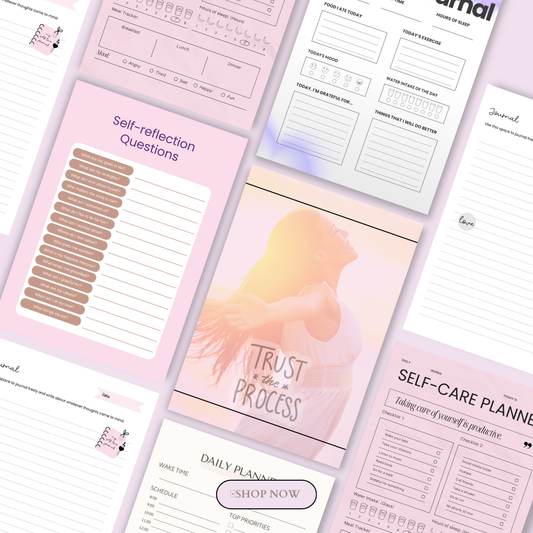
Sample planner pages — one or two pages from a full planner or journal
-
Free guides or e-books — a focused, actionable resource on a specific topic
-
Short trainings or mini-courses — a video lesson, audio file, or email-based course that teaches one skill or concept
-
Swipe files or resource lists — curated examples, scripts, or tools readers can use immediately
If you're curious about the full landscape of what's possible, this mega guide covers over 100 digital products you can create and sell in 2026 — many of which can be adapted into a free version for lead generation.
The most important thing to understand about free digital products is this: a freebie is not a random giveaway. It's a deliberate, strategic tool designed with a specific audience and a specific outcome in mind. Every great lead magnet is built backwards — starting from the paid product you want to sell, then working out what smaller, adjacent problem the freebie can solve to get someone ready to buy.
A free sample planner page, for example, isn't just a gift. It's a preview. It introduces someone to your design style, your layout, your quality — and it makes the decision to buy the full planner feel like an obvious, natural next step rather than a leap of faith.
That distinction — purposeful versus random — is what separates freebies that build businesses from freebies that just sit in someone's downloads folder, forgotten.
Section 2: Why Freebies Build Trust and Generate Leads
Trust is the currency of online sales. And the fastest way to build trust with a stranger on the internet is to give them something genuinely useful before you ever ask for anything in return.
This is the core mechanic behind why free digital products work so well as lead generators — and why smart digital product creators use them as the foundation of their entire marketing strategy.
They lower the barrier to entry
Asking someone who just discovered your brand to spend money immediately is a big ask. They don't know you yet. They don't know if your products are worth it, if your style suits them, or whether you'll deliver on your promises.
A freebie removes that friction entirely. Instead of buy this, the offer becomes try this — and that's a much easier yes. Once someone has experienced your work firsthand, the gap between free user and paying customer shrinks dramatically.
This is especially powerful in the digital product space, where buyers can't physically touch or test what they're purchasing before they commit. If you're selling digital products online, a free sample does the work that an in-store demo would do for a physical product.
The reciprocity principle
Decades of behavioural research — from Robert Cialdini's foundational work on influence to modern consumer psychology studies — consistently show the same thing: when someone gives us something of genuine value, we feel a natural pull to reciprocate.
This isn't manipulation. It's human nature. When a freebie delivers a real result — when someone uses your free weekly planner page and actually feels more organised, or downloads your free Canva template and finally posts something they're proud of — they don't just feel grateful. They feel aligned with you. They want to see more of what you do. They're open to hearing about what else you offer.
That emotional shift is the foundation of every successful freebie-to-paid conversion.
Freebies attract the right audience
One of the underrated benefits of lead magnets is audience self-selection. When someone downloads a free resource specifically about, say, Etsy shop setup or digital marketing content creation, they're not a random visitor. They're actively interested in that topic — which means they're already a warm prospect for a related paid product.
This is why the topic of your freebie matters as much as its quality. A well-targeted lead magnet doesn't just build your list — it builds the right list. People who are genuinely likely to buy.
For example, someone who downloads a free resource on getting started with PLR products is already thinking about PLR digital products as a business model — making them a natural fit for a more comprehensive paid PLR resource or done-for-you product.
Freebies are a portfolio piece
In the digital product world, buyers often purchase based on perceived quality before they ever see the full product. Your freebie is the first real sample of your work that a potential customer encounters — and it sets every expectation that follows.
A polished, well-designed free resource signals that your paid products are worth the investment. A rushed, poorly formatted one signals the opposite.
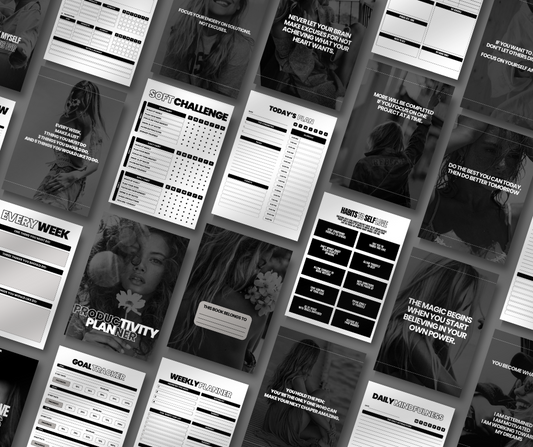
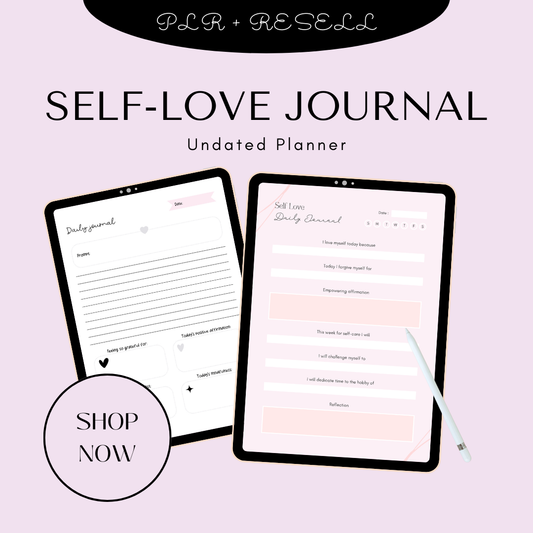
This is why treating your lead magnet like a premium product — even though it's free — pays off. Think about products like the Pink Self-Love Journal or the Productivity Planner: the quality, design, and specificity of the product itself is what builds the buyer's confidence. A free sample page from either of those communicates quality before a single dollar is spent.
And if you've ever wondered whether you can actually make money selling digital products, the answer almost always involves this step — using something free to prove your value, build your list, and earn the sale through demonstrated expertise rather than paid advertising alone.

Section 3: The Freebie-to-Paid Funnel (How It Actually Works)
Understanding why freebies work is one thing. Knowing how to build the path from a free download to a paid sale is where the real money is made.
The freebie-to-paid funnel isn't complicated, but it does need to be intentional. Every step has a job — and when those steps connect properly, the journey from stranger to paying customer feels natural rather than forced.
The Full Journey: From Discovery to Sale
Here's how a well-built freebie funnel flows:
Discovery → The potential customer finds you. Maybe through a Pinterest pin, a Google search, a blog post, or a social media reel. They land on your content and something resonates.
Opt-in → They see your free offer and sign up. This is where you capture their email address — your most direct, algorithm-free line of communication with a warm prospect.
Freebie delivery → They receive the free digital product immediately, usually via an automated welcome email. First impressions matter here: the speed of delivery and quality of presentation set the tone for everything that follows.
Nurture → Over the following days or weeks, you stay in touch. You send helpful emails, share relevant content, build familiarity, and gradually introduce your paid offer as the logical next step.
Paid offer → With trust established and value already demonstrated, the invitation to buy doesn't feel like a pitch. It feels like a recommendation from someone who genuinely understands what they need.
That five-step flow is the backbone of most successful digital product businesses — and it works whether you're selling planners, templates, journals, courses, or done-for-you content.
The "Quick Win" Principle
The most effective freebies are built around one specific, achievable outcome. Not a comprehensive solution — a quick win.
Here's why this matters: when someone downloads your freebie and actually gets a result from it — even a small one — they experience your value firsthand. That experience builds more trust than any testimonial, sales page, or ad could. And trust is what converts a download into a purchase.
The quick win also creates a natural opening for the paid offer. Once someone has solved problem A with your freebie, they're aware that problems B, C, and D still exist. Your paid product becomes the answer to everything the freebie introduced but didn't fully solve.
A Real-World Example
Let's make this concrete.
Say you offer a free Weekly Planner Page as your lead magnet. Someone downloads it, uses it for a week, and genuinely finds it helpful. They like your design. They trust your style. But after seven days, they've run out of pages — and they're also realising they need something more comprehensive: monthly overviews, habit trackers, space for goals.
That's your moment.
Your email sequence follows up with a few helpful tips on planning and productivity, shares how other customers use the full planner, and then introduces your complete Finance & Budget Planner or Health & Fitness Planner — a full bundle with everything they now know they need.
The paid offer doesn't feel like a sales pitch. It feels like the obvious next step. That's the power of a tightly connected funnel.
Why the Freebie and Paid Product Must Be Tightly Connected
This is the most important structural rule of the freebie funnel, and it's the one most often broken.
Your free resource and your paid product need to exist on the same logical continuum. The freebie is the preview; the paid product is the complete answer. If they're not directly related — if the freebie is about social media and the paid product is about budgeting, for example — the conversion path breaks down. The subscriber has no reason to buy.
Think of it this way: the freebie earns the right to make the offer. The paid product fulfils the promise the freebie began. When those two things are aligned, the pitch writes itself.
If you're still deciding what to sell alongside your freebie, exploring done-for-you digital products is a smart starting point — they're designed to work together as a cohesive product ecosystem.

Section 4: How to Convert Freebie Downloads Into Paying Customers
Getting someone to download your freebie is a win — but it's only the beginning. The conversion happens in what comes next. Here are the five most effective methods for turning free subscribers into paying customers.
1. Build an Email Nurture Sequence
The email sequence that follows a freebie download is the single most powerful conversion tool available to digital product creators. It's where the relationship is built, trust deepens, and the paid offer is introduced at exactly the right moment.
A strong nurture sequence typically runs three to seven emails over one to two weeks and follows this arc:
-
Email 1 (immediate): Deliver the freebie, welcome them warmly, and give a brief preview of what's coming
-
Email 2 (day 2–3): Add value — a tip, a story, or a resource that helps them get more from the freebie
-
Email 3 (day 4–5): Share a result, case study, or example that bridges the freebie and the paid offer
-
Email 4–5 (day 6–10): Introduce the paid product directly, address common objections, and include a clear call to action
The goal isn't to sell immediately — it's to continue the conversation in a way that makes the paid offer feel like the natural conclusion, not an interruption. If you're thinking about creating digital products with AI tools, you can use the same approach to build out email sequences and nurture content faster than ever.
2. Use a One-Time Offer or Upsell Immediately After Download
The moment someone opts in for your freebie is the moment their interest is at its peak. Don't let that momentum go to waste.
A one-time offer (OTO) — presented on the thank-you page immediately after sign-up — is one of the highest-converting sales moments in any digital product funnel. Because the subscriber has already said yes once, the threshold for a second yes is lower.
The OTO should be the paid product most directly related to the freebie — typically an expanded or more complete version of what they just signed up for. Keep the price accessible (often between $7 and $47 works well) and frame it around convenience or completeness rather than pressure. Something like the Complete Self-Care Journal pairs naturally as a paid upsell after a free self-care or wellness-themed lead magnet.
3. Segment Your Audience for Relevance
Not all subscribers are the same — and treating them as if they are is one of the fastest ways to lose their attention.
Audience segmentation means grouping your email subscribers based on which freebie they downloaded, so you can send follow-up content and offers that are directly relevant to their specific interest. A subscriber who grabbed a free planner page should receive emails about planners and printables. A subscriber who downloaded a social media content template should receive follow-up content about content creation and digital marketing — like your DFY Social Media Content Launch Kit.
Most email marketing platforms make basic segmentation straightforward, and even simple tagging by opt-in source dramatically improves open rates, click-through rates, and conversion.
4. Use Graduated Calls to Action
Trust is built incrementally — and your calls to action should reflect that.
In the early emails of your nurture sequence, lead with value and keep any CTAs low-commitment: read this post, try this tip, reply and let me know. As the sequence progresses and trust builds, your CTAs can get more direct: check out the full bundle, grab it here before the price changes, here's everything included.
This graduated approach respects where the subscriber is in their decision-making process. It never feels pushy because the ask always matches the level of relationship established. By the time you make a strong offer, the groundwork has already been laid.
5. Ask for Feedback
One of the most underused conversion tools in digital product marketing is a simple question: What did you think?
Sending a short feedback email two to three days after freebie delivery does two things. First, it signals that you care about the subscriber's experience — which itself builds trust. Second, it surfaces objections, gaps, and hesitations that you can address directly in follow-up emails and use to improve both the freebie and the paid offer.
Common feedback themes often reveal exactly why people aren't buying — and once you know the objection, you can handle it head-on.

Section 5: Freebie Examples by Digital Product Type
The freebie-to-paid model works across almost every digital product category. Here's how it plays out in the formats most commonly used by digital creators, bloggers, and Etsy sellers.
Planners & Printables
Freebie: One sample planner page — a daily schedule page, a weekly spread, or a single habit tracker
Paid offer: The complete planner bundle — full monthly and weekly layouts, habit trackers, goal-setting pages, bonus covers, and instructions
This is one of the most natural freebie-to-paid transitions in digital products. The subscriber gets a genuine taste of the product's design and usefulness, and the upgrade feels obvious once they've run out of pages or want a more complete system.
Products like the Health & Fitness Planner or Finance & Budget Planner work perfectly in this model. Offer one free page, deliver it beautifully, and let the quality do the selling. For more inspiration on what's possible in this niche, explore the best digital planners for iPad and GoodNotes users.
Templates
Freebie: One Canva template — a single Instagram post, a lead magnet cover, or a one-page media kit
Paid offer: A full template pack or bundle — 10, 20, or 30+ templates across multiple formats and use cases
Templates are among the best digital products to sell on Etsy without designing from scratch, and a single free template is a powerful proof-of-concept for a larger paid pack.
The conversion logic is simple: if someone loves the free template and gets results from it, they want more of the same. The paid bundle delivers that at scale. A content-focused example would be offering one free carousel template, then upselling the 30 Days of Digital Marketing Carousels Bundle as the complete solution.
Checklists
Freebie: A quick-start checklist — a launch checklist, a setup checklist, or a daily routine checklist
Paid offer: A comprehensive guide, course, or done-for-you resource that goes deep on every item the checklist introduces
Checklists work particularly well as freebies because they deliver instant, tangible value with minimal time investment from the reader. They also make the scope of the full topic visible — which naturally positions the paid product as the resource that covers everything in detail.
If you're exploring PLR and MRR digital products as a business model, a free checklist on getting started with resell rights is an excellent entry point before introducing a paid PLR product bundle.
Mini-Courses & Short Trainings
Freebie: One lesson, one module, or a short email-based course covering the first step of a larger skill or process
Paid offer: The full course, coaching programme, or done-for-you implementation resource
Mini-courses are especially effective for complex topics where buyers need education before they're ready to invest. The free module lets them experience your teaching style, assess the depth of your knowledge, and decide whether they trust you enough to go further.
This format also pairs naturally with done-for-you digital products — offer a free mini training on how to use or customise a DFY product, then sell the full product library as the paid upgrade. For content creators specifically, something like the 700 Melanin Lifestyle Stock Video Reels Bundle or the Director's Cut Prompt Pack could be preceded by a free mini training on how to use video content or AI prompts effectively — making the paid product feel like the natural toolkit to what they just learned.
Section 6: What Makes a Freebie Actually Sell (The "Don't Overgive" Rule)
There's a trap that well-intentioned digital product creators fall into constantly: they make their freebie too good.
That sounds like a strange problem to have. But when a free resource solves every problem, answers every question, and delivers the complete transformation — there's simply no reason left to buy the paid version. You've given away the whole product. The conversion path collapses before it begins.
This is what marketers call the overgive problem, and getting the balance right is what separates a lead magnet that builds a business from one that just gives things away.
Valuable Enough to Build Trust — Not So Complete It Replaces the Sale
The goal of your freebie is not to impress people with volume. It's to deliver one clear, specific result that makes someone think: this person knows what they're talking about, and I want more of this.
That's it. One result. One win. One reason to trust you.
Everything beyond that belongs in the paid offer.
A useful way to think about it: your freebie should answer the question what and why, while your paid product answers the how — in full, step-by-step, with everything included. The free resource opens the door; the paid one walks them through it.
This is why understanding the freemium model is so valuable for digital product creators — the principle of giving limited access to generate demand for the full version is the same mechanic that makes lead magnets work.
Narrow Problem + Free Solution = Natural Opening for the Paid Offer
The more specific your freebie, the more naturally it leads to the paid product.
A free resource titled "5 Ways to Improve Your Skin Routine" is broad. It could go anywhere. But a free Skincare Self-Assessment Checklist that helps someone identify their exact skin type and the three products they're missing? That's specific — and it opens a direct door to a paid skincare guide that goes deeper.
Products like the Skin Confidence: The Glow Getter's Guide to Radiant Skincare or The Glow Lab Guide are perfect examples of paid products that could be preceded by a single, highly specific free resource — one that solves a narrow problem and makes the full guide feel like the essential next step.
The narrower the freebie, the clearer the upgrade path.
Quality and Presentation Always Signal Value
Here's something many new digital product creators underestimate: the quality of your free resource is the first real proof of the quality of your paid products.
A freebie that looks polished, loads cleanly, is well-designed, and delivers on its promise tells the subscriber: the paid version is going to be even better. A freebie that looks rushed, is hard to read, or delivers generic advice tells them the opposite.
This applies to everything — the PDF design, the email that delivers it, the landing page copy, even the file name. Every touchpoint is a data point that the subscriber is using, consciously or not, to decide whether they trust you enough to spend money.
If you're using PLR digital products as the foundation for your freebie, take the time to customise and rebrand them for your business before publishing. A well-branded PLR freebie that looks and feels like your product builds far more trust than a generic, out-of-the-box version — and it makes the paid offer feel like a cohesive part of a real brand, not a random download.
The investment of time in presentation pays back every time someone decides to buy.
Section 7: Common Mistakes to Avoid
Even with a solid strategy, there are a handful of recurring mistakes that prevent freebie funnels from converting. Here's what to watch for — and how to avoid each one.
Making the Freebie Too Broad or Unrelated to Your Paid Offer
A freebie titled "50 Tips for a Better Life" might get downloads. But it won't sell anything — because it has no logical connection to a specific paid product. The subscriber has no idea what you sell, and you have no idea what they actually need.
Your freebie must have a clear, direct relationship to your paid offer. The topic, the audience, and the problem being solved should all point toward the same next step. If someone has to think hard about why your paid product relates to the free one they downloaded, you've already lost the conversion.
No Follow-Up System After Delivery
This is the most expensive mistake in digital product marketing. Someone downloads your freebie, receives the file, and then — silence. No nurture sequence. No follow-up emails. No invitation to buy.
Research from CXL on nurturing leads after a content offer consistently shows that most buyers don't convert on first contact — they need multiple touchpoints before they're ready to purchase. Without a follow-up system, you're leaving the majority of your potential revenue on the table.
Set up at least a three to five email welcome sequence before you drive any traffic to your opt-in page. MailerLite's lead magnet email automation examples are a great starting point for building your first sequence without overcomplicating it.
Overdelivering to the Point of Eliminating the Need to Buy
As covered in Section 6, giving away too much is a real and costly mistake. If your free resource is genuinely complete — if it covers every step, answers every question, and delivers the full transformation — there's no gap left for your paid product to fill.
Deliver a meaningful quick win. Then stop. Let the paid offer be the place where they get everything else.
Weak or Missing Calls to Action
A nurture sequence without a clear call to action is just a newsletter. Every email in your post-freebie sequence should have a purpose — and that purpose should be moving the subscriber one step closer to the paid offer.
In early emails, the CTA might be soft: read this post, try this tip, reply with your thoughts. In later emails, it should be direct: here's the full product, here's what's included, here's the link. Without that progression, subscribers stay warm but never convert.
For practical guidance on turning free users into buyers, Bluchic's breakdown of converting free users into customers is worth reading alongside Onvert's deep dive into the strategic power of freebies — both offer concrete tactics that complement the strategy laid out in this post.
Attracting the Wrong Audience with a Mismatched Freebie
A freebie optimised for virality — something so broad it appeals to everyone — often attracts an audience that has no interest in your paid products. More downloads does not mean more sales if the subscribers were never the right fit to begin with.
Always design your lead magnet for your ideal buyer, not for maximum reach. A smaller list of highly relevant subscribers will always outperform a large list of unqualified ones. This is especially important if your paid products sit in a specific niche — wellness, productivity, content creation, financial freedom through side hustles, or any other focused category.
Conclusion
A freebie is not generosity. It's strategy.
The most successful digital product creators understand that what they give away for free is just as deliberate as what they charge for. Every lead magnet is designed with a purpose — to attract the right person, deliver a meaningful result, build genuine trust, and open a clear path to the paid offer that completes what the freebie began.
If you take one thing from this guide, let it be this: start with one freebie, make it specific, and connect it directly to your best paid product.
You don't need a complex funnel on day one. You need a clear offer, a simple opt-in, a short email sequence, and a paid product that solves the next problem your subscriber has after the freebie delivers its win.
From there, you iterate. You test. You improve. And over time, that single freebie-to-paid pipeline becomes the foundation of a digital downloads business that generates revenue consistently — even when you're not actively working.
If you're looking for high-quality, ready-to-sell digital products to build your paid offer around, explore the full range at Resell Ready — from the Declutter Your Mind Ebook and The Aligned Empire to the Threads to Riches Growth Guide and The Ultimate Branding Course with Master Resell Rights — there's a product for every niche and every funnel.
And if you want to understand exactly why the Ultimate Branding Course belongs in your digital product stack, that's a good next read.
The path from freebie to paid sale is simpler than most people think. Build the bridge. Let the value lead. The sales follow.
Frequently Asked Questions
What is a free digital product?
A free digital product is a downloadable digital resource — such as a checklist, template, planner page, mini e-book, or short training — offered at no cost, usually in exchange for an email address. In marketing, these are commonly called lead magnets. Their purpose isn't to generate direct revenue; it's to attract the right audience, demonstrate value, and build the trust needed to convert a subscriber into a paying customer. You can explore a wide range of digital product formats and ideas to find what suits your niche best.
How do free digital products help sell paid products?
Free digital products work by lowering the barrier to entry — letting potential buyers experience your quality before spending money. They also trigger the psychological principle of reciprocity: when someone receives genuine value for free, they're more open to engaging with your paid offers. A well-designed lead magnet attracts the right audience, warms them up through a nurture sequence, and positions the paid product as the natural, complete solution to the problem the freebie introduced. Addzey's guide to profiting from free digital products covers additional angles on this well.
What is the best free digital product to use as a lead magnet?
The best lead magnet is one that solves a specific, narrow problem for your ideal buyer — and connects directly to your paid offer. For most digital product creators, high-converting formats include single-page planner samples, one Canva template from a larger pack, a short checklist, or a focused mini guide. Visually polished, fast-to-consume resources consistently outperform long, comprehensive ones. If you want ideas tailored to your niche, browsing premium stock image collections or luxury lifestyle bundles can spark ideas for visually driven lead magnets in the lifestyle and branding space.
How many emails should I send after someone downloads a freebie?
A standard post-freebie nurture sequence runs between three and seven emails, sent over one to two weeks. Email one delivers the freebie and sets the tone. Emails two and three add value and build familiarity. Emails four through seven introduce the paid offer, address common objections, and include a clear call to action. After the sequence ends, continue sending regular value-driven emails to your full list — buyers purchase when they're ready, and consistent presence keeps you top of mind.
Should I put my best content in my freebie?
Yes and no. Your freebie should be genuinely good — polished, useful, and reflective of the quality subscribers can expect from your paid products. But it should not be complete. The goal is to solve one specific problem well, not to deliver the entire transformation. Your best, most comprehensive content belongs in your paid offer. Think of the freebie as the chapter that makes someone want to buy the book — valuable on its own, but clearly part of something larger.
🎬 Want a visual walkthrough?
If you’d rather watch than read, here’s the full explainer video covering everything in this guide: