



1. Introduction
If you’ve started exploring digital products, you’ve probably seen the terms PLR, MRR, and RR everywhere — yet many beginners are still confused about what these licenses actually allow you to do.
🎥 Prefer watching instead of reading?
Watch the full step-by-step explainer video below.
Understanding the difference between these licensing types is critical because it directly impacts how you customize, brand, and resell digital products for profit. Whether you're selling planners, templates, courses, or other digital downloads, the license determines your creative control and long-term income potential.
Many new entrepreneurs begin after researching digital products to sell, but without understanding licensing, they risk choosing products that limit their resale or branding rights.
For beginners, starting with PLR digital products can dramatically reduce creation time while still allowing personalization and brand positioning. When combined with insights from high-demand niches for PLR digital products that sell fast, licensing becomes one of the most powerful shortcuts to building sustainable digital income.
In this guide, you’ll learn:
-
What PLR, MRR, and RR actually mean
-
How each license affects ownership, customization, and resale rights
-
Which option is best for beginners vs scaling entrepreneurs
-
How to choose the right licensing model based on your business goals
By the end, you’ll have complete clarity on which licensing strategy aligns with your income and branding vision.
2. What Are Digital Product Licensing Rights?
Digital product licensing rights define how a digital asset can be used, edited, distributed, and resold after purchase. Instead of owning the original copyright, you receive permission to use the product under specific conditions.
Licensing protects creators while giving entrepreneurs access to ready-made assets they can monetize — which is one of the main reasons the digital economy continues to scale so quickly.
These licenses apply across many types of assets, including:
-
eBooks and educational guides
-
Online courses and training programs
-
Templates and planners
-
Graphics and AI resources
-
Marketing bundles and growth systems
For example, entrepreneurs often resell educational resources like the Ultimate Branding Course with Master Resell Rights, which allows both learning and monetization.
Creative-focused sellers may choose products such as the Hyperrealism AI Guide for cinematic Midjourney images to tap into the rapidly growing AI content market.
You’ll also find licensing opportunities across curated collections like digital business masterclasses, where knowledge itself becomes a scalable product. Growth-focused creators frequently bundle education with implementation tools such as the Organic Growth Marketing Bundle to increase perceived value and conversions.
Understanding licensing rights helps you choose products strategically, bundle offers effectively, and position digital assets for both passive income and long-term brand authority.
3. Core Definitions Explained
Before choosing which license fits your business model, it’s important to clearly understand what each one allows you to do. These licensing types are commonly used across done-for-you digital products, giving entrepreneurs the ability to start selling without building from scratch.
If you're exploring different types of digital products, knowing how PLR, MRR, and RR work will help you choose assets that align with your branding goals, income strategy, and long-term scalability.
3.1 Private Label Rights (PLR)
Private Label Rights (PLR) offer the highest level of control and customization. With PLR, you can edit the content, rebrand it with your logo and voice, modify graphics, change titles, and even claim authorship in most cases.
This makes PLR ideal for entrepreneurs who want to build authority and turn simple content into premium offers. Many creators researching what are PLR digital products? A complete beginner’s guide start here because PLR allows them to treat the product as their own.
PLR works especially well if you're studying best PLR digital products to sell online for passive income and want to customize content to stand out in competitive U.S. markets.
PLR is best for:
-
Full customization and rebranding
-
Claiming ownership and authorship flexibility
-
Creating bundled, high-ticket, or signature offers
-
Long-term brand building
Because you can transform the product into something unique, PLR gives you the most business flexibility.
3.2 Master Resell Rights (MRR)
Master Resell Rights (MRR) allow you to sell the product exactly as it is while also passing the same resale rights to your buyers. This creates reseller distribution chains where multiple people can profit from the same product.
MRR is ideal for entrepreneurs who prioritize scalability and speed over customization. Instead of editing content, you focus on marketing and audience growth.
For example, educational resources like the Instagram Growth Masterclass or strategy-focused products such as the Anti-Algorithm Growth Guide — Build a Brand That Leads, Not Just Trends demonstrate how MRR can turn knowledge into a recurring income opportunity.
MRR is best for:
-
Selling products unchanged
-
Passing resell rights to buyers
-
Building reseller-based passive income streams
-
Quick market entry without product development
Many entrepreneurs exploring digital products to sell choose MRR when they want a scalable system without investing time into content editing.
3.3 Resell Rights (RR)
Resell Rights (RR) are the simplest licensing model. You can sell the product unchanged, but your buyers cannot resell it further.
There is no customization allowed and no resale rights passed along. This makes RR straightforward and beginner-friendly.
RR is often used by entrepreneurs testing markets after reading guides like best digital products to sell online in 2026 (high-profit ideas), because it allows simple one-time sales without complex licensing structures.
RR is best for:
-
Selling products unchanged to end users only
-
Beginner product testing
-
Low-complexity digital storefronts
-
Straightforward profit models
Some RR-style resources can also complement structured systems like the Plan & Prosper collection, where simplicity and clarity are key.
4. PLR vs MRR vs RR: Key Differences
While PLR, MRR, and RR may seem similar, the differences significantly impact your ability to brand, scale, and generate passive income.
Many beginners searching where to buy done-for-you digital products in 2026 overlook these licensing distinctions — and that can lead to choosing products that don’t align with their goals.
Here are the most important comparison points:
-
Modification rights — Can you edit and rebrand the product?
-
Ability to pass resale rights — Can your buyers also resell it?
-
Ownership claim — Can you present the product as your own?
-
Business flexibility — How much control do you have over positioning and scaling?
PLR vs MRR vs RR Comparison Table
|
Feature |
PLR |
MRR |
RR |
|
Modification Rights |
Full editing, rebranding, and customization allowed |
No editing; sell as-is |
No editing; sell as-is |
|
Resell Rights to Buyers |
Typically not passed |
Yes, buyers receive resale rights |
No resale rights passed |
|
Ownership Claim |
Yes, can claim authorship |
No ownership claim |
No ownership claim |
|
Business Flexibility |
High — ideal for branding and premium positioning |
Medium — strong for reseller income models |
Low — best for simple, one-time sales |
Understanding these differences helps you make strategic decisions when selecting digital assets, especially if you're building a scalable business in the growing U.S. digital marketplace.

5. Best Use Cases for Each License Type
Choosing between PLR, MRR, and RR depends on your business goals, experience level, and how much control you want over your digital products.
If you’re still exploring what digital products are, their benefits, and how to sell them in 2026, understanding when to use each license will help you avoid wasted effort and maximize income potential.
5.1 When PLR Is the Best Choice
Private Label Rights (PLR) are ideal for creators who want full ownership flexibility and long-term brand authority.
✔ Branding and Authority Building
PLR allows you to customize and rebrand content to position yourself as an expert. For example, you could personalize a mindset resource like the Money Mindset Collection with additional exercises, branding, and bonuses to create a unique premium offer.
✔ Product Customization and Niche Targeting
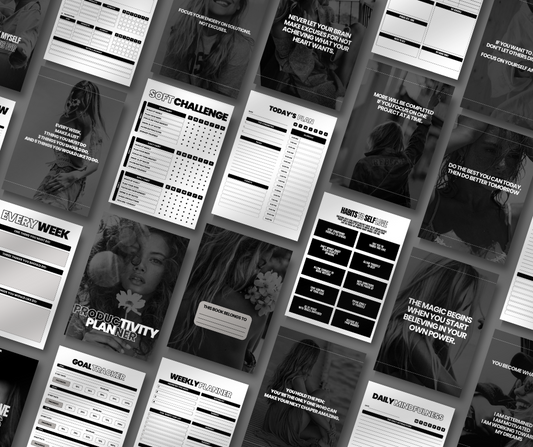
PLR works extremely well for niche positioning. Seasonal products such as the New Year New Me Collection or productivity tools like the Productivity Planner can be adapted for specific audiences including entrepreneurs, students, or busy professionals.
✔ Creating Premium Offers
Because PLR allows bundling, you can combine resources from the Planner Collection with coaching, templates, or bonus trainings to create high-value signature offers.
This premium positioning strategy is frequently recommended in guides covering 25 profitable digital products you can create and sell online.
5.2 When MRR Works Best
Master Resell Rights (MRR) are perfect for entrepreneurs who want scalable passive income without spending time customizing products.
✔ Passive Income Through Reseller Networks
MRR allows buyers to resell the same product, creating distribution chains. Self-improvement resources like the 30 Days to a Better You eBook can spread quickly across multiple audiences through reseller promotion.
✔ Scaling Reach Without Product Creation
Instead of building products from scratch using tutorials like how to create digital products that sell (beginner step-by-step guide), MRR lets you focus entirely on traffic, marketing, and conversions.
✔ Viral and Trend-Based Digital Products
MRR works particularly well for business and productivity tools such as the Your Start-Up Business Planner Workbook, where multiple sellers can promote the same product and expand reach rapidly.
5.3 When RR Is Ideal
Resell Rights (RR) are the simplest licensing model and are often the safest starting point for beginners.
✔ Beginner Testing Phase
RR allows you to test niche demand without committing to customization. For example, selling a specialized planner like the Quantum Manifestation Planner — Align, Attract & Achieve Your Goals can help validate interest before upgrading to PLR customization.
✔ Low-Risk Digital Product Selling
Because RR requires minimal setup, it’s ideal for beginners still learning the fundamentals explained in what digital products are and how to sell them successfully.
✔ Simple One-Time Sales Strategy
RR is best when your goal is straightforward selling without building reseller ecosystems or complex funnels.
6. Real-World Usage Examples
Understanding real implementation helps clarify how these licenses work in practice.
🔹 PLR Customization for Niche Audiences
An entrepreneur could customize the Money Mindset Collection, combine it with planners from the Planner Collection, and create a premium transformation bundle targeted at manifestation-focused audiences.
🔹 MRR Courses Expanding via Reseller Chains
Products like the 30 Days to a Better You eBook or the Your Start-Up Business Planner Workbook can scale quickly when multiple resellers promote them under MRR, generating wider reach and passive income.
🔹 RR for Beginner Product Testing
A beginner exploring manifestation or productivity niches may start by selling the Quantum Manifestation Planner under RR to validate demand before investing in customization.
7. Pros and Cons of PLR, MRR, and RR
Each licensing model offers different advantages depending on your business strategy. If you’re evaluating whether customization is worth the effort, resources like are PLR digital products worth it? Pros, cons, and real examples provide deeper insight.
✔ Advantages and Limitations
PLR Pros
-
Full customization and branding
-
Higher perceived value potential
-
Long-term authority building
PLR Cons
-
Requires editing effort
-
Needs differentiation to avoid competition
MRR Pros
-
Fast launch
-
Passive reseller income
-
No content creation required
MRR Cons
-
Limited product differentiation
-
Possible market saturation
RR Pros
-
Beginner-friendly
-
Low complexity
-
Easy to test niches
RR Cons
-
Limited scalability
-
No reseller expansion
✔ Profit Potential vs Control Trade-Offs
-
PLR: Maximum control and brand authority
-
MRR: High scalability with moderate control
-
RR: Simple execution with limited growth potential
Many entrepreneurs transition through all three stages as they gain experience.
✔ Competition and Saturation Considerations
Because multiple sellers can access the same assets, competition is inevitable. This is why customization, bundling, and niche targeting — often discussed in 25 profitable digital product idea guides — play a crucial role in standing out.
8. How to Choose the Right License for Your Digital Business
Selecting the correct license depends on several factors, including your experience level, branding goals, income strategy, and long-term scalability. Choosing wisely ensures your digital products generate maximum profit without legal or marketing issues.
Based on Experience Level
Beginners often start with simple done-for-you digital products or Resell Rights (RR) offerings to test markets without customization. More experienced entrepreneurs may prefer PLR digital products to create premium branded offers.
Based on Branding Goals
If your goal is to build authority or differentiate your business, PLR products allow full customization. For quick distribution or reseller income, Master Resell Rights (MRR) products like the Pinterest Planner or the Hydration Handbook – Glow Boosting Skincare Planner work well for scalable reach.
Based on Passive vs Active Income Strategy
MRR and RR licenses are excellent for generating passive income streams with minimal effort. PLR is more active but allows long-term control over your branding and product quality. Assets such as the Healthy Habits Blueprint eBook or the Creative Entrepreneurship eBook can be customized for active engagement or sold as-is for passive income.
Based on Long-Term Scalability
For sustainable growth, choose products that align with high-demand PLR niches that sell fast or most profitable digital products to sell in 2026. PLR provides flexibility to refresh content, while MRR enables wide distribution through reseller networks.
9. Common Mistakes to Avoid
Even experienced entrepreneurs make errors when working with digital product licenses. Avoid these pitfalls:
-
Confusing PLR ownership with copyright ownership — PLR lets you rebrand, but the original creator retains copyright. Learn more about differences in guides like the difference between PLR and MRR.
-
Selling without checking license terms — Always confirm whether your license allows reselling or redistribution, as detailed in this comparison guide.
-
Overlooking customization opportunities — Not customizing PLR can reduce perceived value and make products look generic.
-
Entering saturated MRR markets blindly — Use research from where to buy done-for-you digital products in 2026 to avoid highly competitive niches.
Avoiding these mistakes ensures higher profits and better brand positioning.
10. Additional Resources & Further Reading
Before investing in digital products, deepen your understanding using expert resources:
-
PLR vs MRR: Which is better for beginners — Helps beginners decide which license fits their goals.
-
Difference between PLR, MRR, and RR — Explains rights, resale permissions, and use cases.
-
High-demand PLR niches — Shows which products sell fastest in 2026.
-
Done-for-you digital product guides — Step-by-step instructions for selling pre-made content.
Exploring these resources ensures smarter decisions and stronger revenue potential.
11. Conclusion
Understanding the differences between PLR, MRR, and RR is crucial for building a profitable digital business.
-
PLR offers full control, customization, and branding opportunities.
-
MRR provides scalable reseller income without editing.
-
RR is ideal for beginners testing the market with minimal risk.
Choose your license based on experience level, branding goals, and long-term strategy. Combining the right license with thoughtful customization and research will help you generate passive income, strengthen your brand, and scale your digital business in the U.S. market.
12. Suggested Follow-Up Articles
To continue learning and optimizing your digital business, explore these recommended resources:
Following these articles will help you make informed product choices, avoid mistakes, and grow your digital business efficiently.
Frequently Asked Questions (FAQ)
1. What is the difference between PLR, MRR, and RR digital products?
PLR (Private Label Rights) allows full customization and branding. MRR (Master Resell Rights) lets you sell the product as-is and pass resale rights to buyers. RR (Resell Rights) permits selling the product unchanged, but your buyers cannot resell it. Understanding these differences is essential when selecting digital products for your business.
2. Can I claim ownership of PLR products?
Yes. With PLR, you can edit, rebrand, and present the product as your own, making it ideal for creating premium offers like the Money Mindset Collection. However, the original creator still retains copyright.
3. Which license is best for beginners?
Beginners often start with RR or MRR products to test markets and generate passive income without heavy customization. For more control and long-term branding, PLR is ideal. Resources like PLR vs MRR: Which is better for beginners can help you decide.
4. Where can I buy quality PLR, MRR, or RR products?
You can find pre-made done-for-you digital products and high-demand PLR assets through specialized marketplaces. Popular options include planners like the Pinterest Planner or eBooks such as the Creative Entrepreneurship eBook.
5. Are PLR products worth it for growing a digital business?
Absolutely. PLR products allow you to save time, customize content for niche audiences, and build premium offers quickly. To understand the pros and cons, check guides like Are PLR digital products worth it? Pros, cons, and real examples.
🎬 Want a visual walkthrough?
If you’d rather watch than read, here’s the full explainer video covering everything in this guide: