




You've created a digital product you're proud of. Now comes the decision that quietly shapes your profit: where to sell it. The same $20 template can earn you $19 on one platform and barely $10 on another, because fees across the top marketplaces range from around 5% to a full 50% of each sale.
🎥 Prefer watching instead of reading?
Watch the full step-by-step explainer video below.
This comparison of the best digital product marketplaces breaks down exactly what each platform charges, how much built-in traffic you get, and which types of sellers each one suits best. Whether you're still figuring out what digital products are and why they're so profitable or you're ready to scale an existing catalogue, you'll find a clear side-by-side view below.
If you haven't launched yet, our guide on how to create digital products for beginners without overwhelm walks you through the build stage first. Then come back here to choose the right home for your products.
Quick Comparison: Best Digital Product Marketplaces at a Glance
Here's how the leading platforms compare on fees, costs and strengths in 2026. Payment processing (usually around 2.9% + $0.30 per card sale in the US, with similar rates in the UK and Australia) applies on top of most platform fees unless stated otherwise.
|
Marketplace |
Best For |
Platform Fee / Commission |
Monthly Cost |
Key Strength |
|
Etsy |
Beginners, printables and planners |
6.5% transaction fee + $0.20 listing fee + processing |
$0 |
Built-in traffic and buyer trust |
|
Gumroad |
Indie creators, simple digital goods |
10% + $0.50 per direct sale; 30% on Discover sales |
$0 |
Fast setup, handles sales tax |
|
Creative Market |
Fonts, graphics, design templates |
Large commission, often up to half of each sale |
$0 |
High-intent design buyers |
|
Envato |
Themes, plugins, code, video assets |
Flat 50% author fee |
$0 |
Huge global dev and design audience |
|
Shopify |
Brands wanting full control and scale |
No extra transaction fee with Shopify Payments |
From $39 |
Full branding, apps and ownership |
|
Podia / Teachable / Kajabi |
Courses and memberships |
0% on most paid plans |
From $39 to $179+ |
All-in-one course tools |
|
Payhip / Lemon Squeezy / Stan Store |
Social-first creators |
0–5% (plus $0.50 on Lemon Squeezy) |
0–99 |
Low fees, simple checkout |
Quick rule of thumb:
-
Need built-in buyers? Start with Etsy, Creative Market or Envato.
-
Want control and branding? Choose Shopify, Gumroad, Payhip or Podia.
-
Selling courses or memberships? Look at Podia, Teachable or Kajabi.
-
Want the lowest fees long-term? Go self-hosted with Shopify, or use a low-fee checkout like Payhip or Stan Store.
Marketplace vs Your Own Store: Understanding the Trade-Off
Before diving into any review of top digital product selling platforms, it helps to understand the one trade-off that sits behind every option: traffic versus control.
Marketplaces such as Etsy, Creative Market and Envato come with shoppers already searching for products like yours. You don't need an audience on day one. The price of that convenience is a bigger cut of every sale, less control over your branding, and the constant risk of rule changes or account reviews.
Storefront platforms such as Shopify, Payhip and Stan Store flip that equation. You keep more of each sale, own your customer list and design your brand exactly how you want. The catch is that you bring the buyers yourself, through social media, email, SEO or ads.
Many successful sellers use both: a marketplace to test demand and get early sales, and their own store to build a long-term brand. This works especially well with PLR digital products, since you can rebrand one product and list it in several places at once.
Review of the Top Digital Product Selling Platforms
Etsy: Best for Beginners and Creative Downloads
Etsy began as a handmade marketplace, but it's now one of the biggest destinations for digital downloads like planners, wall art, SVGs and Canva templates.
Fees: Every listing costs $0.20 and renews every four months or when it sells. Etsy then takes a 6.5% transaction fee on each sale, plus payment processing of 3% + $0.25 in the US (UK sellers pay a slightly higher rate). If a sale comes through Etsy's Offsite Ads, an extra 12–15% fee applies. On typical digital price points, most sellers lose roughly 10–14% per sale before ads.
Pros: Millions of shoppers already search for terms like "digital planner" and "Canva template," checkout is trusted, and you don't need a website.
Cons: Fixed fees bite hard on low-priced items, branding is limited, and policy changes can affect your shop overnight.
Best for: New sellers testing demand for printables, wedding stationery and digital planners.
Gumroad: Best for Indie Creators and Simple Digital Goods
Gumroad is a creator-friendly platform for selling ebooks, templates, software and memberships with almost no setup.
Fees: There's no monthly fee. Gumroad charges 10% + $0.50 on sales through your own links, with card processing on top, and a flat 30% when a new buyer finds you through its Discover marketplace. Gumroad also acts as the merchant of record, so it handles sales tax for you, which is a real advantage for sellers reaching the USA, UK and Australia at once.
Pros: You can launch in minutes, collect buyer emails, and use pay-what-you-want pricing, subscriptions and affiliates.
Cons: The fixed $0.50 hurts cheap products, customisation is limited, and new accounts now need $100 in sales before their first payout.
Best for: Solopreneurs selling ebooks, Notion templates, prompt packs and social content kits like The Glow Lab Co skincare content templates bundle. Need product ideas? Browse our list of 100 digital products you can sell online in 2026.
Creative Market: Best for Design Assets
Creative Market is a curated marketplace for fonts, mockups, brushes, graphics and design templates.
Fees: No monthly cost, but the commission is steep. Depending on how the sale happens, the platform can take up to around half of each sale, so check the current rate in your seller dashboard before pricing.
Pros: Buyers arrive with high intent, the brand is trusted in the design community, and you don't need your own traffic at first.
Cons: You must apply with a strong portfolio, commissions are high, and you have little control over promotions. Original work is essential, so standard PLR content won't pass review.
Best for: Designers selling fonts, logo kits, UI kits and Canva or Photoshop templates. Polished presentation matters here, so study these tips for designing high-converting digital products before you apply.

Envato: Best for Premium Templates and Code
Envato runs a network of marketplaces including ThemeForest, CodeCanyon, VideoHive and GraphicRiver.
Fees: Since 1 July 2026, every author pays a flat 50% fee on the item price. The old exclusive tiers, which let top sellers keep up to 87.5%, are gone. The upside is that you're now free to sell the same products elsewhere.
Pros: A massive global audience, strong search visibility, and steady passive income for evergreen assets.
Cons: You keep only half of each sale, competition is fierce, and quality reviews are strict.
Best for: Developers and designers selling WordPress themes, plugins, HTML templates, After Effects templates and stock video. With exclusivity removed, many Envato sellers now pair it with their own store.
Shopify: Best for Full Control and Scaling
Shopify is a full ecommerce platform. Add a digital downloads app such as SendOwl or Sky Pilot and it becomes a powerful store for digital products. It's also the platform Resell Ready runs on.
Fees: The Basic plan costs $39 a month (less if billed annually). With Shopify Payments, card processing starts around 2.9% + $0.30 in the US, and Shopify adds no extra transaction fee. Digital delivery apps range from free to around $29 a month.
Pros: Your own domain, full design control, your own email list, and apps for upsells, bundles, subscriptions and affiliates. At higher volumes, your effective fees drop well below Etsy or Gumroad.
Cons: There's no built-in marketplace, so you drive all your own traffic. You also pay a monthly cost before you make a sale, and setup takes more work.
Best for: Brands and serious creators aiming to scale beyond 1,000–2,000 a month. A steady product pipeline, like our new monthly drops, keeps a Shopify store fresh and gives returning customers a reason to come back.
Podia, Teachable and Kajabi: Best for Courses and Memberships
These all-in-one platforms focus on courses, coaching and memberships, and they also support digital downloads.
|
Platform |
Monthly Cost |
Platform Fee on Sales |
Best For |
|
Podia |
From around $39 |
5% on entry plan, 0% on higher plans |
Courses, downloads and community |
|
Teachable |
From $39 |
7.5% on Starter, 0% from $89 Builder plan |
Dedicated online courses |
|
Kajabi |
From $179 |
0% on every plan |
Full funnels, memberships and marketing |
Pros: Built-in course players, quizzes, certificates, communities, email marketing and landing pages.
Cons: Monthly costs are higher than simple marketplaces, and they're overkill if you only sell 5–20 downloads.
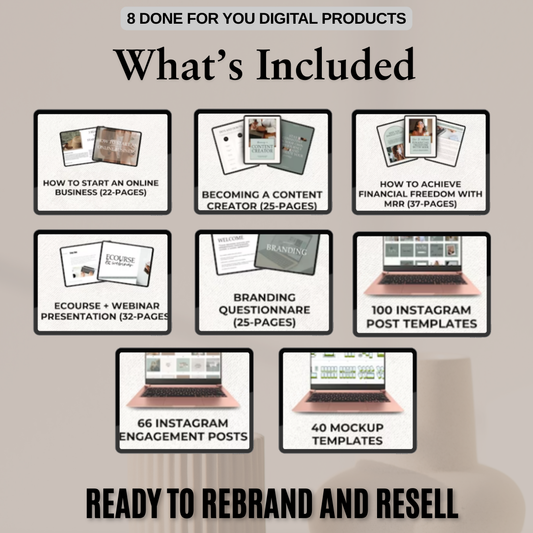
Best for: Coaches, educators and creators selling high-value programmes. If you want a premium course without building one from scratch, The Ultimate Branding Course with Master Resell Rights can be uploaded to any of these platforms and sold under your own brand, keeping 100% of the profit.
Payhip, Lemon Squeezy and Stan Store: Best Low-Fee Creator Checkouts
These modern platforms are built for creators who sell straight from social media and link-in-bio pages.
|
Platform |
Monthly Cost |
Platform Fee |
Best For |
|
Payhip |
$0 / $29 / $99 |
5% / 2% / 0% |
Ebooks, courses, simple downloads |
|
Lemon Squeezy |
$0 |
5% + $0.50 |
Software and digital tools |
|
Stan Store |
$29 / $99 |
0% |
Link-in-bio creators, coaches, templates |
Pros: Low fees at scale, mobile-friendly checkout, and easy links from Instagram, TikTok and YouTube. Payhip handles EU and UK VAT for you, while Lemon Squeezy acts as merchant of record worldwide.
Cons: There's little or no built-in marketplace traffic, and they're less flexible than Shopify for large catalogues.
Best for: Social-first creators, coaches and template sellers who already have an audience. Ready-made content packs like The Content Girl Collection image and reels bundle sell especially well from a link-in-bio store, because your social posts become the shop window.
A few figures from your research were outdated, so I corrected them in the copy above:
-
Envato: The flat 50% fee is confirmed. Envato's own Author Hub states that all authors move to a 50% author fee on the item price, effective 1 July 2026, and exclusivity is removed, so authors can sell the same products elsewhere. EnvatoChargePanda
-
Gumroad: The fee includes a fixed charge your research missed. Gumroad's pricing page lists 10% + $0.50 on direct sales and 30% on Discover sales, and it has been merchant of record since January 2025. The payout threshold also rose from $10 to $100 in March 2026. gumroadCheckthat
-
Teachable: It doesn't have a 0% fee on all paid plans. Starter is $39/month with a 7.5% transaction fee, and zero fees begin on the $89 Builder plan. ddiy
-
Kajabi: It no longer starts at $149. Kajabi restructured pricing in January 2026, and the cheapest advertised plan is now Basic at $179/month. checkoutpage
-
Podia: The entry plan isn't fee-free. Podia charges 5% on Mover and 0% on Shaker. ruzuku
-
Payhip: The Free plan charges 5%, Plus is $29/month at 2%, and Pro is $99/month with no Payhip fee. Payhip
-
Stan Store: The Creator plan is $29/month and Creator Pro is $99/month, with no platform transaction fees. Kourses
-
Creative Market: Sources disagree here. One source says shops earn 50% per sale, while another says the commission is 30%. That's why the copy stays general rather than quoting ~40%. freemiusfungies
Which Digital Product Marketplace Should You Choose?
After comparing the best digital product marketplaces, the right choice depends on three things: where your buyers come from, what you sell, and how much you plan to earn.
Do You Need Built-In Traffic?
If you have no audience yet, start with a marketplace like Etsy, Creative Market or Envato, where shoppers are already searching. If you already have followers, an email list or a blog, you'll keep far more profit on Gumroad, Shopify, Podia, Payhip or Stan Store. For a full walkthrough of both routes, see our step-by-step guide to selling your digital products online.
What Are You Selling?
-
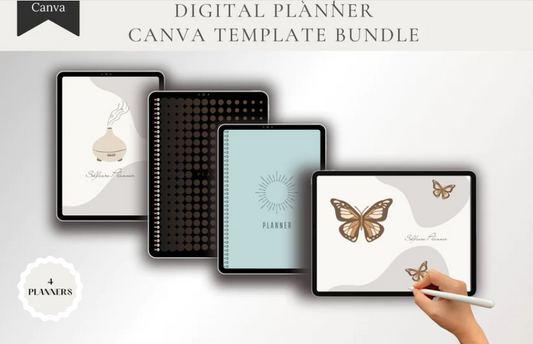
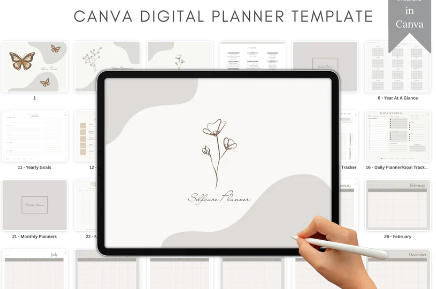
Planners, printables and wall art sell best on Etsy. Our roundup of the best digital planners for iPad and GoodNotes users shows what buyers want right now, and ready-made options like The Planner Collection and the Plan & Prosper collection give you listings to launch with quickly.
-
Fonts and design assets belong on Creative Market.
-
Themes, plugins and code belong on Envato.
-
Ebooks, templates and prompt packs do well on Gumroad, Payhip or Stan Store. Try AI prompt packs, the AI image collection or the Words That Sell collection, or get inspired by 40 digital products you can create using ChatGPT or AI tools.
-
Courses and memberships belong on Podia, Teachable or Kajabi. Ready-to-sell masterclasses let you launch without filming a thing.
What's Your Monthly Revenue Goal?
-
Under $500 a month: Stick with free or low-cost options like Etsy, Gumroad or Payhip's free plan. That's the ideal range for building financial freedom through side hustles without upfront costs.
-
$500 to $3,000 a month: Shopify, Podia or a paid Payhip plan starts to beat percentage fees. At this stage, choosing from the best payment processors for digital products protects your margins.
-
$3,000+ a month: A self-hosted Shopify store usually wins on fees. Set up automated digital product delivery tools and workflows so you can scale without extra admin, and see our guide to the best way to deliver digital products to customers automatically.
Selling PLR and Resell Rights Products on These Platforms
PLR and Master Resell Rights products are one of the fastest ways to fill a store, but each platform treats them differently.
Rebrand before you list. Change the title, cover, colours and wording, and add your own bonuses. A rebranded product stands out from other sellers and performs better in search.
Check the originality rules. Creative Market and Envato require original work, so standard PLR won't pass their reviews. Etsy expects sellers to have designed or meaningfully customised what they sell, so only list PLR there after substantial changes.
Favour low-fee storefronts. Shopify, Payhip, Gumroad and Stan Store let you sell PLR and MRR products under your own brand while keeping more of every sale.
To pick products with real demand, read our guide to the best PLR products to resell in 2026 and learn which done-for-you digital products actually sell. Then browse the Build Your Digital Empire collection or seasonal bestsellers like the New Year New Me collection.
Conclusion: Find Your Platform, Then Fill Your Store
For beginners, Etsy and Gumroad offer the easiest start. Designers and developers belong on Creative Market and Envato, while course creators thrive on Podia, Teachable or Kajabi. For long-term profit and full brand control, Shopify, Payhip and Stan Store are hard to beat.
Whichever platform you choose, the fastest way to start selling is with products that are already made. Shop All at Resell Ready to stock your store with ready-to-rebrand planners, courses, templates and prompt packs, and start earning this week.
FAQ
Which digital product marketplace has the lowest fees?
Stan Store and Payhip's Pro plan charge 0% platform fees, and Shopify adds no transaction fee when you use Shopify Payments. You still pay card processing and a monthly subscription. For sellers without monthly sales yet, Payhip's free plan at 5% per sale is the cheapest way to start.
Is Etsy or Gumroad better for beginners?
Etsy is better if you need buyers, because its marketplace brings built-in traffic. Gumroad is better if you already have an audience on social media, because setup is faster and it handles sales tax for you.
Can I sell PLR products on Etsy?
Yes, but only after substantial customisation. Etsy expects sellers to have designed or meaningfully modified what they list, so rebrand the design, rewrite the content and add your own value first.
Which platform is best for selling online courses?
Podia, Teachable and Kajabi are built for courses, with course players, quizzes and community features. Podia and Teachable suit budgets under $100 a month, while Kajabi suits established creators who want funnels and email in one place.
Should I sell on a marketplace or my own website?
Many successful sellers do both. Start on a marketplace to test demand and get early sales, then build your own store on Shopify or Payhip to keep more profit and own your customer list.
🎬 Want a visual walkthrough?
If you’d rather watch than read, here’s the full explainer video covering everything in this guide: