




Introduction
Scroll through any list of digital products examples right now and you'll see the same word popping up again and again: masterclass. Everyone from marketing coaches to software developers is packaging their expertise into a paid class — and for good reason, since a well-built masterclass can outsell an entire library of cheaper digital products combined. But here's the catch most creators run into: most masterclasses never convert, because they're built around a topic instead of a result.
🎥 Prefer watching instead of reading?
Watch the full step-by-step explainer video below.
The quick answer is this — people pay for a masterclass when it promises a specific, believable outcome, delivers it quickly, backs it up with proof, and is priced in a way that matches the transformation on offer. That's it. No amount of polish, editing, or bonus content fixes a masterclass that skips this formula.
At The GoDigital World, we work with creators building exactly this kind of offer, and this guide breaks down, step-by-step, how to go from an idea to a masterclass people actually buy — and finish. We'll cover how to define your outcome, validate demand before you build a single lesson, structure the class itself, choose a delivery format, price it properly, pick the right platform, and market it so seats actually fill.
1. Start With the Outcome, Not the Topic
The single biggest reason masterclasses underperform is that they're designed around a subject rather than a transformation. "Social Media Marketing Masterclass" is a topic. "Grow Your First 10,000 Organic Followers Without Paid Ads" is an outcome — and it's the one people will actually pull out their card for.
Think about why top-rated digital courses for learning coding succeed where generic tutorials fail. Nobody signs up because they want to "learn Python." They sign up because they want to build a specific app, land a specific job, or finally understand why their code keeps breaking. The best programming courses are built backward from that result, and your masterclass should be too.
Before you outline a single module, write one sentence that captures your student's before-and-after:
-
Before: "I have an audience, but no product and no consistent sales."
-
After: "I have a finished digital product, a simple funnel, and my first paying customers."
That single sentence should drive every decision that follows — your curriculum, your sales copy, and your price. It's the same principle behind our own How to Build a 6-Figure Digital Product Brand Masterclass: it's not framed as "learn about digital products," it's framed as a specific destination students are working toward from day one.
If you want to see this outcome-first approach applied to different formats, it's worth studying how digital products for passive income are positioned around real results rather than features — the same logic that separates a masterclass people finish from one that gets abandoned after lesson two.
2. Validate Demand Before You Build
Don't guess whether people will pay — test it before you invest weeks producing content. This step alone saves more failed launches than any amount of extra polish later.
Start by surveying 20–30 people in your existing audience with one direct question: "Would you pay $X to achieve [specific outcome] in [specific timeframe]?" Vague enthusiasm doesn't count as validation — you're looking for people willing to commit, even at a discounted "beta" price. If nobody bites at a lower founding-cohort rate, they won't bite at full price either.
Next, run a competitor scan. Look at what similar masterclasses in your space are promising, how they're structured, and what they charge — our own masterclass collection is a useful reference point for how outcome-driven offers get positioned and priced. The same logic applies outside of marketing niches too: browsing top-rated digital courses for learning coding shows how the strongest players differentiate on results and mentorship, not just video count, even in a crowded, commoditized market.
This is also the stage to look at what's already selling well as a bundled offer. Resources like the Organic Growth Marketing Bundle or the Anti-Algorithm Growth Guide show how creators package proven strategies into a single paid offer — a useful model to study before you finalize your own masterclass angle and price point.
3. Design a Structure That Converts
Once your outcome is locked in, structure is what turns that promise into something students actually finish. A masterclass that gets abandoned halfway through won't generate the reviews, referrals, or repeat sales you need — so structure isn't a nice-to-have, it's a retention strategy.
The arc that consistently works follows five stages: intro → core modules → application/practice → proof of progress → wrap-up/next steps. The intro sets expectations (who this is for, what they'll walk away with). The core modules deliver the teaching in digestible chunks. The application stage is where students actually do the work — build the funnel, write the copy, ship the product. Proof of progress gives them a visible marker of what they've accomplished (a finished asset, a completed checklist, a mini-challenge). And the wrap-up points them toward their next action, whether that's launching or upgrading into a deeper offer.
As a rule of thumb, aim for 3–7 modules, with 3–6 lessons per module, and keep individual lessons to 5–12 minutes. This isn't arbitrary — shorter lessons with a single clear objective keep completion rates high, which matters more for your reputation than cramming in extra content. This is the same structure you'll find across our full library of digital products, where the highest-performing offers are broken into tight, outcome-driven segments rather than long, unfocused modules.
The biggest structural mistake creators make is building a masterclass people watch instead of one they do. If your lessons don't include a concrete action item at the end of each module, you're producing a documentary, not a masterclass. This "doing" emphasis is exactly what separates something like our Instagram Growth Masterclass from a passive info-dump — every module pushes the student toward an implemented result, not just a viewed video.
4. Choose the Right Delivery Format
Your delivery format shapes both engagement and perceived value — and getting this wrong is one of the fastest ways to undersell a masterclass that's otherwise well-built.
Live sessions create urgency and real-time engagement through Q&A, but they're harder to scale and depend on your availability. Self-paced formats scale infinitely and let students move at their own speed, but without built-in accountability, completion rates tend to drop. Hybrid — a live teaching session paired with recordings, templates, and async support — usually strikes the best balance for a first paid masterclass, because it feels premium and time-bound while still giving students a resource they can revisit.
When it comes to tools, there are two broad categories to choose from: dedicated webinar/workshop platforms (built for live delivery, registration, and replays) and full course-and-community platforms (built for hosting content long-term, managing tiers, and building a student community around it). Rather than locking into one brand early, evaluate based on what you actually need — payment plans, coupon support, replay delivery, and integration with your existing email or CRM setup.
If you want to see hybrid delivery done well, browse our Build Your Digital Empire collection — it bundles live-style teaching frameworks with templates and resources students can implement on their own timeline, which is precisely the hybrid model most first-time masterclass creators should aim for.

5. Price It Like a Transformation
Pricing is where most creators leave the most money on the table — not because they charge too much, but because they price based on how much content they made instead of how much value that content delivers.
The right approach is value-based pricing: define the outcome in concrete terms, estimate what that outcome is worth to your student in money, time saved, or opportunity gained, and price at roughly 10–30% of the value delivered in the first year. If your teaching realistically helps someone generate or save $5,000, a price of $500–$1,500 is easily justified — and often still feels like a bargain to the buyer.
A tiered structure makes this even more effective, since it gives buyers a comparison point instead of a single yes/no decision:
-
Basic (seat or self-paced access, core lessons only): typically $197–$497
-
Standard (full access, replays, templates, light community/Q&A): typically $397–$797
-
VIP (everything above plus 1:1 feedback or small-group coaching): typically $797–$1,497+
You can see this tiering logic reflected across our own catalog — from focused single offers like the Money Mindset Collection and the Planner Collection, up to more comprehensive offers like The Ultimate Branding Course with Master Resell Rights, which anchors a higher tier by bundling in resale rights on top of the core training.
If you want a simple formula, work backward from a revenue goal: divide your monthly revenue target by your audience size multiplied by your expected conversion rate. With a conservative 2% conversion assumption, most creators land between $197–$497 for self-paced offers and considerably higher for cohort-based or coaching-inclusive programs.
One final note: if you're running a shorter, single-session workshop rather than a full masterclass, start lower — often $15–$50 — to fill seats and collect testimonials, then raise the price incrementally with each run. This "start low, build proof" approach mirrors how niche-specific bundles like the Quantum Manifestation Planner or seasonal offers like the New Year New Me Collection often launch at an intro price before scaling up once demand and reviews are established. For a deeper breakdown of digital pricing strategy across formats, our guide on 100 digital products you can sell online is a useful next read.
6. Pick a Platform That Removes Friction
The best masterclass content in the world won't convert if the buying and delivery experience feels clunky. Your platform choice should remove friction at every step — registration, payment, and access — not add another hurdle between "interested" and "enrolled."
When evaluating platforms, look for four things: support for multiple pricing tiers, built-in payment plans (essential for anything priced above roughly $300), coupon or early-bird functionality, and clean replay delivery paired with CRM or email integration so students actually receive their materials and follow-up sequences.
Platforms generally fall into two buckets. The first is dedicated workshop and webinar tools, built specifically for live delivery, registration, and replay hosting — Talkspresso's guide on how to run a paid masterclass online walks through this model well, and EasyWebinar's roundup of the best webinar software is a solid comparison point if you're weighing options. The second bucket is full course-and-community platforms, designed for hosting content long-term and managing tiers and student communities — BuddyBoss's online course pricing guide is a useful reference here, since pricing structure and platform choice tend to go hand in hand.
Whichever bucket you land in, ClickMeeting's masterclass guide is worth a read for how it frames the platform decision around the full buyer journey, not just the video delivery itself.
7. Build a Marketing Plan That Fills Seats
A masterclass doesn't sell itself, no matter how strong the content is. Plan for a focused 3–4 week promotion window built around three core assets: a landing page, an email sequence, and supporting social content.
Your landing page needs a clear outcome-driven headline, a plain statement of who it's for (and who it isn't), the agenda, any bonuses included, social proof, and a direct call to action. Systeme.io's breakdown of how to price an online course is a helpful companion resource here, since your landing page copy and your pricing tiers should reinforce the same value story rather than working against each other.
Your email sequence should follow a simple arc: problem-awareness, your story, the offer itself, proof it works, a bonus reveal, and a final urgency push as the deadline approaches. Graphy's guide to pricing your online course also covers how tier anchoring and payment plans should be reflected consistently across your emails and landing page, not just buried in a pricing table.
Pricing psychology plays a real role too: early-bird discounts reward your most engaged followers, a three-tier structure anchors perceived value (a higher tier makes the middle one look like the obvious choice), and payment plans lower the barrier for hesitant buyers. If your masterclass sits within a broader digital-product catalog, it also helps to promote it alongside proven sellers — bundles like the Naomi Bundle or done-for-you assets like the Rosie one-page homepage template make strong bonus or upsell additions to a marketing sequence, since they let buyers act on what they learn immediately.
8. Deliver an Experience That Generates Proof
Your first cohort matters as much for the proof it generates as for the revenue it brings in. Treat it as a chance to collect real testimonials, not just close sales.
Build implementation time directly into the session so students leave with something tangible finished, not just notes. Schoolmaker's online course design guide covers this "build while you teach" approach well — it's the difference between a class people watch and one they actually complete. Immediately afterward, ask specific questions: What did you implement? What result did that produce? Vague praise like "great class!" won't move future buyers — a testimonial tied to a real outcome will.
This proof-first approach applies just as much to niche, aesthetic-driven offers as it does to strategy-heavy ones. Bundles like The Glow Lab Co. skincare collection or The Content Girl Collection work because buyers walk away with a finished, shareable result — exactly the kind of tangible proof your first masterclass cohort should be producing too.
9. Example Masterclass Outline (Worked Example)
Here's how the "outcome-first" framework plays out as a real, five-module masterclass in the digital marketing and coaching space.
Title: From Audience to Income — Launch Your First Paid Digital Offer in 7 Days
-
Module 1: Niche & Offer. Choose a specific, in-demand angle — our list of 20 high-demand digital products to sell right now is a great starting reference. Deliverable: a one-sentence offer statement.
-
Module 2: Product Creation. Build a minimum viable product fast, whether that's a template, a guide, or a digital download. Deliverable: a finished first draft.
-
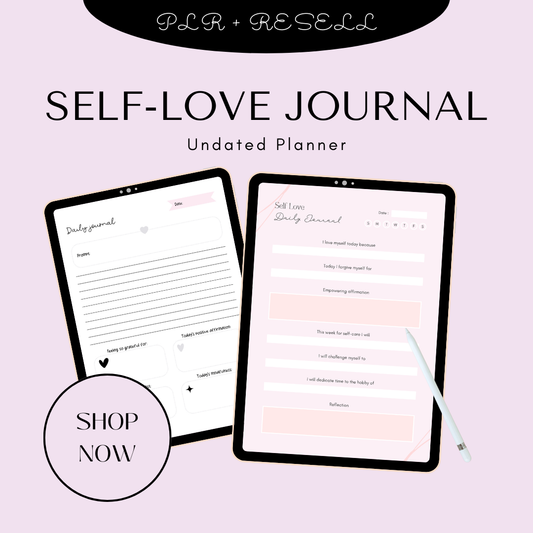
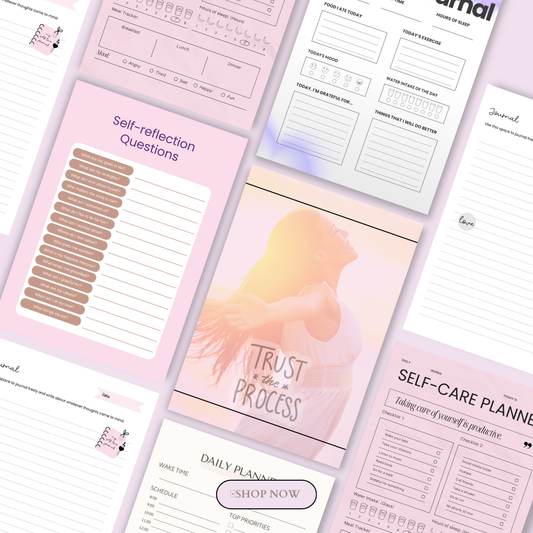
Module 3: Positioning & Format. Decide whether your product fits a planner-style format, like the ones covered in our planners guide, or something more reflective, like a self-love journal. Deliverable: a finalized product format and cover concept.
-
Module 4: Store & Checkout Setup. Get the product live and purchasable. Deliverable: a working, published product page.
-
Module 5: Simple Launch Plan. Map a two-week promotional push tied to a real income goal — the kind of practical roadmap covered in our guide to financial freedom through side hustles. Deliverable: a launch calendar with a set date and target.
Every module ends in a concrete action, not just a video watched — which is the entire point.
10. Bottom Line / Recap
A masterclass people will pay for isn't the one with the most content — it's the one built around a specific outcome, validated with real demand before it's built, structured to make students do the work, priced against the transformation rather than the runtime, delivered on a friction-free platform, and backed by real proof from your first cohort. Get those pieces right, in that order, and the marketing becomes dramatically easier because you're not selling information — you're selling a result with your name on it.
If you're ready to put this framework into action, browse our full masterclass collection for structure and pricing inspiration, or start with a proven, done-for-you foundation like the How to Build a 6-Figure Digital Product Brand Masterclass to shortcut your first launch.
FAQ
How much should I charge for my first masterclass?
Price against the transformation, not the runtime. A good starting point is 10–30% of the value your outcome delivers to the student in their first year — for example, if your teaching could realistically help someone earn or save $5,000, a price between $500–$1,500 is easily justified. If it's your very first cohort, consider starting slightly lower to build testimonials, then raising the price on each subsequent run.
How long should an online masterclass be?
Most successful masterclasses run 2–6 sessions or roughly 2–3 hours of core content, broken into 3–7 modules with 3–6 lessons each. Individual lessons work best at 5–12 minutes — long enough to teach one clear idea, short enough that students actually finish. Length matters less than whether each module ends with something the student has to do.
Should my masterclass be live, self-paced, or a mix of both?
A hybrid format — a live teaching session paired with recordings, templates, and async support — is usually the strongest choice for a first paid masterclass. Live sessions build urgency and real engagement, self-paced content scales without extra effort on your part, and combining the two gives students both the premium, time-bound feel of a live event and the flexibility to revisit the material afterward.
How do I know if people will actually pay for my masterclass idea?
Validate demand before you build anything. Survey 20–30 people in your existing audience with a direct question — "Would you pay $X to achieve this outcome in this timeframe?" — and treat only real commitments (not vague enthusiasm) as a green light. Running a discounted pre-sale or founding cohort is one of the fastest ways to confirm demand without producing a full curriculum first.
What's the biggest mistake people make when creating a masterclass?
Designing it around a topic instead of a specific outcome. A masterclass titled around a subject ("Marketing Masterclass") rarely converts, because buyers aren't paying for information — they're paying for a result. The strongest masterclasses are built backward from a clear before-and-after statement, which then shapes the curriculum, the marketing copy, and the price.
🎬 Want a visual walkthrough?
If you’d rather watch than read, here’s the full explainer video covering everything in this guide: