



Building passive income through digital products for passive income has become one of the most accessible ways for creators, freelancers, and side-hustlers in the US, UK, and Australia to earn money online without holding inventory or managing shipping. A single file — a template, planner, course, or license — can be created once and sold to hundreds of customers, whether they're browsing Etsy in Sydney, Gumroad in London, or Shopify in New York.
🎥 Prefer watching instead of reading?
Watch the full step-by-step explainer video below.
But "passive" doesn't mean "effortless." If you're exploring digital products as a business model for the first time, it helps to understand exactly what separates a genuinely passive product from one that quietly turns into a part-time job. Some sellers succeed by using done-for-you digital products that actually sell, while others build their own from scratch — either path can work if you understand the fundamentals below.
What Makes a Digital Product Truly "Passive"?
Not every digital file qualifies as a passive-income asset. Whether you're selling to buyers in the US, UK, or Australia, the strongest products consistently share four traits.
The 4 Characteristics of a Passive Digital Product
-
It solves a specific, recurring problem — not a vague, oversaturated one.
-
It delivers automatically after purchase — no manual sending required.
-
It requires no customization per customer — the same file works for everyone.
-
It stays useful for months or years with minimal upkeep.
A generic "planner" competes against thousands of listings. A tightly niched product — like the tools featured in 15 digital products you can sell on Etsy without designing — has a clearer audience and an easier path to sales in competitive marketplaces across all three markets.
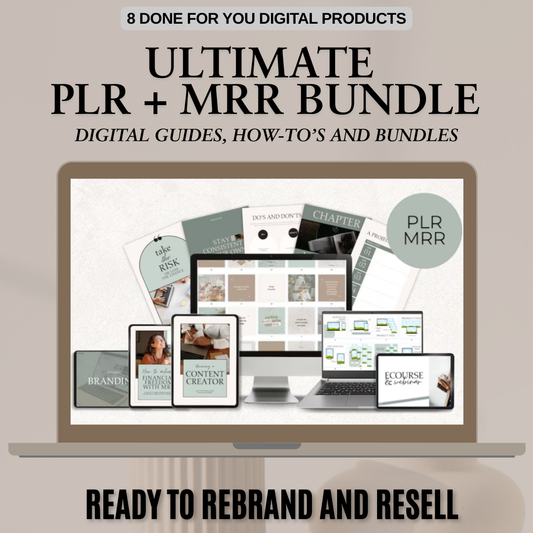
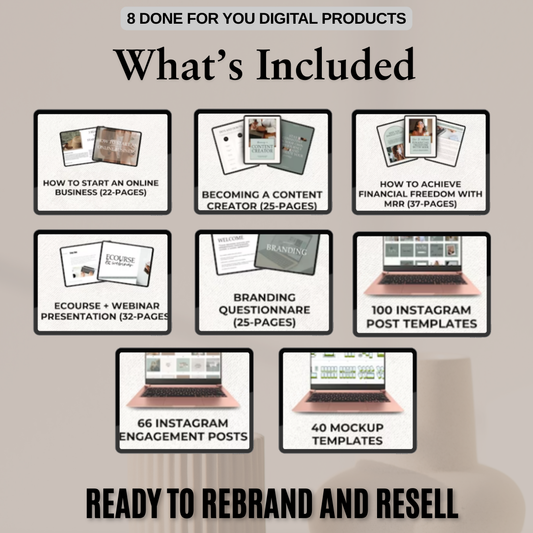
If you'd rather skip the creation process entirely, browsing best PLR products to resell in 2026 or a ready-made anti-algorithm growth guide can shortcut months of product development.
The Basic Income Formula
The math behind passive digital income is simple:
Revenue = Price × Number of Sales
Sell a $15 template 100 times, and you've generated $1,500 in gross revenue — before platform fees, ad spend, and taxes. This is why so many creators researching the most profitable digital products for passive income gravitate toward low-cost, high-volume items like templates and printables rather than expensive, low-volume offers.
For a full breakdown of setup, pricing, and delivery — relevant whether you're selling in USD, GBP, or AUD — see how to sell your digital products online: a complete step-by-step guide. And if you want to see what a finished, sales-ready product actually looks like, examples like the Rosie 1-Page Homepage Template, the Glow Lab Co. skincare content bundle, and the Content Girl Collection reels bundle show how polished, done-for-you products are packaged and priced.
7 Real Examples of Profitable Digital Products
If you're wondering which digital products for passive income actually generate consistent sales in the US, UK, and Australia, these seven categories have proven track records — backed by real creator case studies.
1. Printable Planners & Templates
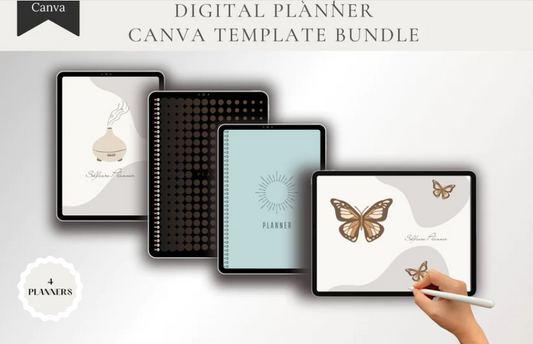
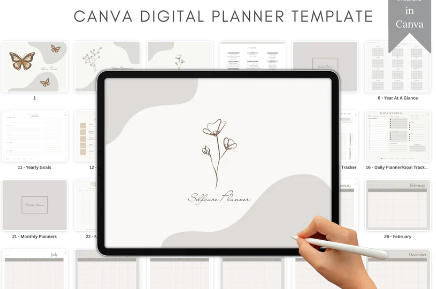
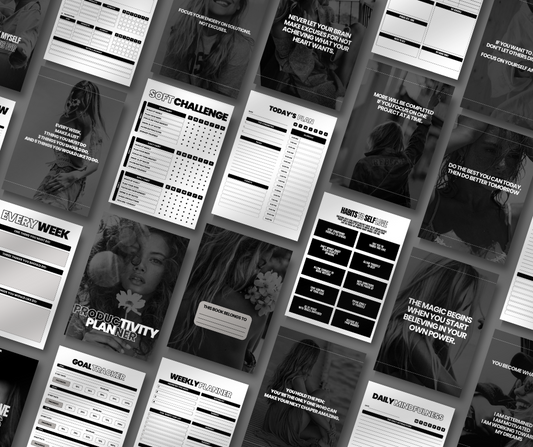
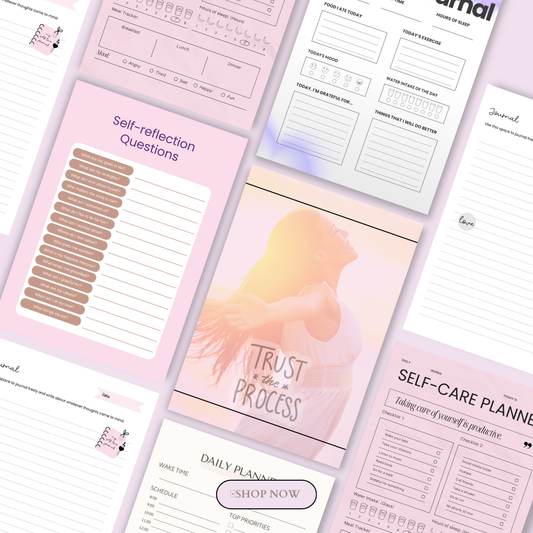
Printables remain one of the easiest entry points into digital selling because there's no manufacturing, shipping, or inventory involved — just a file, delivered instantly. This model works especially well for buyers searching for organizational tools, from planners to budget trackers and habit logs, including full collections like Plan & Prosper.
A smart product ladder might look like: a single printable planner for $5, a themed bundle for $12, an editable version for $18, and a commercial-use license for $39. Each tier increases average order value without requiring a brand-new product.
Real example: Etsy seller Claudine Hellmuth sells printable gift-box templates she illustrates herself. Even after returning to full-time employment, she continued earning side income because her products required no storage, shipping, or repeat manufacturing — a textbook case of digital passive income done right.
2. Online Courses
Pre-recorded courses can generate genuinely passive income once built, since students access content through an automated platform without ongoing manual delivery.
Real example: Antoine van der Lee, creator of the SwiftLee iOS-development brand, published free educational content for roughly seven years before launching his first paid course — which generated $40,000 at launch. Real example: Abagail Pumphrey's "Trello for Business" course, priced at $29, earned more than $8,000 in its first month and eventually surpassed $288,000 in total sales.
What prevents a course from staying passive? Ongoing updates when software or industry practices change, plus support questions and refund requests. For a structured approach to building your own, resources like the ultimate branding course or a ready-built 6-figure digital product brand masterclass can shortcut the learning curve. Sellers who want resale rights built in can also look at the ultimate branding course with Master Resell Rights, or browse the wider masterclasses collection for more done-for-you course options.
3. Ebooks & Practical Guides
Ebooks succeed when they solve a specific problem rather than repeating free blog content. Instead of a generic title like "How to Sell Digital Products," a sharper angle — such as "The Beginner's Etsy Launch Plan: From Idea to First 20 Listings" — signals audience, platform, and outcome all at once.
One ebook can be repurposed into five additional products: blog posts, printable checklists, a mini-course, extracted templates for a bundle, and a free lead magnet. This repurposing strategy is especially valuable for content creators looking to maximize output from a single piece of research, and copywriting-focused sellers can explore the Words That Sell collection for ready-made ebook and copy templates.
4. Canva Templates & Design Assets
Canva templates can be sold directly or published through Canva's Creator marketplace, where accepted designers earn royalties based on usage. This is one of the fastest-growing categories among Canva digital products that sell like crazy — templates, planners, and more.
|
Product Tier |
Example Offer |
|
Entry product |
10 Instagram templates |
|
Core product |
60-post content bundle |
|
Premium product |
Complete brand system |
|
Recurring offer |
Monthly template membership |
|
Business license |
Extended commercial rights |
Ready-made examples of this ladder in action include the Positivity Pop Collection, the Glossed in Power viral content pack, and the full Post Perfection collection for social-ready design assets.
5. Stock Photos, Illustrations, Audio & Video
Licensed assets — photography, illustrations, presets, sound effects, and video footage — can be sold repeatedly under different license tiers: personal-use, commercial-use, extended, or exclusive.
Licensing warning: sellers must own or have explicit permission to use every asset in their product, particularly fonts, stock images, music samples, and AI-generated material. A resale-rights product should never be sold unless the license clearly permits that exact form of resale. Anyone exploring how to sell digital art online should review licensing terms carefully before listing.
6. Memberships & Premium Content Libraries
Memberships generate recurring, more predictable revenue than one-time sales. For example: 100 members at $10/month equals $1,000 in monthly recurring revenue; 500 members at $15/month equals $7,500. These are gross figures — churn, fees, and content production still apply.
Retention requires an ongoing reason to stay subscribed: new monthly assets, workshops, member discounts, or a growing searchable archive.
7. Software, Spreadsheets & Automation Tools
Digital tools succeed when they solve a measurable business problem — like a profit calculator tracking price, fees, ad spend, and break-even sales. This category also includes downloadable social media templates for Instagram that convert, plus niche tools built for small business owners and underserved markets like digital downloads for wedding planners.
AI-enhanced products work best when they combine automation with real expertise — a niche prompt system beats a generic prompt list every time.
Shop All → See ready-to-sell digital product templates

Which Platform Fits Each Product Type?
Choosing the right platform matters as much as the product itself — especially when selling across US, UK, and Australian markets with different buyer habits.
|
Product Type |
Suitable Platform |
Strength |
|
Printables & digital art |
Etsy |
Marketplace discovery, instant downloads |
|
Courses & memberships |
Teachable |
Structured delivery, student access, course tools |
|
Templates & digital downloads |
Gumroad or Shopify |
Direct selling, bundles, audience ownership |
|
Canva templates & elements |
Canva Creators |
Royalty-based marketplace distribution |
|
Software & advanced tools |
Shopify or dedicated site |
Branding, checkout control, flexibility |
|
Ebooks & guides |
Gumroad, Shopify, author platform |
Direct delivery, email-list integration |
Etsy's listing policies confirm digital products can be delivered instantly or made-to-order, Canva's Creator program pays royalties based on marketplace performance, and Teachable case studies consistently show creators building sustainable businesses around their own audiences — regardless of whether they're based in Los Angeles, London, or Melbourne.
A Practical 6-Step Strategy to Launch Your First Passive Digital Product
Turning digital products for passive income from theory into revenue requires a repeatable system — not guesswork. Here's the process real sellers in the US, UK, and Australia use to launch successfully.
Step 1 – Choose a Narrow Customer Problem
Avoid broad categories. Instead of "planners," target "content planners for Etsy sellers." Reviewing a data-backed list of top-selling digital products can help you spot underserved niches before you commit to one.
Step 2 – Validate Demand Before Building
Check Etsy and Google search suggestions, competitor reviews, and community discussions. Shopify's own research into passive income ideas and making money while you sleep both stress validating demand before production — and tracking what's currently trending can shortcut this research significantly.
Step 3 – Create One Focused Product
Build a single product with one clear outcome rather than a sprawling bundle. Shopify's guide to how to make printables to sell recommends starting small and expanding based on real buyer feedback.
Step 4 – Add Automatic Delivery
Instant downloads, automated email sequences, or a course portal remove manual fulfillment. Etsy's own seller handbook on selling digital downloads confirms automated delivery is standard practice for digital sellers.
Step 5 – Build a Content Funnel
A free blog post, Pinterest pin, or short tutorial attracts buyers who already have the problem your product solves — then guides them toward a low-cost offer and eventually a bundle or membership.
Step 6 – Improve Based on Customer Behavior
Track conversion rate, refund rate, and repeat purchases. Customer questions often reveal missing instructions or entirely new product opportunities.
Shop All → Browse our full collection of done-for-you digital product templates
What "Passive" Really Means (Honest Caveats)
Digital products can be semi-passive, but income is never guaranteed. Ongoing responsibilities typically include:
-
Updating products for software or platform changes
-
Responding to buyer questions
-
Managing refunds
-
Handling copyright and licensing compliance
-
Monitoring platform policy changes
Etsy requires that listed items be made, designed, handpicked, or sourced by the seller, and it mandates disclosure when a product involves artificial intelligence — a policy every seller using AI-assisted tools, including those exploring resources like the Midjourney Mastery Guide Collection, should understand before listing. According to Etsy's 2025 digital downloads trend report, compliance and originality remain key factors in long-term seller success.
Final Takeaway
Three patterns repeat across nearly every successful digital-product business: Etsy sellers earn from downloadable files with zero physical fulfillment, audience-led creators like Antoine van der Lee and Amie Tollefsrud (per Teachable's case study) turn consistent content into course sales, and Canva Creators earn ongoing royalties from template usage.
Start with one narrow product, one audience, and one platform. Once it proves demand, expand into bundles, licenses, or a full marketing template collection.
Shop All → Browse our full collection of done-for-you digital product templates
FAQ
What platform fees do Gumroad and Etsy charge creators?
Fees vary by platform and payment method. Etsy charges listing and transaction fees, while selling digital products on Shopify involves app and subscription costs instead. If you're accepting payments via PayPal, it's worth reviewing what you need to know about selling downloadable products with PayPal before choosing a checkout method, and Shopify's own digital products guide breaks down platform costs in more detail.
How do digital creators protect their files from piracy?
Watermarking previews, licensing terms, and limiting file-sharing permissions all reduce piracy risk. Clear commercial-use licenses, as outlined in guides on how to sell digital downloads on Etsy step by step, help protect creator rights.
What tools are best for creating Canva templates and printables?
Canva remains the most accessible tool for both categories. Pricing strategy matters just as much as design — see how to price digital products for maximum profit and industry context from Passive Yield Lab's 2026 digital products report and Gumroad's 2026 annual meeting recap for platform trends shaping the space this year.
What are the best digital products for teens or beginners to start with?
Low-cost, simple-to-create items like printables, social media templates, and short guides are ideal starting points since they require no advanced skills or large upfront investment. Shopify's guide to business ideas for teens highlights how younger or first-time creators can start small with printables or templates before scaling into courses or memberships once they've built confidence and audience trust.
Can I sell digital products without building an audience first?
Yes, but it's harder. Marketplaces like Etsy provide built-in discovery through search, so you don't need an existing following to make your first sale — how to sell digital downloads on Etsy step by step shows how new sellers can get discovered organically. That said, courses and premium memberships tend to sell far better with an established audience, which is why creators like Antoine van der Lee spent years publishing free content before launching a paid product.
🎬 Want a visual walkthrough?
If you’d rather watch than read, here’s the full explainer video covering everything in this guide: