








Few business models let you sell the same product hundreds of times without restocking a shelf or paying for shipping. That’s the appeal of digital products: once a file, template or course is built, every extra sale costs you almost nothing to deliver. But not every product earns the same. Some sell for $3 and need constant volume, while others command $500 or more, or bring in monthly recurring payments.
This guide ranks the most profitable digital products for passive income in 2026, whether you’re selling to buyers in the US, UK or Australia. For each one, you’ll see typical price ranges, who it suits best and how passive it really is. You’ll also learn how to combine several products into a ladder that grows your income over time.
Quick Answer: What Are the Most Profitable Digital Products to Sell in 2026?
The most profitable digital products to sell in 2026 are online courses, niche templates, memberships, AI prompt packs and software tools, followed by ebooks, printables and stock assets.
Templates and printables are the easiest place to start, as covered in our guide on whether it’s easy to create digital products as a beginner. Courses, memberships and software have the highest earning ceiling.
Why Digital Products Work for Passive Income
A digital product is any file or gated online asset delivered by download, email or member access instead of the post. That includes PDFs, ebooks, templates, online courses, videos, music, graphics, fonts and software.
What makes them so well suited to passive income is automation. Platforms like Shopify’s digital products tools and Etsy deliver files to customers automatically the moment they pay, so a sale can happen while you’re asleep or on holiday.
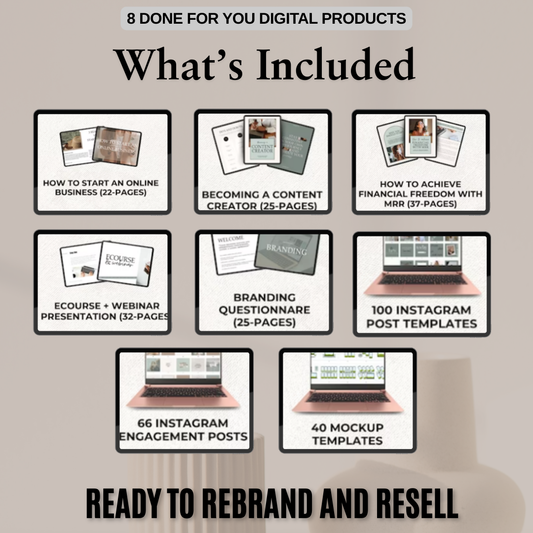
The economics are simple: you put in the work once, then sell the same product again and again with near-zero production cost. That’s why digital products have become one of the most reliable routes to financial freedom through side hustles. And if you don’t want to create from scratch, you can start with ready-made Master Resell Rights products that you rebrand and sell as your own.
The 8 Most Profitable Digital Products in 2026: At a Glance
Before we go deeper, here’s how the top digital products compare on price, profit potential and who they suit best. Use this table to shortlist the options that match your skills, then read the breakdown of each one below.
|
Rank |
Product type |
Why it’s profitable |
Typical price range |
Best for |
|
1 |
Online courses |
High perceived value and strong pricing power |
49–997+ |
Experts, educators, consultants |
|
2 |
Niche templates |
Fast to create, easy to bundle |
9–49 |
Designers, productivity creators |
|
3 |
Memberships |
Recurring monthly revenue |
5–99/month |
Community builders, niche experts |
|
4 |
AI prompt packs |
Low production cost, high demand |
9–97 |
Marketers, freelancers |
|
5 |
Software and automation tools |
Highest revenue ceiling |
Often subscription |
Developers, technical creators |
|
6 |
Ebooks and workbooks |
Simple to produce and test |
4.99–24.99 |
Writers, subject experts |
|
7 |
Printables and planners |
Evergreen Etsy demand |
3–25 |
Beginners, designers |
|
8 |
Stock assets |
Repeat licensing income |
Platform-dependent |
Photographers, musicians, designers |
1. Online Courses
Online courses sit at the top of the list because buyers aren’t paying for videos. They’re paying for a transformation: a new skill, a higher income, better health or a solved business problem. That perceived value gives courses strong pricing power, with most selling between $49 and $997 or more.
As Shopify’s guide to digital products points out, courses turn in-depth knowledge into a format that can serve unlimited students after it’s built. In 2026, the winners are narrow and outcome-driven, such as AI skills for non-technical professionals, Etsy SEO for printable sellers or Shopify email marketing for small brands.
Don’t want to film your own? The Ultimate Branding Course with Master Resell Rights lets you sell a complete, premium course and keep 100% of the profit. You’ll find more ready-to-sell options in our masterclasses collection.
2. Niche Templates and Notion Systems
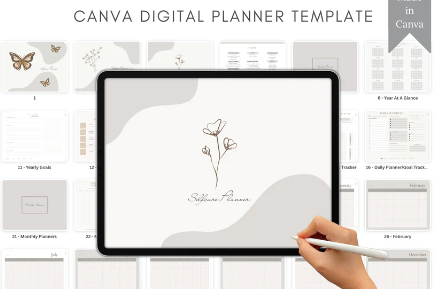
Templates are one of the most practical passive income products because they solve a problem people face over and over: planning, organising, designing, writing or managing a workflow. Popular formats include Canva templates, Notion dashboards, resume templates, budget spreadsheets and business SOPs.
They’re quick to create, easy to sell as singles or bundles, and simple to adapt to new niches. Notion template bundles typically sell for 19–39, and bundling raises your average order value without extra effort.
High-demand niches in 2026 include:
-
Small-business content calendars
-
Freelancer client onboarding kits
-
Teacher and homeschool planners
-
Real-estate listing and follow-up templates
Social media templates are another strong seller, which is why ready-made packs like Post Perfection are popular with creators who want to launch quickly.
3. Memberships and Paid Communities
Memberships turn one-time buyers into recurring revenue. Instead of earning once per customer, you earn every month, which boosts customer lifetime value and makes your income far more predictable. Prices usually range from $5 to $99 per month.
Whop ranks paid communities and memberships among the leading digital products for monthly income. The most successful ones deliver an ongoing result rather than a generic content library: monthly Canva template drops for Etsy sellers, fresh AI workflows each month or a freelancer community with job leads.
The honest trade-off? Memberships need more ongoing work than a one-off download, since members expect regular value. Solid online marketing for digital product sellers also matters here, because retention depends on keeping people engaged.
4. AI Prompt Packs and Automation Kits
AI products are the clearest growth category of 2026. Non-technical professionals want results from tools like ChatGPT, but most don’t have time to learn prompt engineering. Prompt packs and automation kits close that gap, typically selling for $9 to $97 with very low production costs.
The key is specificity. “100 random prompts” won’t stand out. Focused systems will, such as 50 Etsy listing prompts for handmade sellers, an AI client onboarding workflow for coaches or Zapier automation templates for Shopify stores. Deadline Funnel groups these AI assets with high-volume, low-friction products that scale through traffic and a clear niche.
For inspiration, see our list of 40 digital products you can create using ChatGPT or AI tools, or start selling today with ready-made AI prompt packs.
5. Software, Plugins and Automation Tools
Software has the highest revenue ceiling of any digital product, because it solves workflow problems people will pay for monthly or annually. An analysis of Gumroad creator income statistics estimated that software-development products averaged around $60,814 in revenue per product and made up roughly 32% of tracked platform revenue. The dataset’s time period and methodology limit how far those figures can be generalised, but the direction is clear.
You don’t need to be a developer to get a slice of this market. No-code options include:
-
Notion and Airtable systems
-
Spreadsheet dashboards and calculators
-
Zapier and Make automation templates
-
Subscription-based Discord bots
-
Simple no-code SaaS tools
If you’d rather sell a complete toolkit for building an online business, the Build Your Digital Empire collection is a ready-made starting point.

6. Ebooks, Guides and Workbooks
Ebooks rarely earn the most per sale, but they’re one of the fastest digital products to create, test and launch. Most sell between $4.99 and $24.99, making them an ideal low-risk entry product that leads buyers towards your higher-priced offers.
Generic ebooks face heavy competition in 2026. Practical, niche-specific workbooks and toolkits perform far better, for example:
-
The 30-Day Etsy Launch Workbook
-
AI Prompt Journal for Coaches
-
Freelancer Pricing Calculator and Guide
If you want polished ebooks you can rebrand and sell immediately, browse the Words That Sell collection, packed with ready-made guides that come with resell rights.
7. Printables, Planners and Digital Art
Printables remain the most beginner-friendly digital product, especially on Etsy. Planners, wall art, invitations, budget sheets, meal planners and colouring pages all sell well, usually for $3 to $25. The Etsy Seller Handbook explains how instant downloads let customers access files right after purchase.
Success here comes down to niche selection and visual quality. Broad “daily planners” are crowded, while specific products such as teacher lesson planners, wedding budget trackers or small-business bookkeeping sheets are easier to position and rank.
Our guide to selling planners covers the opportunity in more detail, and the Plan & Prosper collection gives you ready-to-sell planners with resell rights.
8. Stock Assets and Creative Licenses
Stock assets earn royalty-style income: you create a photo, video clip, song or graphic once, then license it repeatedly. Earnings per sale are usually lower than courses or software, but a large library can build steady passive income.
Profitable niches include authentic lifestyle photos for small brands, B-roll packs for Reels, Lightroom presets, YouTube background music, fonts and clipart bundles. To skip production entirely, you can resell ready-made assets like the AI Image Collection or short-form video packs from Reel Power Packs.
The Shortcut: PLR and MRR Products
Creating a course, template library or ebook from scratch can take weeks. PLR (Private Label Rights) and MRR (Master Resell Rights) products remove that bottleneck. You buy a professionally made product once, add your own branding, and sell it under your name, often keeping 100% of the profit.
The best part is that resell rights cover most of the profitable categories above, from courses and masterclasses to templates, AI prompt packs and ebooks. For example, the How to Build a 6-Figure Digital Product Brand Masterclass gives you a premium course to sell without filming a single video. Browse the full range of ready-to-sell MRR products to find your starting point.
What Makes a Digital Product Profitable?
The most profitable digital products share one simple formula:
Specific audience + urgent problem + clear outcome + simple delivery
Trends come and go, but this formula holds. As the Inkfluence AI guide to 2026 product niches suggests, profitability depends less on chasing what’s hot and more on choosing the right economic model. There are three to pick from: high-ticket knowledge products (courses, masterclasses), recurring utility tools (memberships, software) or low-cost, high-volume products (printables, templates, stock assets).
Before you build anything, validate demand with these five steps:
-
Research competitors on Etsy, Gumroad, Creative Market and Udemy.
-
Read reviews to spot bestseller badges and recurring customer complaints.
-
Check Google Trends to confirm interest is steady, not a short spike.
-
Pre-sell a mini version, waitlist or beta offer before building the full product.
-
Price on outcome, not on page count or video length.
ThriveCart’s guide to selling digital products is a useful companion for this step.
Best Digital Products by Experience Level
The most profitable product for you is the one you can create, and market, consistently. If you’re still getting to grips with the basics, start with our explainer on what digital products are and how they work. Then use this table to match your skills to a starting product.
|
Experience level |
Best starting product |
Why |
|
Complete beginner |
Printables, Canva templates, simple planners |
Low technical barrier and fast creation |
|
Writer or educator |
Ebook, workbook, mini-course |
Uses knowledge you already have |
|
Designer |
Canva templates, social media kits, digital art |
Leverages visual skills |
|
Productivity enthusiast |
Notion templates and dashboards |
Strong demand from freelancers and businesses |
|
Marketer |
AI prompt packs, email templates, automation workflows |
Solves expensive business problems |
|
Developer |
SaaS, plugins, bots, code templates |
Highest pricing and recurring revenue potential |
Build a Product Ladder for Bigger Profits
The sellers earning the most rarely rely on a single product. Instead, they build a value ladder that moves customers from a free download to higher-priced offers over time:
-
Free lead magnet: a checklist, mini template or short guide to grow your email list.
-
Low-ticket product (9–29): a printable, template or ebook.
-
Core product (47–197): a template bundle, course or toolkit.
-
Premium offer (297–997): an in-depth course or advanced system.
-
Recurring offer: a membership, template club or software subscription.
This structure raises customer lifetime value, so you’re not depending entirely on low-priced downloads. To see how real creators have put these products to work, read our guide to digital products for passive income with real examples that work. It also helps to sell where your buyers already shop, so compare your options in our 2026 guide to the best digital product marketplaces.
Reality Check: Passive Doesn’t Mean Zero Work
“Passive income” doesn’t mean no work. Digital products still need research, creation, customer support, marketing, updates and platform management, especially in the first few months.
Gumroad data also shows that earnings are highly concentrated: only a small share of products record sales, and many that do sell earn modest lifetime revenue. The difference usually comes down to positioning and visibility, which is where a strategy like the one in the Anti-Algorithm Growth Guide helps you build a brand that keeps attracting buyers.
The takeaway is simple: match a specific buyer’s urgent problem, automate delivery, and market consistently. For a fuller picture, see our honest answer to whether you can really make passive income with digital products.
Conclusion: Choose the Product That Fits You
The most profitable digital products for passive income in 2026 aren’t simply the trendiest. They’re the ones that solve an urgent problem for a specific buyer, deliver automatically, and suit your skills and the time you can commit.
Courses, memberships and software offer the highest earning potential, while templates, printables and ebooks are the fastest way to get your first sales. Whichever you choose, you don’t have to start from a blank page.
Ready to launch faster? Shop All ready-to-sell MRR products and start building your digital product income today.
Frequently Asked Questions
What is the most profitable digital product to sell in 2026?
Online courses are the most profitable for most creators thanks to high prices (49–997+). Software and memberships have the highest long-term ceiling because they generate recurring revenue.
Which digital product is easiest for beginners?
Printables, planners and Canva templates are the easiest. They need no coding, are quick to make and sell well on Etsy and Shopify.
Can you really earn passive income from digital products?
Yes, but it takes upfront work. Once a product is created and delivery is automated, it can keep selling with little ongoing effort, provided you keep marketing it.
How much should I charge for a digital product?
Price based on the outcome you deliver. Low-ticket items usually sell for 9–29, core products for 47–197 and premium courses for 297–997.
Are PLR and MRR products profitable to resell?
Yes. Because you skip creation time and often keep 100% of the profit, PLR and MRR products offer one of the best margin-to-effort ratios, especially for beginners.