








You’ve built a digital product you’re proud of, set up your sales page, and then you hit the big question: should you pay for ads? Many sellers never try online advertising because it feels risky. Others spend a few hundred dollars in their first week, see almost no sales, and give up on paid traffic for good.
Neither approach builds a profitable business. Whether you sell planners, templates, courses or digital products with resell rights, paid ads can be one of the fastest ways to grow, as long as you know which ones pay back.
Quick answer: Online advertising is worth the spend for digital products when your product has healthy margins, a sales page that already converts, and a measurable, profitable return on ad spend (ROAS). The best starting channels are Meta for visual products, Pinterest for planners and templates, and Google Search for high-intent buyers.
The key principle is that ads scale a proven offer. They can’t rescue an untested one. If you haven’t yet set up your store, payment flow and product pages, start with this step-by-step guide to selling digital products online before spending money on traffic.
In this guide, you’ll get a simple profitability formula, a channel-by-channel breakdown, a beginner-friendly starter budget, and a practical spending plan for sellers in the USA, UK and Australia.
What “Worth the Spend” Really Means for Digital Products
An ad is worth running only if the revenue it brings in is greater than the full cost of acquiring that customer. Looking only at what you paid the platform isn’t enough. As HubSpot’s guide to online advertising explains, a campaign is successful when it earns more than it costs, so you need to measure return, not just reach.
The ROAS Formula
The standard measure is return on ad spend (ROAS):
ROAS = Revenue from ads ÷ Ad spend
A 3:1 ROAS means you earn $3 in revenue for every $1 you spend on ads. It’s quick to calculate and easy to compare across campaigns, which is why most ad platforms report it.
Why ROAS Alone Isn’t Enough
ROAS shows revenue, not profit. For a digital product, your real return also depends on:
-
Your product price: a $9 printable and a $499 course have very different room for ad costs.
-
Payment and platform fees: Stripe, PayPal, Shopify and marketplace fees reduce every sale.
-
Refunds: even a small refund rate affects your margin.
-
Email list value: a buyer who joins your list may purchase again, which raises their long-term worth.
Here’s how the numbers look for a $27 Canva template bundle, one of the most popular digital products to sell:
|
Metric |
Example |
|
Product price |
$27 |
|
Payment/platform fees |
$2 |
|
Ad cost per sale |
$8 |
|
Profit before other costs |
$17 |
|
ROAS |
$27 ÷ $8 = 3.38:1 |
That campaign is worth continuing. Now imagine the ad cost per sale rises to $25. ROAS is still above 1:1, so the dashboard looks positive, but after fees you’re making almost nothing on each sale.
Key takeaway: Set a target cost per acquisition (CPA) based on your margin, not just a target ROAS. This is why higher-priced offers give you much more room to advertise. A premium product like the Ultimate Branding Course with Master Resell Rights can absorb a higher cost per sale and still stay comfortably profitable.
Which Online Advertising Channels Are Worth It?
No single ad platform is best for every seller. The right channel depends on your product type, how buyers search for it, and how well it shows up in an image or short video. If you’re still choosing what to sell, this list of 100 digital products you can sell online can help you match product ideas to the platforms where they sell best.
|
Channel |
Best digital products |
When it’s worth the spend |
Main risk |
|
Meta Ads (Facebook + Instagram) |
Planners, templates, courses, printables, digital art, memberships |
You have strong visuals, a clear offer and can retarget site visitors |
Costs climb quickly without a tested landing page |
|
Pinterest Ads |
Canva templates, planners, wall art, printables, wedding and business templates |
Buyers are browsing for ideas and solutions, and visual discovery suits the product |
Slower path to purchase; needs strong Pin designs |
|
Google Search Ads |
Courses, software, ebooks, niche templates, tools, business resources |
People search with clear intent, such as “Notion CRM template” or “wedding budget spreadsheet” |
Popular keywords can be expensive |
|
Google Display / YouTube |
Courses, masterclasses, memberships, apps, higher-priced products |
Retargeting and educating cold audiences before they buy |
Weak for direct sales from cold traffic |
|
TikTok Ads |
Trend-led templates, digital downloads, creative products for younger buyers |
Short videos can show the product being used |
Needs frequent new creative to keep results steady |
|
Etsy Ads |
Printables, digital planners for Etsy, templates, digital art |
Boosts visibility inside a marketplace where buyers are already shopping |
You don’t own the customer relationship |
|
Influencer / affiliate ads |
Courses, memberships, premium templates, niche tools |
Paying for performance lowers your upfront risk |
Quality and audience fit vary widely |
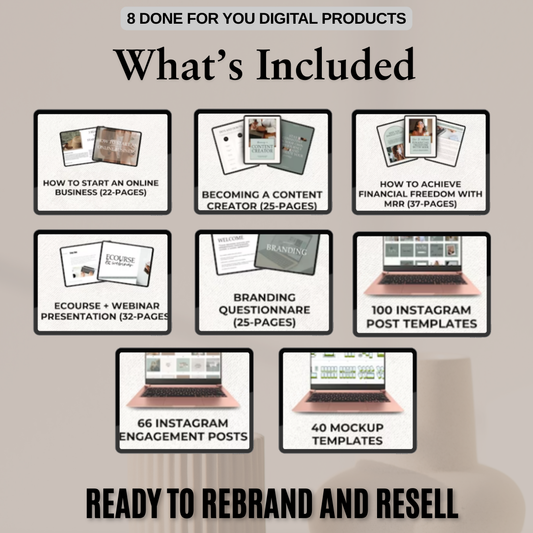
Start with one channel that fits your product. Prove the numbers there before you expand. If you’d rather test ads with ready-made offers instead of building products from scratch, you can browse all MRR products that you can rebrand and resell as your own.

What Is Usually Worth the Spend
Not every ad format deserves your budget. For most digital product sellers, these four options give the best chance of a profitable return.
1. Retargeting Ads
Retargeting is often the best place to start. Instead of paying to introduce your brand to strangers, you show ads to people who have already shown interest, so you’re reminding warm prospects why they should buy.
Use retargeting to reach:
-
Product-page visitors who left without buying
-
Cart abandoners who started checkout but didn’t finish
-
Email subscribers who haven’t purchased yet
-
Video viewers who watched a meaningful part of your product demo
Because these people already know your brand, retargeting usually costs less per sale than cold traffic. This complete guide to marketing digital products recommends retargeting as a core part of any paid strategy for downloadable products.
2. Pinterest Ads for Visual Digital Products
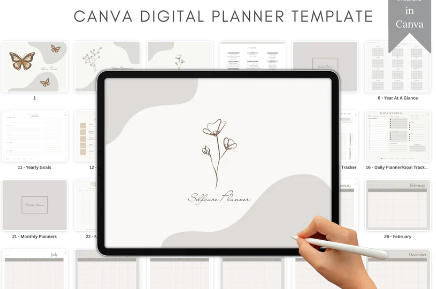
Pinterest is a strong fit for planners, Canva templates, printable wall art, budget spreadsheets and business templates. People come to the platform looking for ideas and solutions, so a well-designed Pin can show the product, a layout preview or a real use case. Products like digital planners for iPad and GoodNotes users tend to perform well because they look great in visual formats.
Pinterest Ads are worth testing when:
-
Your product looks good in a static image or short video
-
You can create several Pin designs from one product
-
Your landing page clearly shows what the buyer receives
-
You can track Pinterest sales with UTM links or analytics
Pinterest’s advertising platform supports campaign goals such as conversions and sales, while its Shopping Ads use your product data to show relevant items to interested browsers. A ready-made bundle such as The Planner Collection gives you plenty of designs to test as separate Pins. Printify’s guide to profitable digital products also highlights Pinterest as a natural channel for planners and templates.
3. Google Search for High-Intent Products
Google Search Ads work best when buyers are actively searching for the exact solution you sell, such as “meal planner template,” “Notion business dashboard” or “SEO checklist ebook.” Choosing high-demand niches for PLR digital products makes this channel far more effective, because the search demand already exists.
Google Search is less suitable for a highly original product that nobody is searching for yet. In that case, social discovery, email or content marketing may be a better first investment.
Costs vary widely. WordStream’s online advertising cost data puts the average Google Ads cost per click at $5.42 and suggests many businesses begin with 1,000–2,500 a month. As a small seller, you can start far more conservatively with a tightly focused campaign on a handful of specific keywords.
4. Meta Ads for Scalable Offers
Facebook and Instagram are often the best first paid channel for digital products. They combine visual creative, detailed targeting, retargeting and quick testing. They work especially well for products with a visible transformation, such as a cleaner planner, a polished template or a clear course outcome. Personal-growth bundles like the Money Mindset Collection suit this kind of before-and-after messaging.
Meta Ads are worth the spend when you have:
-
A product page that already converts, organically or in a small test
-
At least two or three distinct ad creatives
-
A clear price and offer
-
Purchase tracking, not just click tracking
-
Enough margin to absorb testing costs
Industry estimates put Facebook CPC around $0.70 and Instagram CPC around 0.40–2, though your actual costs depend on audience, creative quality and optimisation. Higher-margin offers like the Ultimate Branding Course give you the most room to scale. Teachable’s guide to digital products also notes that courses are among the most profitable digital products, which makes them a good match for paid social.
What Is Usually NOT Worth the Spend
Knowing where not to spend can save you as much money as knowing where to invest.
Cold Awareness Campaigns
Broad brand-awareness ads are hard to connect to actual purchases, especially for low-priced products. As HubSpot points out, every campaign should be measured against a clear return. Save awareness spending for when your sales campaigns are already profitable.
Ads Before a Proven Sales Page
Paid traffic amplifies whatever already exists. If your page is unclear or slow, ads will buy visits rather than customers. Strong website marketing comes first. Before you spend, make sure your sales page shows:
-
What the buyer receives
-
Who the product is for
-
The main outcome or benefit
-
Preview images or a demo
-
Price and delivery method
-
Reviews, testimonials or credibility signals
-
A simple, fast checkout
Very Low-Priced Products Without an Upsell
A $3 printable can still be profitable, but only if your cost per sale is extremely low or buyers are likely to purchase again. For products under $10, raise your order value first with bundles, order bumps or upsells. For example, a buyer of Midjourney 101: Beginner’s Guide to AI Art Creation could be offered the more complete Midjourney Mastery Guide Collection at checkout. AI prompt packs, copywriting resources from the Words That Sell collection and masterclasses also work well as add-ons that make each ad-driven sale more valuable.
Spending Across Too Many Platforms
Beginners often lose money by running Meta, Google, TikTok, Pinterest and Etsy Ads at the same time. Your budget gets spread too thin to produce useful data. Start with one primary channel, prove the numbers, then expand.
How to Decide Your Ad Budget
A practical testing budget for a new digital product is 5–20 per day for 7–14 days, as long as you can track conversions. Common guidance for Meta and Google suggests starting at 3–10 per day and increasing only what performs. Payhip’s guide to marketing digital products and Whop’s digital product marketing guide both recommend starting small and building from proven results.
Use this five-step framework:
-
Set a maximum profitable CPA. If your product sells for $37 and fees are $4, your maximum CPA might be $20 if you want at least $13 profit per sale.
-
Run a small test. Spend enough for meaningful data, typically 7–14 days or 2–3 times your target CPA per ad set.
-
Judge sales, not clicks. Likes and views are diagnostics. Purchases, leads and revenue decide whether a campaign continues.
-
Kill or revise weak ads quickly. If an ad gets clicks but no sales, test a new angle, audience, page or offer before adding budget.
-
Scale winners gradually. Increase budget in steps rather than doubling overnight, so performance stays stable.
ROAS Benchmarks (and How to Use Them Carefully)
Benchmarks give useful context, but they aren’t guarantees. Triple Whale’s Google Ads benchmarks, based on more than 18,000 brands, found a median Google Ads ROAS of 3.31 in 2025, down from 3.68 in 2024. Another ecommerce benchmark puts the average at about 2.87:1.
Use these as directional reference points for digital products:
-
Below 1:1: Usually unsustainable, unless the campaign builds your email list or drives repeat purchases
-
2:1: Often thin for low-priced products, but can work for high-margin offers
-
3:1: A reasonable early target for many digital products
-
4:1 or higher: Generally strong, especially for templates and downloads with minimal fulfilment costs
Shopify’s ROAS benchmarks by industry show ecommerce figures often clustering around 4:1 to 6:1, but those include physical products with very different cost structures. Your own product margin, not a generic benchmark, should be the deciding standard.
A Practical Online Advertising Spending Plan
|
Stage |
Budget focus |
Recommended action |
|
Pre-ad validation |
$0 |
Drive organic traffic to your sales page; improve the offer, page and checkout |
|
Test |
5–20/day for 7–14 days |
Test 2–3 creatives on one platform, ideally Meta or Pinterest |
|
Retargeting |
10–30% of ad budget |
Target product viewers and cart abandoners |
|
Scale |
Increase only profitable campaigns |
Add budget gradually to ads with stable ROAS and acceptable CPA |
|
Expand |
Only after one channel works |
Add Google Search, Pinterest, TikTok or influencer partnerships |
With MRR products, you can skip creation time and go straight to validating offers. Browse all MRR products to find ready-made items you can rebrand and test with paid traffic.
FAQs
Is online advertising worth it for digital products?
Yes, when your product has healthy margins, a converting sales page and a profitable ROAS. Ads work best for scaling an offer that already sells.
What’s a good ROAS for digital products?
3:1 is a reasonable early target. 4:1 or higher is strong. Always judge ROAS against your own margin and target CPA.
How much should I spend on ads as a beginner?
Start with 5–20 per day for 7–14 days on one platform, then scale only the campaigns that are profitable.
Which ad platform is best for selling templates and planners?
Pinterest and Meta are usually the best fit because both are visual and reach buyers browsing for ideas and solutions.
Should I run ads on a product under $10?
Only with an upsell, bundle or order bump in place. Without one, ad costs can easily wipe out your profit.
Conclusion
Online advertising can grow a digital product business quickly, but only when the numbers support it. Validate your offer first, start with retargeting and one well-matched channel, and don’t scale until your ROAS and CPA make sense for your product margin.
Ready to test ads with products you don’t have to create from scratch? Shop All MRR products and start building offers you can rebrand and resell. For a high-margin flagship product that gives you more room to advertise, explore the Ultimate Branding Course with Master Resell Rights.