



Introduction
Creating a digital product is the easy part. Between templates, presets, planners, and courses, anyone can build something in an afternoon. The hard part is getting it in front of people who actually want to buy it. Marketing digital products on social media isn't about posting more — it's about following a system: the right offer, the right platform, content that moves people from stranger to buyer, and a way to scale what works. This playbook walks through exactly how to market digital products on social media, step by step, so your next post does more than sit there.
🎥 Prefer watching instead of reading?
Watch the full step-by-step explainer video below.
1. Get Your Offer Right Before You Post
Before you touch Instagram or TikTok, get clear on what you're actually selling — and what comes before and after it. Most creators only think about their main product. The ones who consistently sell think in a ladder:
-
Core product — the main thing you're promoting. This could be anything from a Notion template pack to a full digital product line. If you're still deciding what to sell, this mega-guide to 100 digital products you can sell online is a solid place to start.
-
Lead magnet — a free, high-value sample that solves one small piece of the bigger problem your core product solves. This is what earns you a follow or an email address before you ever ask for a sale.
-
Order bump or upsell — a low-friction add-on at checkout. Something like a set of AI prompt packs or a words-that-sell copywriting bundle works well here, since both pair naturally with almost any digital product.
-
Backend offer — a higher-ticket product for buyers who want to go further, such as one of these masterclasses.
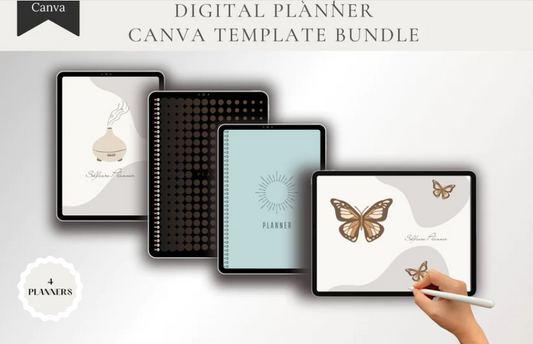
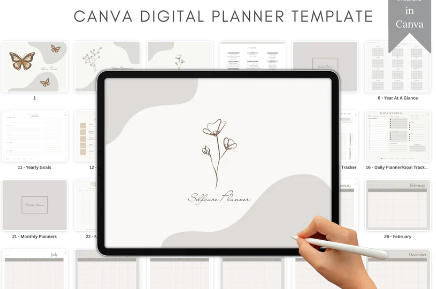
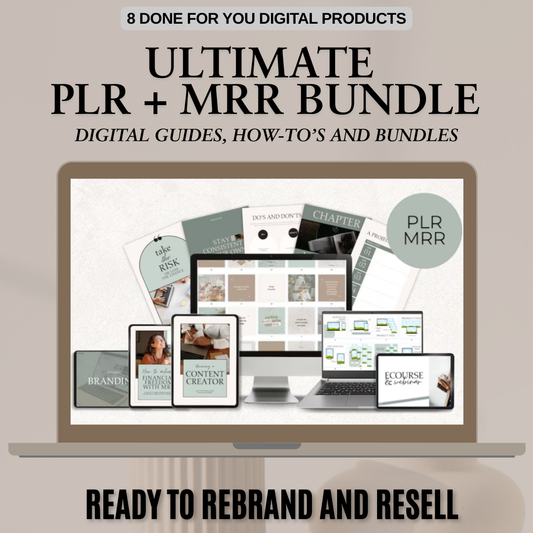
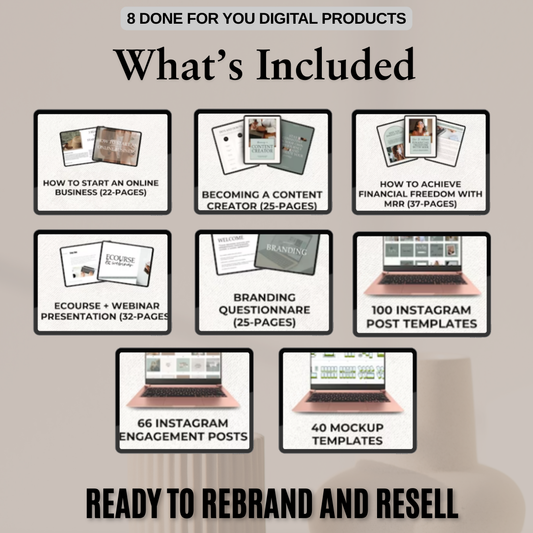
If you don't want to build every layer from scratch, PLR digital products and done-for-you digital products let you plug in a ready-made offer ladder without starting from a blank page — and products like planners are a reliable, evergreen category to build around in any of these slots.
This structure matters more than which platform you choose. A perfectly targeted TikTok video promoting a weak, standalone offer will always underperform a mediocre post promoting a real ladder — because the ladder is what turns a single sale into three.
2. Choose Your Platform Based on Your Product, Not Your Preference
Don't pick a platform because you personally enjoy scrolling it. Pick it based on where your buyer already searches and buys, and how your product is best demonstrated.
|
Platform |
Best For |
Top Formats |
Key Stat |
|
TikTok |
Impulse-friendly products under ~$50, quick-win courses |
Short video, LIVE shopping |
~43.8% buyer conversion rate; projected $23.4B in US TikTok Shop ecommerce sales in 2026 |
|
|
Premium templates, presets, planners, coaching |
Reels, Stories, DMs, Shops |
Widely used by marketers for product discovery and Shop tagging |
|
YouTube |
High-ticket courses, software, in-depth tutorials |
Shorts for discovery, long-form for trust |
Strong for building buyer trust before a bigger purchase |
|
|
Planners, printables, design templates |
Product Pins, search-optimised boards |
Long shelf life — a single strong pin can drive traffic for months |
|
|
Communities, webinars, older demographics |
Groups, ads, LIVE, Marketplace |
Strong for retargeting and event-based selling |
|
|
B2B tools, professional templates, courses |
Articles, carousels, DMs |
Growing channel for professional-facing digital products |
If you're in the US, UK, or Australia, this holds across all three markets — the platform mix looks broadly similar, though Pinterest tends to convert especially well for UK and Australian audiences searching for planners and printables, and TikTok Shop is currently strongest in the US.
The mistake most people make is trying to be everywhere at once. Pick one or two platforms that fit your product type, and get genuinely good at them before adding a third. If growth and visibility are the actual bottleneck rather than platform choice, resources like the anti-algorithm growth guide and the organic growth marketing bundle are built specifically to help you build reach that doesn't evaporate the moment an algorithm shifts.
3. Set Up a Real Storefront, Not Just a Bio Link
Even the best content won't convert if there's no clear, frictionless path from "I'm interested" to "I bought it." Before you scale your posting, make sure this path actually exists.
On Instagram:
-
Switch to a Business or Creator account and connect to Meta Business Suite.
-
Set up an Instagram Shop through Commerce Manager and add your products to a catalogue, with clear images, benefit-driven descriptions, and a direct link to checkout or delivery.
-
Use product tags in Reels, Stories, and posts wherever the feature is available.
On TikTok:
-
Use a Business or Creator account and apply for TikTok Shop if you're eligible.
-
Upload listings and connect payment and delivery — for digital goods, this is often handled through an external checkout.
-
Enable product tags in videos and LIVE sessions.
Everywhere else, your link-in-bio should do three jobs, in order: send people to your lead magnet opt-in, send them to your main product page, and show your best-performing social proof. Don't make people dig for it.
Your actual landing page — wherever the link leads — needs a few non-negotiables: an outcome-focused headline, a few benefit-driven bullet points, a visual demo (a GIF or short video showing the product in use), social proof such as testimonials or screenshots, a simple checkout (Stripe, PayPal, Gumroad, or similar), and automated delivery so buyers get instant access.
This is also where branding does real work — a page that looks credible converts better than one that looks thrown together, which is part of why a resource like the ultimate branding course pays for itself quickly once your storefront is driving consistent traffic.
Get this foundation right, and every piece of content you post afterward has somewhere real to send people.
4. Build a 3-Stage Content Funnel
Most creators only post one type of content — direct promotion — then wonder why nothing sells. A content funnel works because it meets people where they actually are: strangers, considerers, and ready buyers all need different things from you.
Discovery content is how new people find you. This is where you demonstrate a small piece of your product in action, share a before/after transformation, or call out a common mistake your audience makes. If you're short on product ideas to build discovery content around, guides like 40 digital products you can create using ChatGPT or AI tools or 15 digital products you can sell on Etsy without designing are useful starting points, especially for creators building out a catalogue rather than a single product.
Consideration content builds trust with people who already know you exist but haven't bought yet. Testimonials, behind-the-scenes of how you built the product, direct comparisons ("this template vs. building it from scratch"), and FAQ-style posts all belong here. Niche-specific proof works particularly well — for example, if you sell planners, something like 25 digital planners you can sell on Etsy for beginners or the best digital planners for iPad and GoodNotes users can double as consideration content, since it shows real use cases rather than just claims.
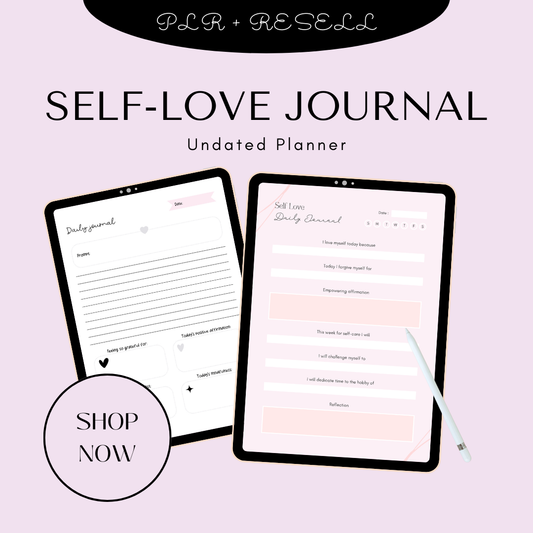
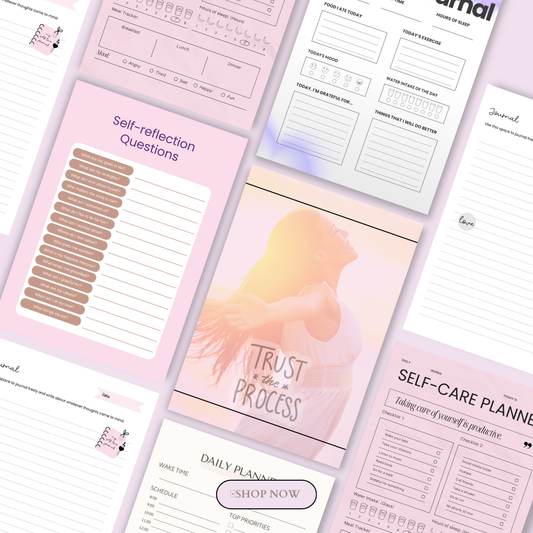
Conversion content is where you ask for the sale. Direct demos with a clear CTA, limited-time bonuses, and LIVE sessions all sit here. This is also the stage where a well-timed niche product does real work — a self-love journal or a themed bundle like New Year New Me converts especially well when tied to a seasonal moment, because the urgency is built into the timing itself.
If you want the full mechanics of turning any of this into an actual sale — not just engagement — this step-by-step guide to selling digital products online walks through the process end to end.

5. Use a Short-Video Formula That Actually Converts
Short-form video is the single highest-ROI format for marketing digital products right now, across US, UK, and Australian audiences alike. But most short videos fail for the same reason: no structure. Use this five-part formula for anything 30–60 seconds long:
-
Hook (0–3 seconds): Lead with a specific result or problem — "This template saved me six hours a week," not "Hey guys, today I want to talk about..."
-
Problem (3–8 seconds): Name the frustration your audience actually feels.
-
Demonstration (8–25 seconds): Show the product being used — a screen recording, a flip-through, a real result.
-
Result (25–40 seconds): State the concrete outcome — time saved, money made, stress removed.
-
CTA (final 5 seconds): One instruction only — "Link in bio," or "Comment PLAN and I'll send it over."
Video length should match intent. Videos under 15 seconds are better for pure discovery and reach; the 30–60 second range converts better because it gives you room to actually demonstrate value before asking for anything. If you're building content around a visual product, this formula works especially well for things like skincare content templates — for example, a collection like The Glow Lab Co. skincare templates bundle is designed around exactly this kind of demo-first video structure.
6. Turn Customers Into a UGC Engine
User-generated content consistently outperforms polished, studio-style content for digital products — because it answers the one question every potential buyer has: "Does this actually work for someone like me?"
To collect UGC systematically rather than hoping it shows up organically:
-
Add a short post-purchase email asking for a screenshot of their result or a 15–30 second video testimonial.
-
Create a branded hashtag so customers can tag their results without being asked each time.
-
Feature customer wins directly in your Reels, TikToks, and Story highlights (with permission).
This works especially well for products where the transformation is visible — a before/after skincare routine using something like Flawless Foundations: the ultimate beginner's skincare guide, or a content glow-up using a resource like The Content Girl Collection, gives customers something concrete and visual to actually show off. The more visible the result, the easier the UGC is to collect — and the harder it works for you once it's posted.
7. Scale What's Already Working With Paid Ads
Don't run ads on a hunch. The sequence that actually works is: post organically first, watch what performs, then put money behind the proven winners.
Test, then amplify. Track which organic posts get high saves, high shares, high link clicks, or comments like "how do I get this?" Once a post consistently pulls interest, that's the creative you put budget behind — not a fresh idea you've never tested.
UGC vs. polished creative. Test both, but expect UGC-style ads to win on cost per click more often than not for digital products, since they read as authentic rather than sales-driven. If you're building out ad creative from scratch, a tool like the Midjourney Mastery Guide for AI visual storytelling can help you generate strong polished-style visuals to test against your UGC.
Retargeting and platform notes. Build retargeting audiences from three groups: people who engaged with your profile, viewers who watched 50%+ of a video, and website visitors who didn't buy. On Meta, this is where conversion campaigns aimed at checkout perform best. On TikTok, Spark Ads let you boost an already-proven organic post directly, which tends to outperform building a cold ad from scratch. On Pinterest, Promoted Pins targeting search terms work well for planners, printables, and templates specifically, and tend to have unusually long performance windows compared to other platforms.
If growth on the ad side is less about budget and more about not knowing where to focus, a structured resource like the Instagram Growth Masterclass or a broader creator resource like the Naomi Bundle can help narrow that down before you spend anything. And for faceless creators specifically trying to scale content without burning out on personal appearances, something like the Glossed in Power viral content pack is built around exactly that constraint.
8. Build an Email List So You're Not Renting Your Audience
Social platforms can throttle reach, change algorithms, or restrict your account overnight — your email list is the one audience you actually own. If you're serious about turning financial freedom through side hustles into something sustainable rather than a one-off launch spike, this is the piece that makes it repeatable.
Opt-in flow from social: Don't send people straight from a post to your product page — send them to an opt-in first. Offer a free sample of your product: one template from a pack, a mini-lesson, a sample page. Use Story link stickers, your bio link, or a "comment X and I'll DM you the link" prompt to drive traffic to that opt-in page rather than a straight sale.
5-day welcome sequence:
-
Day 1: The problem your product solves, told as a story, not a pitch.
-
Day 2: A walkthrough of your product's features paired with a quick win the reader can use immediately.
-
Day 3: Social proof — testimonials, screenshots, real results.
-
Day 4: Objections and answers, FAQ-style.
-
Day 5: A final reminder, ideally with a bonus or deadline attached.
This sequence works for nearly any product category. For something visual and aesthetic-driven, a resource like the Positivity Pop Collection gives you five days' worth of on-brand visuals to pair with each email. For a mindset or personal-development audience, the Money Mindset Collection fits naturally into a welcome sequence built around transformation.
9. Run a 7-Day Launch on Social
Launches work because they create a defined window of attention instead of a slow trickle. Use this structure for a new product or a major relaunch:
-
Pre-launch (2–3 days before): Tease the problem your product solves and show behind-the-scenes of how you built it. This is where curiosity gets built without giving away the offer itself.
-
Launch day: Post a clear "it's live" video with a demo and direct CTA. Pair it with a launch email and, if possible, a LIVE session where you demo the product and answer questions in real time.
-
Mid-launch: Share early buyer results and comparison content — what buyers get versus doing it themselves.
-
Close: A final "last chance" email and countdown Stories tied to a genuine deadline or bonus.
Seasonal and calendar-driven launches tend to perform especially well because the urgency is already built in for you. A Black Friday Collection is the clearest example, but the same logic applies to a done-for-you funnel like the Naomi Mega Funnel, which gives you the entire 14-page structure already built so the launch window is spent on promotion, not page-building.
For visual-heavy launches, pairing your promotional content with ready-made assets — such as 35 viral-ready AI reels or a set of 100 premium aesthetic images — means you're not scrambling to create content during the exact week you should be focused on selling. For faceless lifestyle brands specifically, something like Glam Girl faceless lifestyle reels serves the same purpose without needing to appear on camera.
10. Track the Metrics That Predict Sales
Vanity metrics feel good but don't tell you what's actually driving revenue. Track these instead:
-
Link click rate — the percentage of viewers clicking through to your product or landing page.
-
Save rate — a strong signal of consideration; people saving a post are planning to come back to it.
-
Video watch-through rate — the percentage watching past 50%, which tells you whether the content itself is relevant.
-
Opt-in conversion rate — how many social visitors actually join your email list.
-
Conversion rate by platform — sales divided by link clicks, broken out per platform, so you know where to double down.
-
ROAS (Return on Ad Spend) — revenue generated per dollar spent on ads.
This full-funnel digital marketing case study is a useful real-world reference for how these metrics connect across an entire funnel rather than in isolation. Reviewing these numbers monthly — not daily — gives you enough data to make real decisions about which platform, creative, or product to scale next.
11. Mistakes to Avoid
-
Posting only promotional content, with no discovery or consideration content in between.
-
Sending traffic straight to a product page with no lead magnet or nurture sequence first.
-
A clunky or unclear checkout process for digital delivery.
-
Ignoring mobile optimisation, when the vast majority of social traffic is mobile.
-
Running paid ads on untested creative instead of amplifying content that's already proven itself organically.
-
Slow or inconsistent DM and comment responses, which quietly kills trust at the exact moment someone's deciding to buy.
For a deeper look at how these mistakes play out in practice — and how creators are adjusting their approach for 2026 — both this guide on promoting digital products and actually generating sales and this piece on the keys to digital sales for creators are worth bookmarking.
Closing
Marketing digital products on social media isn't about posting more — it's about posting with a system behind it. Get your offer structure right, choose platforms based on your product rather than personal preference, build a storefront people can actually buy from, and move people through discovery, consideration, and conversion content deliberately. Layer in short-form video built to convert, a genuine UGC engine, paid ads that amplify what's already working, an email list you actually own, and a structured launch — then let your metrics tell you what to scale next.
If you'd rather skip the trial-and-error phase entirely, resources like this step-by-step guide to selling digital products online and a category browse like The Planner Collection are solid next stops — or just explore the full range and find what fits your audience.
FAQ
1. How do I start marketing a digital product on social media with no existing audience?
Start with one platform, not all of them. Pick discovery-stage content — quick tutorials, before/afters, or "mistake" posts — that showcases your product's value without requiring anyone to already know or trust you. Pair this with a lead magnet so early viewers have a low-risk way to engage before you ask for a sale.
2. Which social media platform converts best for selling digital products?
It depends on the product. TikTok tends to work well for impulse-friendly, lower-priced products thanks to short video and TikTok Shop. Instagram suits premium templates, presets, and coaching-style offers. Pinterest is strong for planners and printables because pins have a long shelf life. Rather than picking the "best" platform overall, match the platform to how your specific product is best demonstrated.
3. How much content do I need to post before I see sales?
There's no fixed number, but consistency matters more than volume. A realistic starting point is 3–5 posts per week split across discovery, consideration, and conversion content, sustained for at least 4–6 weeks before judging results. Paid ads can accelerate this once you've identified which organic content is already converting.
4. Do I need paid ads to sell digital products on social media?
No — many creators sell digital products purely through organic content, especially with a solid content funnel and email list in place. Paid ads work best as an amplifier for content that's already proven itself organically, not as a starting point. Testing organically first also means you spend ad budget on creative you already know converts.
5. How important is email marketing if I'm already active on social media?
Very important, since your social following isn't something you own — a platform change or account issue can wipe out your reach overnight. An email list captured through a lead magnet gives you a direct, stable line to your audience and typically outperforms social media on conversion rate for actual product sales.
🎬 Want a visual walkthrough?
If you’d rather watch than read, here’s the full explainer video covering everything in this guide: