


Introduction
The days of dumping a random list of ChatGPT prompts into a PDF and calling it a product are over. Buyers in 2026 expect structured, professional systems — not scattered one-liners. If you're a creator looking for your next income stream, AI prompts are one of the most accessible digital products you can build: no manufacturing, no shipping, no inventory, and near-zero marginal cost per sale. Once you've built a prompt pack, you can sell it to hundreds — or thousands — of buyers without lifting another finger.
🎥 Prefer watching instead of reading?
Watch the full step-by-step explainer video below.
In this guide, you'll get a repeatable framework for packaging AI prompts into a polished, sellable product: how to pick a profitable niche, structure your pack so it feels premium, price it strategically, and choose the right platform to launch on.
Why Sell AI Prompts as Digital Products?
AI prompts sit at the sweet spot of digital products for creators: low overhead, infinitely scalable, and genuinely useful. They solve a real, felt problem — saving buyers hours of trial-and-error while helping non-experts get professional-grade results from tools like ChatGPT, Claude, and Midjourney.
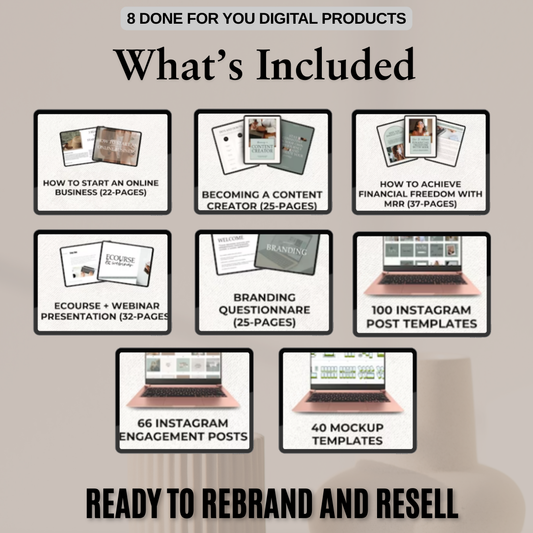
They also fit neatly alongside other proven digital products examples creators are already selling, from templates to digital planners. If you'd rather skip building from scratch, PLR digital products let you resell or rebrand ready-made prompt packs under your own name — a fast way to test the market before investing in an original system.
The catch: the bar has risen. Buyers now expect documentation, real examples, and evidence the pack is actively maintained — not just a text file of ideas.
Step 1: Choose Your Niche and Outcome
Don't sell "ChatGPT prompts." Sell outcomes for specific people. The most successful prompt packs are built around a clear title formula:
[Outcome] — [Number] [Specific Type] Prompts for [Specific Person/Situation]
A few examples that convert well:
-
"30 Real Estate Listing Prompts for Agents Who Hate Writing"
-
"Notion + AI Content Calendar System for Solopreneurs"
-
A Midjourney Mastery Guide built for beginners who want hyperrealism and motion prompt stacking without the learning curve
If visual content is your niche, look at how packs like the Director's Cut cinematic prompt pack or the Motion Made Easy guide frame their outcome — viral reels, cinematic ads, visual storytelling — rather than just listing "Midjourney prompts." You can browse an entire AI prompt pack collection or a set of masterclasses for more positioning inspiration before you land on your own angle.
Step 2: Design Your Prompt Product Structure
A professional prompt pack is far more than a list of instructions — it's a mini-system buyers can follow start to finish. Here's what separates a top seller from a forgettable file dump.
Core Components
Every solid pack starts with the prompts themselves, clearly formatted with placeholders like {brand_name} or {target_audience} so buyers can customize in seconds. Pair each prompt with model instructions — which AI tool it's built for (ChatGPT-4o, Claude, Midjourney v6), recommended settings, and how to fill in variables. Include 2–3 example outputs per prompt, ideally with screenshots, so buyers can see the result before they even try it themselves — the same approach used by strong Midjourney prompt bundles and image-focused packs like 150 AI Images Midjourney Prompts Bundle. Round it out with customization tips for different industries or tones, plus version and compatibility notes so buyers know exactly which model versions your pack was tested on.
Bonus Elements That Increase Perceived Value
The extras are what turn a $10 file into a $50+ product. A short onboarding guide (2–4 pages) sets expectations and walks buyers through the recommended order of use. Grouping prompts by workflow stage — discovery, draft, refine, QA — rather than by topic makes the system feel intentional, not random. A changelog signals the pack is actively maintained, and a license file clarifying personal vs. commercial use protects both you and your buyer. Packs like Glossed In Power, which bundles PLR and MRR rights into a branding-focused prompt system, show how licensing clarity itself becomes part of the product's value.
Step 3: Package Your Prompts for Delivery
Different buyers prefer different formats, so it pays to offer more than one. A PDF gives you a polished, professional feel — cover page, table of contents, consistent formatting across devices. TXT or MD files are copy-paste-friendly for power users who want to plug prompts straight into their own workflow. A Notion template or Google Doc creates an interactive, fill-in-the-blank experience for buyers who want structure built in. And preview assets — screenshots of example outputs — do double duty as both product content and sales page material, similar to how digital art creators showcase samples before a buyer commits.
Pro tip: Pair a beautifully designed PDF for browsing with a plain-text file for copying. Buyers browse in one format and work in another — giving them both removes friction at the exact moment they're ready to use what they bought. This same "polish plus practicality" principle shows up across clipart and digital downloads, where small, well-packaged files consistently outsell bulkier, less organized ones.
Step 4: Price Your Prompt Products Strategically
Tiered pricing lets you capture different buyer segments and build toward higher lifetime value rather than relying on one price point.
A proven pricing ladder looks like this:
-
$0 — Free lead magnet: 10–20 prompts, no support or updates. Goal: capture emails and prove quality.
-
10–25 — Intro/Starter tier: A single workflow, 40–80 prompts, quick-start docs. Converts cold traffic.
-
30–50 — Mid/Premium tier: A full themed system with variants, examples, and tuning notes, aimed at professionals.
-
$100+ — Pro/Bundle tier: Cross-tool workflows (research → outline → draft → repurpose), deeper documentation, quarterly updates.
-
27–49/month — Subscription: Monthly prompt drops, access to the full back catalog, and early access to new model-specific releases.
Position your mid-tier pack (around 47)asyourvolumeseller—it'sthepricepointmostbuyerslandon.Yourpro-tierbundle(147–$197) becomes your profit driver, sold to fewer buyers but at a much higher margin. This mirrors the ladder strategy used across other downloadable creator products, where a low-cost entry template funnels buyers toward a premium bundle.

Step 5: Choose Where to Sell
You can sell on dedicated prompt marketplaces, general digital product platforms, or your own store — each with different trade-offs in fees, traffic, and control.
|
Platform |
Fees/Commission |
Best For |
Notes |
|
PromptBase |
~20% commission |
Text-based, task-specific prompts |
Largest dedicated prompt marketplace with a built-in, ready-to-buy audience |
|
Etsy |
$0.20 listing + 6.5% |
Visual prompts, PDF bundles |
Huge organic reach; strong fit for Midjourney/DALL·E prompt packs |
|
Gumroad |
~10% + payment fees |
Creators with an existing audience |
Simple storefront; best if you're driving your own traffic via social or email |
|
Shopify/WooCommerce |
Monthly + payment fees |
Full control, branding, subscriptions |
Ideal once you're running a broader digital product store |
|
Amazon KDP |
Royalty-based |
Prompt books |
Use free promotions to seed reviews, then funnel buyers to higher-ticket offers |
For maximum reach, list on one or two marketplaces — PromptBase and Etsy is a strong combination — while driving your own traffic to a Gumroad or Shopify store, where you keep a larger share of every sale. Creators scaling multiple income streams, like the ones behind The Go Digital World, typically follow this exact blend: marketplace presence for discovery, owned store for margin.
Step 6: Write a High-Converting Sales Page
Your product title and description should sell outcomes, not features — the same formula from Step 1: [Outcome] — [Number] [Specific Type] Prompts for [Specific Person/Situation]. For example: "Write Property Listings in 5 Minutes — 25 Real Estate AI Prompts for Agents."
Structure your description in five parts:
-
Hook: Open with the pain point — "If you're spending 2 hours writing every property listing…"
-
What's included: Be specific. "25 copy-paste prompts, 3 example outputs per prompt, a customization guide, and a 4-page onboarding PDF."
-
Quantified benefit: Name the time saved or results produced — "Cut listing writing time by 80%."
-
Social proof or sample output: Show it working with a before/after or a screenshot of a real generated result.
-
Clear CTA: "Get instant access" or "Download now."
This same hook-to-CTA structure works whether you're selling a standalone pack or a full vault, like the membership site content prompts vault, where the "what's included" section does the heavy lifting for a higher-ticket offer. For more detail on writing product copy that actually converts, SendOwl's guide to selling AI prompts breaks down real seller examples worth studying.
Step 7: Market Your Prompt Products
Short-form video is the fastest way to build trust in a prompt pack — "how I made this" Reels or TikToks showing your process and results perform especially well, as demonstrated by niche-specific packs like 75 Viral TikTok Reels Prompts for Creators and Coaches. Publishing one free prompt per week on social media builds a funnel — it demonstrates quality and pulls followers toward your paid packs. Pair that with long-tail SEO: target specific phrases like "faceless illustration prompt guide" instead of generic terms like "AI prompts," the same way niche-focused products such as the PLR Faceless Illustration Prompt Guide or the Bling Cartoon Prompt Guide target a specific buyer search intent.
A simple 4-week launch plan:
-
Week 1: Submit to PromptBase, list on Gumroad/Etsy, post in relevant niche communities
-
Weeks 2–4: Create before/after demo content, run a limited-time launch discount to build early reviews
For platform-specific setup, guides like selling digital products with WooCommerce or setting up digital product sales on Shopify walk through the technical side step by step.
Legal & Licensing Basics
Every prompt pack should ship with a simple license file clarifying three things: whether use is personal-only or commercial, whether buyers can resell the prompts (usually no), and whether they can use the outputs commercially (usually yes). Most sellers offer two tiers — a lower-priced personal license and a higher-priced commercial license for agencies or freelancers using the prompts with clients, similar to the PLR/MRR structure seen on packs like Glossed In Power. Getting this right protects you and builds buyer trust — Dodo Payments' step-by-step guide covers licensing basics in more depth.
Checklist: Must-Haves for Every AI Prompt Product
Before you launch, make sure your pack includes:
-
Prompt files in clean, copy-paste formats (TXT/Markdown/JSON)
-
Versioned prompts plus a changelog
-
Preview assets (screenshots of outputs or templates)
-
README/docs covering where each prompt fits and expected output
-
2–5 realistic examples per workflow
-
A license file matching your pricing tiers
For a deeper breakdown of packaging standards, Getly's guide to AI prompt packs and Zanfia's guide to building an AI prompt business are both worth bookmarking.
Conclusion
From niche selection to sales page copy, packaging AI prompts as a digital product comes down to one idea: structure sells. A well-documented, clearly licensed, thoughtfully priced prompt pack will consistently outsell a random list of one-liners — no matter how good the prompts themselves are. If you're ready to see what's working right now, browse the ultimate list of digital products to sell online or check the data-backed list of top-selling digital products in 2026 for your next product idea.
Frequently Asked Questions
Do I need coding or design skills to sell AI prompts?
No. Most successful prompt packs are built with a document editor and a PDF or Canva template — no coding required. What matters more is clear formatting, real example outputs, and a niche-specific outcome, not design polish.
How much can I realistically charge for an AI prompt pack?
Pricing typically ranges from 10–25 for a single-workflow starter pack up to $100+ for a cross-tool bundle with deeper documentation. Most sellers find their highest-volume sales sit around the 30–50 mid-tier, with premium bundles serving as a smaller but higher-margin revenue stream.
Is PromptBase or Etsy better for selling AI prompts?
It depends on your product type. PromptBase has a built-in audience actively searching for task-specific prompts, while Etsy works well for visual prompt packs (like Midjourney bundles) sold as downloadable PDFs. Many sellers list on both for reach, then drive traffic to their own store for better margins.
What's the difference between personal and commercial licensing for prompts?
A personal license typically restricts use to the buyer's own projects, while a commercial license allows the buyer to use the prompts (or their outputs) for client work or resale purposes. Most sellers offer both tiers, pricing the commercial license higher.
Can I sell AI prompts if I used PLR (Private Label Rights) content to build them?
Yes, as long as the PLR license explicitly permits resale or rebranding — check the terms before listing. PLR prompt packs are a popular way to launch quickly without building a system from scratch, then customize or expand it as your own brand grows.
🎬 Want a visual walkthrough?
If you’d rather watch than read, here’s the full explainer video covering everything in this guide: