







1. Introduction: Why Self-Love Journaling Changes Everything
Have you been feeling disconnected from yourself… overly critical in your thoughts… or emotionally stuck in patterns that seem impossible to break?
In today’s fast-paced world, especially across the USA where productivity culture dominates, many women struggle with burnout, self-doubt, and emotional exhaustion. We prioritize achievement and responsibilities—but often neglect our inner well-being.
That’s where self-love journaling becomes transformational.
🎥 Prefer watching instead of reading?
Watch the full step-by-step explainer video below.
Self-love journaling is an intentional writing practice designed to build self-compassion, process emotional wounds, and strengthen confidence from within. Unlike casual diary writing, it uses structured prompts to help you reflect on your strengths, past experiences, limiting beliefs, and daily gratitude.
If you're new to the practice, this guide explains the foundation of building a journaling habit:
https://resellready.co/blogs/news/self-love-journal
Reflection + Compassion = Healing
The formula behind this practice is simple:
Reflection + compassion = healing.
When you reflect honestly on your experiences—and respond with kindness instead of criticism—you begin to shift your internal narrative.
Self-love journaling fosters healing by encouraging reflection on personal strengths, past wounds, and daily gratitude, promoting emotional growth and self-compassion. Over time, it reduces negative self-talk, builds resilience, and strengthens self-worth.
Many women pair emotional reflection with structured goal planning using tools like:
https://resellready.co/blogs/news/productivity-planner
Others prefer digital organization systems and explore options like:
https://resellready.co/blogs/news/best-digital-planners-for-ipad-and-goodnotes-users
If you're comparing formats, reviewing different planning systems can help you decide what fits your lifestyle best:
https://resellready.co/blogs/news/planners
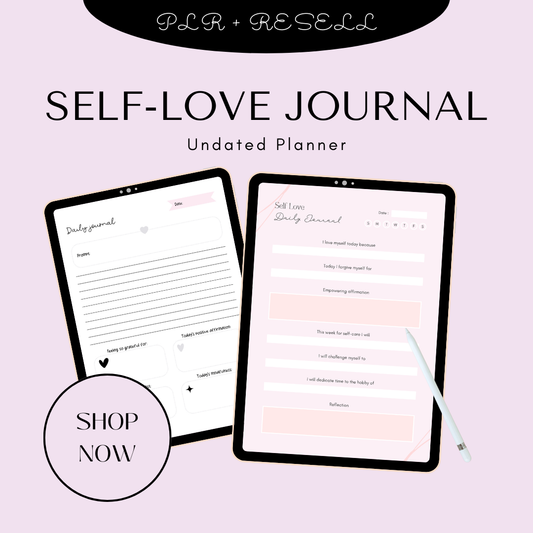
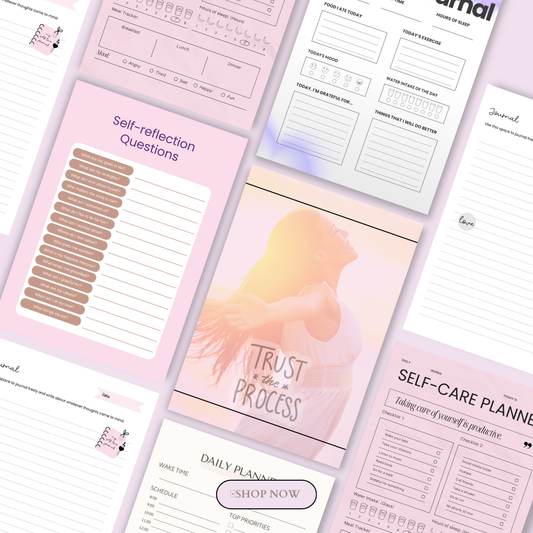
For those who prefer a ready-to-use guided format specifically focused on healing and self-growth, this journal provides structured prompts designed for transformation:
https://resellready.co/products/the-self-love-journal
If you're a creator or entrepreneur wanting customization flexibility, this editable version allows you to personalize your journaling experience:
https://resellready.co/products/plr-pink-self-love-journal
And if you're building a self-love brand or sharing empowering content online, this content bundle can help you stay consistent:
https://resellready.co/products/30-self-love-reels
What You’ll Gain From This Guide
By the end of this article, you will:
-
Understand how self-love journaling supports emotional healing
-
Learn how structured prompts improve self-awareness
-
Discover how to build a consistent journaling habit
-
Feel empowered to start your own self-love practice
You don’t need to be a perfect writer. You simply need the courage to be honest with yourself.
And that’s where real growth begins.
2. What Is Self-Love Journaling?
Definition and Purpose
Self-love journaling is a structured self-care practice designed to strengthen your relationship with yourself. Its purpose is to cultivate emotional clarity, self-acceptance, resilience, and confidence through intentional reflection.
Instead of simply documenting daily events, self-love journaling encourages deeper questions like:
-
What do I appreciate about myself today?
-
What belief about myself needs healing?
-
How can I treat myself with more compassion this week?
This approach transforms journaling from passive writing into active personal growth.
To understand how structured prompts support emotional breakthroughs, you can explore:
https://resellready.co/blogs/news/self-love-journal
How Journaling Supports Emotional Processing
Unprocessed emotions often turn into recurring mental patterns—self-doubt, comparison, perfectionism, or avoidance.
Writing slows your thinking and creates space between you and your emotions. When you express feelings on paper, they become easier to understand and release.
Research on expressive writing shows journaling can:
-
Reduce stress and anxiety
-
Improve emotional regulation
-
Increase clarity and self-awareness
-
Strengthen resilience
Many women combine emotional reflection with structured daily systems like:
https://resellready.co/blogs/news/productivity-planner
Or explore digital formats discussed in:
https://resellready.co/blogs/news/best-digital-planners-for-ipad-and-goodnotes-users
The Difference Between Regular Journaling and Intentional Self-Love Journaling
Regular journaling may focus on daily events or venting frustrations. While helpful, it doesn’t always create transformation.
Intentional self-love journaling is:
-
Prompt-driven
-
Compassion-focused
-
Growth-oriented
-
Designed specifically for healing
For example:
Regular journaling:
“Today was stressful.”
Self-love journaling:
“How did I support myself during stress today, and what do I need tomorrow?”
That shift builds resilience instead of reinforcing negativity.
If you want a fully guided structure, this journal provides ready-made prompts:
https://resellready.co/products/the-self-love-journal
If you're building or selling digital products in the self-love niche, this customizable option gives flexibility:
https://resellready.co/products/plr-pink-self-love-journal
And if you're creating social content to reinforce positive messaging, this resource supports consistent engagement:
https://resellready.co/products/30-self-love-reels
How Self-Love Journaling Builds Self-Awareness and Emotional Resilience
Self-awareness is the foundation of healing.
When you consistently reflect on your thoughts and emotional triggers, you begin to notice:
-
Where you criticize yourself unnecessarily
-
When you shrink your needs
-
How you react to rejection
-
What truly fulfills you
This awareness creates conscious choice. And conscious choice builds resilience.
Over time, self-love journaling helps you:
-
Respond calmly instead of reacting impulsively
-
Forgive yourself faster
-
Reduce harsh inner dialogue
-
Celebrate progress more consistently
When supported by structured planning systems like:
https://resellready.co/blogs/news/planners
Journaling becomes part of a sustainable personal growth routine rather than a temporary habit.
The more consistently you practice reflection with compassion, the more natural self-love becomes.
And that is when healing shifts from effort to embodiment.
3. Why Self-Love Journal Prompts Work for Healing and Personal Growth
Self-love journal prompts are more than simple writing exercises — they are transformative tools that guide emotional healing, self-awareness, and long-term growth. When used consistently, they help you uncover limiting beliefs, reduce negative self-talk, and strengthen resilience.
If you want a comprehensive resource on why structured journaling works, you can explore The Ultimate Self-Love Journal Guide: How to Start, What to Write, and Why It Works, which explains how prompts foster deep self-reflection and personal transformation.
3.1 Emotional Processing & Pattern Awareness
Self-love journaling helps you process emotions instead of suppressing them. Prompts bring subconscious thoughts to the surface, allowing you to reflect on recurring patterns and emotional blocks.
-
Uncover limiting beliefs: Prompts guide you to identify beliefs that may be holding you back. Guided tools like The Self-Love Workbook: 42-Page Guided Journal for Radical Self-Discovery make it easier to explore these beliefs step by step.
-
Identify self-critical patterns: Journaling highlights negative thought cycles so you can challenge and reframe them.
-
Encourage emotional release: Writing about your experiences provides a safe way to release stress and process feelings. For a reflective, narrative-style approach, Pages of Peace: My Self-Love Journal – A Detailed Guide helps you create calm and clarity through structured prompts.
3.2 Rewiring Self-Perception
Self-love prompts help shift your internal dialogue from self-criticism to self-compassion.
-
Promote positive self-identity: Focusing on strengths and accomplishments reinforces self-worth.
-
Strengthen confidence: Documenting small wins builds internal trust and reduces self-doubt.
-
Build inner safety: Writing without judgment creates a safe internal environment.
Resources like The Complete Self-Care Journal combine guided reflection with practical self-care exercises, helping reinforce your self-identity while supporting emotional resilience.
3.3 Developing Self-Compassion
Self-compassion is a key outcome of consistent self-love journaling.
-
Reduce harsh inner dialogue: Prompts help replace criticism with understanding.
-
Encourage forgiveness: Writing about past mistakes allows you to release guilt and embrace self-kindness.
-
Strengthen resilience during setbacks: Reflection helps you respond thoughtfully instead of reacting impulsively.
For additional structured exercises that complement reflection, The Self-Care Workbook provides guided activities to build self-compassion while encouraging personal growth.
3.4 Creating Breakthrough Moments
Structured journaling can create profound moments of insight, especially when feeling emotionally stuck.
-
Especially powerful when feeling disconnected: Prompts provide direction when you’re unsure where to start.
-
Structured reflection leads to clarity: Writing reveals hidden emotions, patterns, and desires.
For guidance on using prompts effectively to generate breakthroughs, The Ultimate Self-Love Journal Guide: How to Start, What to Write, and Why It Works offers step-by-step strategies. Pairing your practice with journals like The Self-Love Workbook: 42-Page Guided Journal for Radical Self-Discovery ensures that your breakthroughs are intentional and structured.
4. How to Use These Self-Love Journal Prompts
To gain maximum benefit from your journaling practice:
-
Find a quiet space: Choose a calm, distraction-free environment.
-
Set a 10–20 minute timer: Consistency matters more than duration.
-
Write without judgment or editing: Allow yourself to be honest and authentic.
-
Revisit responses weekly: Track your emotional growth over time.
-
Pair with affirmations or meditation: Reinforce insights and build mental resilience.
-
Track emotional shifts: Note changes in mood, self-perception, and confidence.
For structured support and guided prompts, tools like The Self-Love Workbook: 42-Page Guided Journal for Radical Self-Discovery, The Complete Self-Care Journal, and The Self-Care Workbook provide ready-to-use prompts that simplify the process while encouraging deep transformation. For reflective inspiration, Pages of Peace: My Self-Love Journal – A Detailed Guide demonstrates how daily journaling can cultivate calm, self-compassion, and clarity.
5. 50 Powerful Self-Love Journal Prompts for Healing and Growth
Self-love journaling is one of the most effective tools for emotional healing, confidence building, and personal transformation. When prompts are organized intentionally, they guide you through self-acceptance, compassion, body appreciation, emotional healing, and present-moment empowerment.
If you enjoy structured personal development tools, you may also love the growth-focused resources inside the Plan & Prosper Collection, which are designed to help you align mindset, goals, and daily habits. For deeper reflective exercises, creative thinkers often pair journaling with guided question frameworks from the AI Prompt Packs Collection to unlock clarity and fresh insights.
Below are 50 powerful self-love journal prompts organized for structured transformation.
A. Embracing Your Uniqueness (Prompts 1–10)
Self-acceptance is the foundation of healing. Before you can grow confidently, you must first acknowledge your individuality as something valuable — not something to fix. These prompts help you embrace your strengths, personality, and personal story.
-
What is one unique quality about yourself that you absolutely love?
-
How do you celebrate your personal strengths?
-
What is one thing that makes you proud of who you are today?
-
How do you embrace the things that make you different from others?
-
What is one talent or skill you have that brings you joy?
-
What is one personality trait you appreciate about yourself?
-
How do you accept both your strengths and weaknesses?
-
What is one compliment you’ve received that truly resonated with you?
-
How do you practice self-compassion when you make mistakes?
-
What is one way you show yourself love and kindness each day?
If you're building a daily reflection habit, structured tools like those mentioned in Best Daily Planners for Busy Women in 2026 can help you integrate journaling into your routine consistently.
B. Cultivating Self-Compassion (Prompts 11–20)
Negative self-talk can silently damage confidence and emotional well-being. These prompts are designed to transform inner criticism into compassion and resilience.
-
How do you show yourself kindness on tough days?
-
What is one negative thought you often have about yourself?
-
How do you forgive yourself when you make mistakes?
-
What is one thing you tend to criticize yourself for?
-
How do you manage self-doubt?
-
What is one way you can be kinder to yourself today?
-
How do you handle setbacks while still showing yourself love?
-
What is one mantra you can repeat when you’re feeling down?
-
How do you practice self-care that supports your emotional well-being?
-
What is one way you can start speaking more kindly to yourself?
Many people pair compassion journaling with manifestation and intention-setting strategies. If that interests you, Manifestation Planners: How to Script, Visualize, and Track Your Dream Life explains how mindset and structured planning work together.
C. Body Appreciation & Acceptance (Prompts 21–30)
Healing includes reconnecting with your body in a compassionate way. These prompts encourage gratitude, respect, and mindful self-care.
-
How do you feel about your body, and how has that relationship evolved?
-
What is one thing your body allows you to do that you’re grateful for?
-
How do you show love to your body through self-care?
-
What is one part of your body that you’ve struggled to accept?
-
How do you honor your body’s needs when you’re tired or stressed?
-
What is one way you can be more mindful of how you speak about your body?
-
How do you celebrate your body’s strength and abilities?
-
What is one way you can treat your body with more respect and care?
-
How do you remind yourself that your body is more than its appearance?
-
What is one thing you love about your body today?
If you're building a wellness-focused reset routine, collections like the New Year, New Me Collection often combine reflection, planning, and habit tracking to support holistic transformation.

D. Healing Past Hurts (Prompts 31–40)
True self-love requires releasing emotional weight from the past. These prompts help you process experiences, forgive yourself, and rebuild confidence.
-
What is one past experience that still affects how you feel about yourself?
-
How do you let go of negative beliefs shaped by others?
-
What is one way you’ve learned to forgive yourself for past mistakes?
-
How do you rebuild confidence after rejection or failure?
-
What is one lesson from a painful experience that made you stronger?
-
How do you handle emotional wounds that are still healing?
-
What is one way you can release guilt or shame from the past?
-
How do you protect your emotional well-being while healing?
-
What is one affirmation for your worth despite past experiences?
-
How do you practice self-love as you heal from emotional pain?
If you’re interested in turning your own journaling passion into a creative income stream, How to Make and Sell Planners Online: A Beginner’s Guide explores how reflective tools can become digital products.
E. Celebrating Who You Are Today (Prompts 41–50)
Self-love is not only about healing — it’s about gratitude and empowerment in the present moment. These prompts help you appreciate your progress and stay committed to growth.
-
What is one thing you’re proud of accomplishing recently?
-
How do you celebrate small victories in your life?
-
What is one area of your life where you feel truly content?
-
How do you practice gratitude for the person you are today?
-
What is one thing you’ve learned about yourself recently that fills you with pride?
-
How do you stay present and appreciate who you are now?
-
What is one thing you’ve done this week to show yourself love?
-
How do you remind yourself that you are worthy of love and happiness?
-
What is one way you can celebrate your self-love journey today?
-
How do you stay committed to self-love even when life gets busy?
To stay consistent, structured productivity systems — like those featured in the Plan & Prosper Collection — can help you integrate journaling, goal-setting, and mindset work into your everyday routine.
Final Thoughts
These 50 powerful self-love journal prompts are designed to guide you through emotional healing, body acceptance, self-compassion, and personal empowerment. Whether you journal daily or weekly, structured reflection builds confidence, resilience, and clarity over time.
6. How to Turn These Prompts into a 30-Day Self-Love Challenge
If you want real emotional growth, consistency is key. Turning these self-love journal prompts into a structured 30-day self-love challenge helps build momentum, deepen self-awareness, and create lasting mindset shifts.
If you’re new to journaling, this complete guide to building a reflective habit inside Self-Love Journal explains how daily writing improves confidence, clarity, and emotional resilience.
Below is a simple but powerful monthly structure designed for sustainable transformation.
Suggested 4-Week Structure for Your 30-Day Self-Love Challenge
Organizing your prompts into weekly themes keeps your growth intentional and balanced.
Week 1: Embracing Your Uniqueness
Focus on self-acceptance and identifying your strengths.
Use this week to reconnect with your individuality, values, and personality traits that make you distinct.
Pair this with reflective reading from Own Your Reflection: A Self-Acceptance eBook for Embracing Your True Self to deepen your understanding of authentic self-worth.
Week 2: Cultivating Self-Compassion
Shift your inner dialogue from criticism to kindness.
This week is about forgiving yourself, releasing perfectionism, and building emotional resilience.
You can support this mindset reset with structured confidence practices found in the Glow Up Guide: Confidence, Beauty & Self-Care Blueprint to reinforce internal and external self-care habits.
Week 3: Body Appreciation & Self-Care
Reconnect with your body in a compassionate way.
Focus on gratitude for what your body allows you to do and practice respectful self-talk.
Using a structured system like the Glow Up Tracker Planner – Self-Care & Confidence Journal can help track daily self-care habits and emotional shifts throughout the week.
Week 4: Healing + Celebration
Release emotional baggage and celebrate growth.
Reflect on past experiences, forgive yourself, and acknowledge your progress.
If you enjoy combining journaling with structured planning, exploring modern digital tools discussed in Best Digital Planners for iPad and GoodNotes Users can help you maintain consistency beyond the 30-day challenge.
Daily 15-Minute Self-Love Routine
To keep the challenge manageable and realistic:
-
Spend 10 minutes answering one journal prompt.
-
Spend 3 minutes writing one gratitude statement.
-
Spend 2 minutes repeating affirmations aloud or silently.
Consistency matters more than perfection. Even a short daily practice builds emotional strength over time.
If you prefer printable or structured systems, browsing reflective tools and planners available on Resell Ready can give you additional formats to stay organized.
Weekly Reflection Check-In
At the end of each week, answer:
-
What emotional shift did I notice this week?
-
What limiting belief did I challenge?
-
Where did I show myself compassion?
-
What progress am I proud of?
-
What will I improve next week?
Tracking weekly insights prevents journaling from becoming passive writing — it transforms it into measurable personal growth.
If you’re inspired to turn your journaling journey into a creative business idea, Canva Digital Products That Sell Like Crazy: Templates, Planners & More explains how reflective tools can become profitable digital products.
For additional structured planning resources, explore curated guides inside Planners to maintain long-term growth after your 30-day challenge ends.
7. Complementary Self-Love Affirmations
Affirmations reinforce the beliefs you’re building through journaling. When combined with written reflection, they help reprogram subconscious patterns and strengthen emotional confidence.
Below are short, powerful affirmations aligned with each category of your 30-day challenge.
A. Uniqueness & Self-Acceptance
-
I honor what makes me different.
-
My individuality is my strength.
-
I am proud of who I am becoming.
-
I deserve to take up space.
-
I embrace myself fully and unapologetically.
B. Self-Compassion & Kindness
-
I speak to myself with love and respect.
-
I forgive myself and grow from my mistakes.
-
I am allowed to learn at my own pace.
-
I release perfectionism.
-
I choose compassion over criticism.
C. Body Appreciation
-
My body deserves care and gratitude.
-
I respect my body’s needs.
-
I am more than my appearance.
-
My body supports me every day.
-
I treat my body with kindness.
D. Healing & Celebration
-
My past does not define my worth.
-
I am resilient and capable.
-
I celebrate my progress, no matter how small.
-
I release guilt and embrace growth.
-
I am worthy of love and happiness.
How to Combine Journaling + Affirmations
For best results:
-
Write your journal prompt first.
-
Identify one limiting belief from your answer.
-
Choose an affirmation that directly counters that belief.
-
Repeat the affirmation 5–10 times slowly and intentionally.
This process links reflection with belief replacement — creating deeper subconscious rewiring.
Optional Morning & Evening Self-Love Routine
Morning (5–10 minutes):
-
Read 3 affirmations aloud.
-
Visualize yourself embodying those beliefs.
-
Write one intention for the day.
Evening (10–15 minutes):
-
Answer your daily journal prompt.
-
Write one thing you did well.
-
Repeat one affirmation before sleep.
Over time, this practice builds emotional resilience, confidence, and clarity — transforming self-love from a concept into a daily habit.
8. Overcoming Journaling Resistance
Even the most powerful self-love journal prompts won’t create transformation if you avoid using them. Many people start journaling with motivation but struggle with resistance after a few days. The good news? Resistance is normal — and completely manageable.
If you're building a deeper reflective habit, resources like Self-Love Journal explain why emotional resistance shows up and how to move through it with compassion instead of judgment.
Let’s address the most common blocks.
“I Don’t Know What to Write”
This is the #1 reason people stop journaling.
When your mind feels blank:
-
Rewrite the prompt in your own words.
-
Start with “Right now, I feel…”
-
List three small thoughts instead of a long paragraph.
External inspiration can also spark ideas. Articles like 50 Self-Love Journaling Prompts and 10 Journal Prompts for Self-Love Reflection offer additional question styles that may resonate differently.
Fear of Confronting Emotions
Journaling often surfaces feelings you’ve been avoiding. That discomfort is not a sign to stop — it’s a sign you’re healing.
If emotions feel intense:
-
Write for just 5 minutes.
-
Close with one calming affirmation.
-
Follow up with grounding self-care.
Structured reset tools like the Self-Care SOS Kit: 29-Page Emergency Reset for Mind, Mood & Confidence can help regulate emotions after deep journaling sessions.
Inconsistency
Life gets busy. Motivation fluctuates.
Instead of quitting, simplify.
Practical Solutions:
-
Start with 5 minutes daily.
-
Try bullet journaling instead of full paragraphs.
-
Use voice-to-text journaling on your phone.
-
Habit stack: journal right after brushing your teeth or morning coffee.
If you prefer digital systems, the tools discussed in Best Digital Planners for iPad and GoodNotes Users can make tracking and journaling easier and more engaging.
Perfectionism
Journaling is not meant to be poetic or polished. It’s meant to be honest.
If perfectionism is holding you back:
-
Give yourself permission to write messy thoughts.
-
Use bullet points instead of sentences.
-
Remind yourself: clarity comes from expression, not performance.
If you struggle with deep-rooted self-doubt, transformational mindset work like Unf*ck Your Limits: 70-Page Mindset & Self-Worth Transformation eBook can complement your journaling journey.
9. Tracking Your Healing & Growth Over Time
Self-love becomes powerful when you measure progress. Reflection without tracking can feel abstract — tracking creates visible evidence of growth.
You can explore more structured growth practices inside Self-Love Journal Prompts for Healing and Guidance to deepen long-term transformation.
Here’s how to track effectively.
Emotional Check-In Scale
At the beginning and end of each week, rate:
-
Self-confidence (1–10)
-
Emotional calm (1–10)
-
Self-criticism frequency (1–10)
-
Overall mood (1–10)
Over 30 days, you’ll begin noticing trends and improvements.
Monthly Reflection Questions
At the end of your challenge, ask:
-
How has my self-talk changed?
-
What limiting belief did I release?
-
What emotion do I handle better now?
-
What am I most proud of?
-
Where do I still need growth?
Pairing journaling with structured personal development systems like The Aligned Empire: A Guide to Wealth, Peace & Purpose from Your Highest Self can expand your growth beyond emotional healing into life alignment and clarity.
Progress Markers to Look For
Over time, you may notice:
-
Reduced self-criticism
-
Increased confidence
-
Greater emotional resilience
-
Faster recovery from setbacks
-
More self-awareness
To organize this journey, consider creating a simple “Self-Love Growth Log.” This can be a notebook section, printable tracker, or digital planner tab.
If you enjoy combining self-care with practical structure, guides like Glow On The Go: 30-Page Beauty & Self-Care Guide for Busy Women or The Glow Lab Guide: Skincare & Self-Worth eBook can help integrate inner growth with outer self-care rituals.
For creators interested in turning growth tools into income streams, Best PLR Digital Products for the Self-Help and Manifestation Niche (2025 Guide) explains how reflective content can become a profitable digital product.
10. Final Thoughts: Your Self-Love Journey Starts Now
Healing begins with awareness. Growth begins with compassion.
Self-love journaling is not about becoming perfect — it’s about becoming present. Through consistent reflection, honest writing, and gentle self-acceptance, you create emotional strength that compounds over time.
Remember:
-
Consistency matters more than intensity.
-
Five minutes daily beats one hour once a week.
-
Progress is often subtle before it becomes visible.
Your next steps are simple:
✔ Save or bookmark this guide.
✔ Start with Prompt #1 today.
✔ Commit to 30 days.
✔ Return and compare your emotional growth.
In just one month, your self-talk, confidence, and clarity can shift in ways you never expected.
Your self-love journey doesn’t start when you feel ready.
It starts when you decide to begin. 💛
Frequently Asked Questions (FAQ)
1. How do self-love journal prompts help with healing?
Self-love journal prompts help with healing by encouraging emotional processing, identifying limiting beliefs, and reducing negative self-talk. Writing regularly allows you to reflect on past experiences, release suppressed emotions, and build healthier thought patterns. Over time, this improves emotional resilience, confidence, and self-awareness.
2. How often should I use self-love journal prompts?
For best results, use self-love journal prompts daily or at least 3–4 times per week. Even 5–15 minutes per day can create noticeable shifts in mindset and emotional well-being. Consistency matters more than writing long entries.
3. What if I don’t know what to write in my journal?
If you feel stuck, start small. Write one sentence about how you feel, create bullet points instead of paragraphs, or simply rewrite the prompt in your own words. There is no “right” way to journal — honesty matters more than structure or perfection.
4. Can journaling really improve self-confidence?
Yes. Journaling improves self-confidence by helping you recognize strengths, track progress, and challenge self-critical thoughts. When you consistently reflect on accomplishments and growth, your brain begins reinforcing positive self-beliefs, which naturally increases confidence over time.
5. How long does it take to see results from self-love journaling?
Many people notice small emotional shifts within 1–2 weeks of consistent journaling. Deeper transformation typically occurs over 30 days or more. Tracking your thoughts and reviewing past entries helps you see measurable progress in reduced self-criticism, improved mood, and stronger self-awareness.
🎬 Want a visual walkthrough?
If you’d rather watch than read, here’s the full explainer video covering everything in this guide: